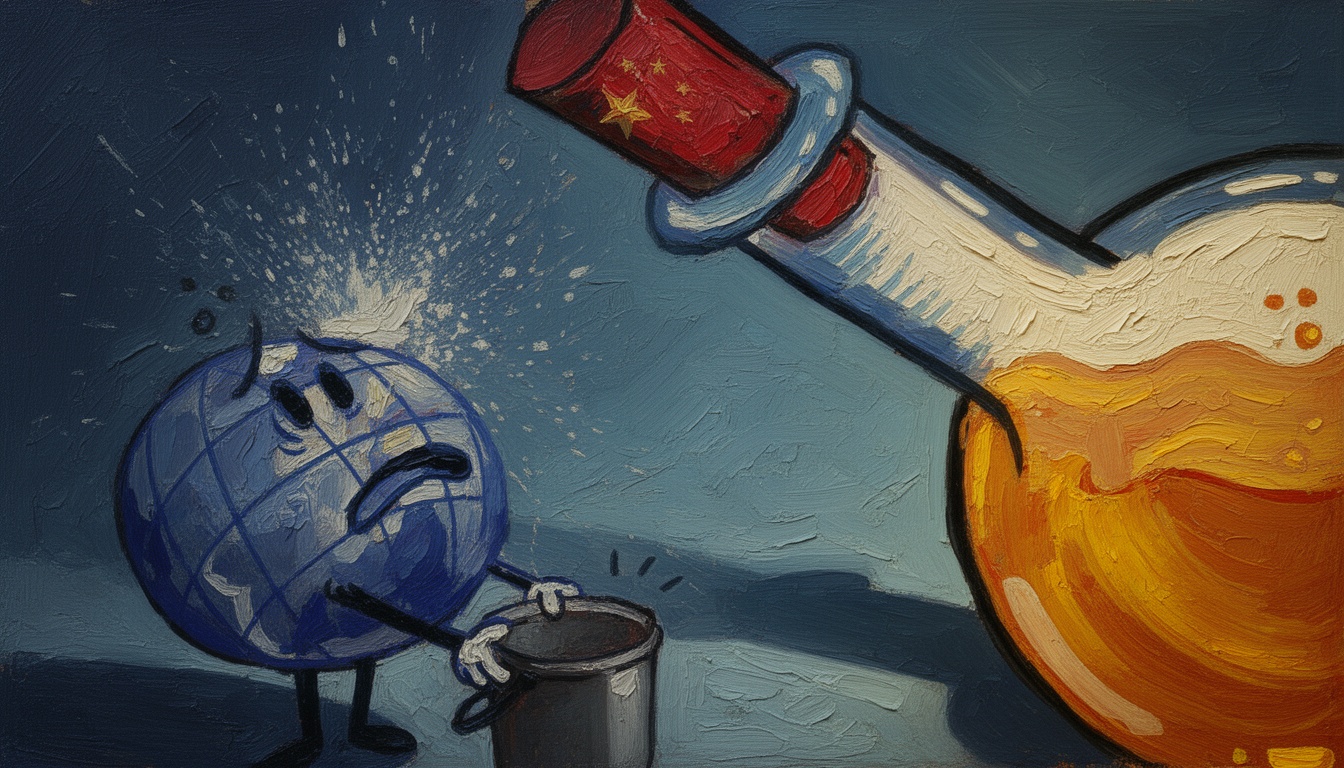
China Considers Sulphuric Acid Export Ban Amid Global Disruption
China's potential ban on sulphuric acid exports could destabilize key industries.
China is reportedly considering a ban on sulphuric acid exports, a critical component used in fertilizer production and metal processing. The global market for this chemical has recently gained attention due to escalating supply issues related to military conflicts, notably the ongoing war involving the US and Israel that has impacted Iran.
The conflict in the Gulf region has severely affected the shipping routes critical to sulphuric acid trade, particularly through the Strait of Hormuz. This chokepoint is vital, as it accounts for approximately 25% of the world's sulphuric acid production. With shipments experiencing significant delays or halts, the already strained supply chain is under even greater pressure, leading to a rise in prices.
Strategically, the implications of China's ban could resonate far beyond its borders. Several countries rely heavily on imports of sulphuric acid for agricultural and industrial needs. A sudden scarcity may force these nations to seek alternative sources or face production shortfalls, potentially leading to repercussions in food security and manufacturing output.
From an operational standpoint, industries dependent on sulphuric acid will have to contend with increasing costs and supply uncertainty. Fertilizer producers may experience diminished outputs, directly affecting agricultural yields. Metal processing industries could face bottlenecks, disrupting broader supply chains and impacting market stability.
In terms of consequences, if China's export ban is enacted, it may lead to heightened tensions between major economies involved in chemical production and trade. Nations already grappling with energy and commodity inflation may find themselves further destabilized by soaring prices, prompting calls for strategic reserves and alternative sourcing arrangements. This situation could provoke a re-evaluation of trade dependencies and heighten global commodity market volatility.