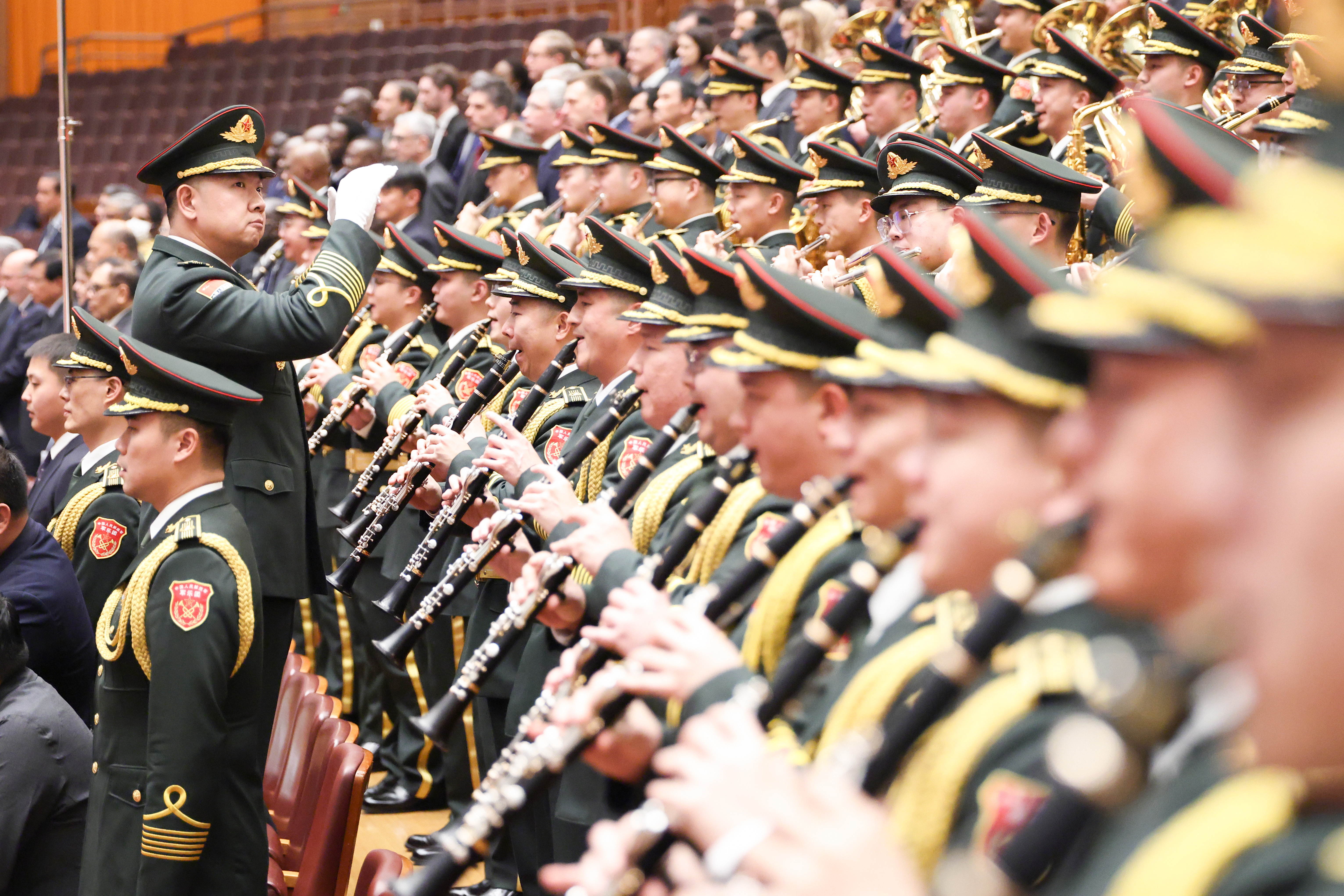
China Boosts 2026 Defense Budget 7% Amid Generals' Purge
China's military budget increase occurs concurrently with an internal power struggle, heightening instability within its armed forces. This budgetary escalation underscores Beijing's commitment to military expansion amidst internal turmoil.
China has escalated its 2026 defense budget by 7%, a move coinciding with a significant purge of senior military officials. This increase raises the military budget to an estimated $230 billion, reflecting ongoing efforts to modernize and expand the People's Liberation Army (PLA) amid internal strife and geopolitical threats.
The history behind this moment is marked by increasing tensions in the Indo-Pacific region, particularly concerning territorial disputes in the South China Sea and rising competition with the United States. Reports indicate that this budget boost follows an alarming trend of internal military instability, recently highlighted by the reported dismissal of multiple high-ranking generals, which has further revealed factions within China's military leadership.
This development is consequential as it not only signals Beijing's ambition to bolster its military capabilities but also exposes vulnerabilities within the PLA. The ongoing restructuring could impact operational efficiency, with the potential for factional conflicts undermining unified military strategy. Additionally, the increase in spending may provoke reactions from neighboring countries, heightening tensions in an already volatile region.
Key players behind this decision include Xi Jinping, who is consolidating power while navigating the complexities of military leadership amidst a backdrop of controversy. The rapid budget increase reflects an intent to ensure the PLA remains a modernized, formidable force capable of projecting power and handling perceived threats, a directive rooted in the core of Xi's national rejuvenation agenda.
Currently, the PLA continues to enhance its naval capacities, evidenced by the ongoing construction of aircraft carriers and advancements in missile technology. The budget boost will likely fund further development of systems such as the Type 055 destroyers and DF-41 intercontinental ballistic missiles. The intent to solidify combat readiness highlights Beijing’s strategy to deter adversaries through superior technological prowess.
The likely consequences include escalated arms races with regional actors like Japan, India, and Australia, who may feel compelled to enhance their military investments in response to China's assertiveness. This destabilizing factor could lead to miscalculations and increasingly confrontational postures among regional powers, especially in contested areas.
Historically, moments of internal strife within military leadership coincide with aggressive posturing abroad, as seen during the Cultural Revolution. The military purge suggests underlying divisions which may provoke aggressive actions by the PLA as factions vie for influence and credibility, potentially leading to conflict in the Asia-Pacific region.
Looking forward, monitoring the impacts of this increased budget is vital. Key indicators will include shifts in PLA military exercises, deployment patterns, and any further announcements regarding military reforms. Additionally, international response from major powers will reveal whether this budget increase is viewed as a precursor to heightened threats or merely part of viewing China's internal political landscape.