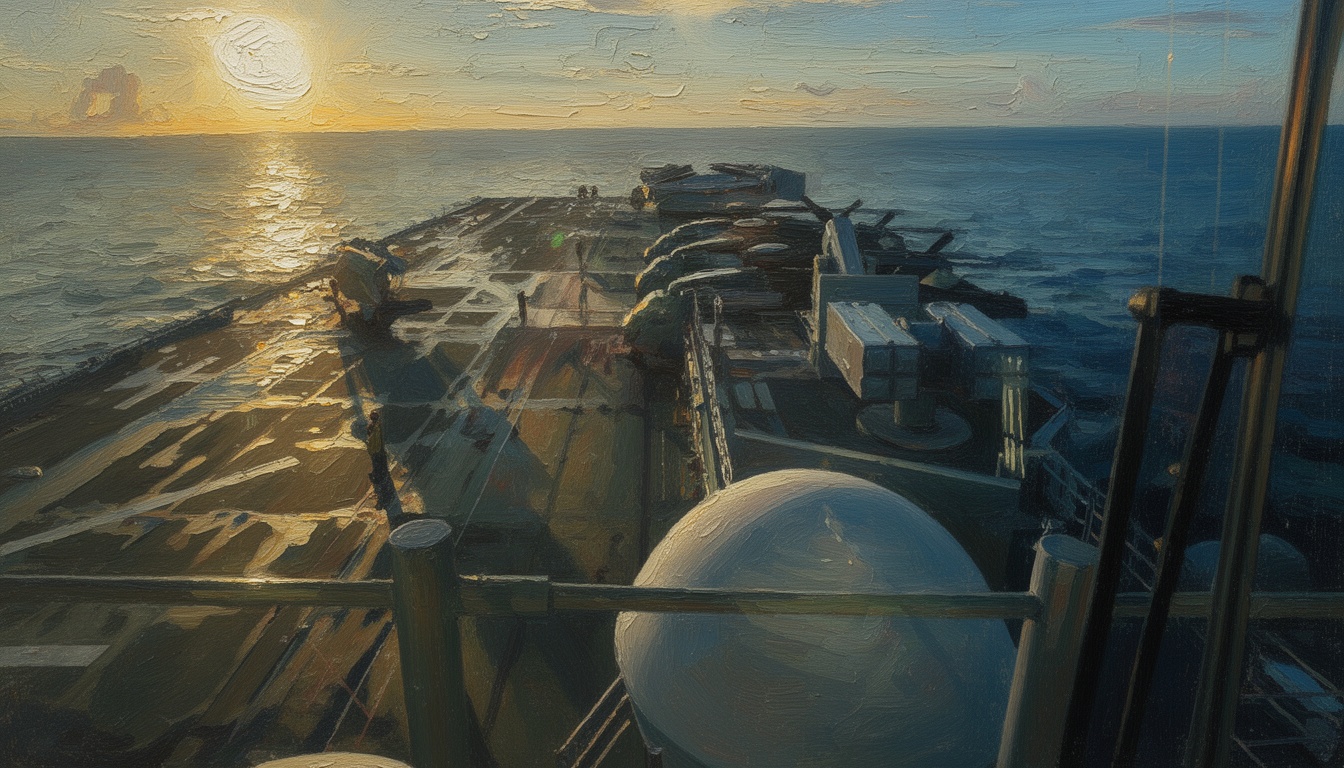
CENTCOM Denies IRGC Missile Claims Targeting USS Tripoli
U.S. Central Command rejected claims by Iran’s Islamic Revolutionary Guard Corps that missiles hit the amphibious assault ship USS Tripoli. The denial blocks a potentially escalatory narrative of an armed strike at sea and reinforces CENTCOM’s public line on maritime threats.
U.S. Central Command (CENTCOM) denied claims from Iran’s Islamic Revolutionary Guard Corps (IRGC) that the amphibious assault ship USS Tripoli was hit by missiles. CENTCOM said the allegation was not accurate, directly contradicting IRGC’s messaging. The statement keeps the incident in the realm of contested claims rather than confirmed combat.
The IRGC had publicly asserted that USS Tripoli suffered missile impact, prompting attention to the security of U.S. naval assets in the region. USS Tripoli operates as an amphibious assault platform, meaning its presence carries military and deterrence signaling. When one side claims missile damage and the other side denies it, the dispute becomes part of a broader information and escalation contest.
Strategically, CENTCOM’s denial matters because it shapes how partners and regional actors interpret the risk of naval confrontation. It also limits the credibility of claims that could justify further retaliation or heightened posture. The episode underscores how quickly narratives around “attacks at sea” can pressure command decisions and regional diplomacy.
Operationally, the key point in the public record is the mismatch between IRGC assertions and CENTCOM’s rebuttal. CENTCOM denied that missiles hit USS Tripoli, meaning it provided no confirmation of strike effects or damage to the ship. Without verified details on time, location, or weapon employment in the source reporting, the incident remains unconfirmed beyond competing statements.
The likely consequence is continued pressure from both sides through information operations, even in the absence of confirmed kinetic effects. IRGC-linked messaging can still sustain a perception of threat toward U.S. naval activity, while CENTCOM will continue to manage the public narrative and force protection. For risk analysts, the case highlights how maritime “claims of hits” can raise escalation hazards before facts are established.