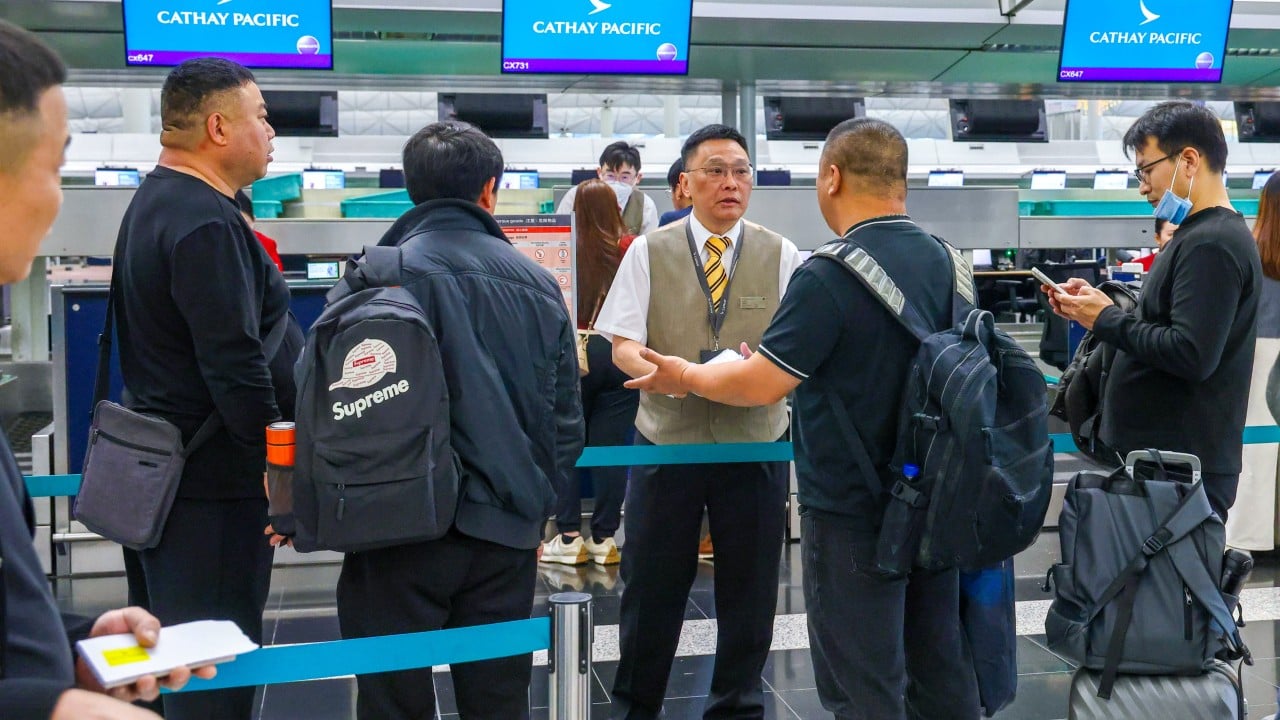
Cathay Pacific Grounds Middle East Flights Amid US-Israeli Assault on Iran
The suspension of Cathay Pacific's flights to Dubai and Riyadh underscores severe regional instability following US-Israeli military strikes on Iran. The grounding of 37 flights signals a major escalation in Middle East tensions, posing risks to international travel and security.
Cathay Pacific has halted all flights to Dubai and Riyadh until further notice due to intensified military operations by the US and Israel against Iran. This suspension affects 37 scheduled flights and marks a significant disruption in air travel between Hong Kong and the Middle East, highlighting the growing risks associated with the prevailing conflict.
The current situation arises from escalating tensions where the US and Israel have launched airstrikes on Iranian military targets. These strikes, reportedly involving precision-guided munitions, are part of a broader strategy to curb Iran's military capabilities and support for proxy forces in the region. In response, Iran's government has rallied nationalist sentiments, increasing hostilities and threatening retaliation which could escalate the conflict further.
This incident is of global significance as it destabilizes not only the Middle Eastern region but also the international transportation landscape. The halting of flights threatens economic ties and regional security, illustrating how military actions directly lead to civilian disruptions. Given that air travel is critical for international business and diplomacy, these developments may further isolate Iran economically while straining relationships among regional powers.
Cathay Pacific’s decision to suspend flights reflects the airline's immediate prioritization of passenger safety amid a volatile environment. The airline has offered customers affected by these cancellations greater flexibility for rebooking or refunds, which signals an acute awareness of the shifting landscape in air travel safety. The effective grounding of these routes could also impact regional tourism and trade, which are already fragile due to ongoing geopolitical tensions.
Operationally, the suspended services significantly affect the logistics and connectivity of major air routes that cater to thousands of passengers annually. The consequences of these military actions extend beyond immediate cancellations; with Cathay Pacific, a major player in international aviation, halting operations, the flow of people and goods will be critically interrupted. The potential implications on cargo routes serving the energy markets and supply chains could lead to increased costs and delivery delays.
As the crisis unfolds, further escalation is anticipated with Iran likely to retaliate against US and Israeli assets in the region. This could involve asymmetric attacks through proxy forces or direct military action, escalating longer-term conflict dynamics that could embroil neighboring states and international stakeholders. For commercial airlines, ongoing military actions in the Persian Gulf represent a growing threat to flight safety and operational stability.
Historically, disruptions such as these have led to prolonged periods of instability in the Middle East, often resulting in wider military engagements or increased political tensions among global powers. The Gulf War and the Iraq War serve as precedents for how localized conflicts can spiral into larger confrontations with far-reaching implications for civilian populations and global security.
Looking ahead, industry stakeholders should monitor Iran's responses closely, as well as any potential changes in military strategies from the US or Israel that might influence outlet routes and airspace safety. Key indicators will include military communication from Iran and any alternative arrangements that airlines must make in response to ongoing geopolitical shifts.