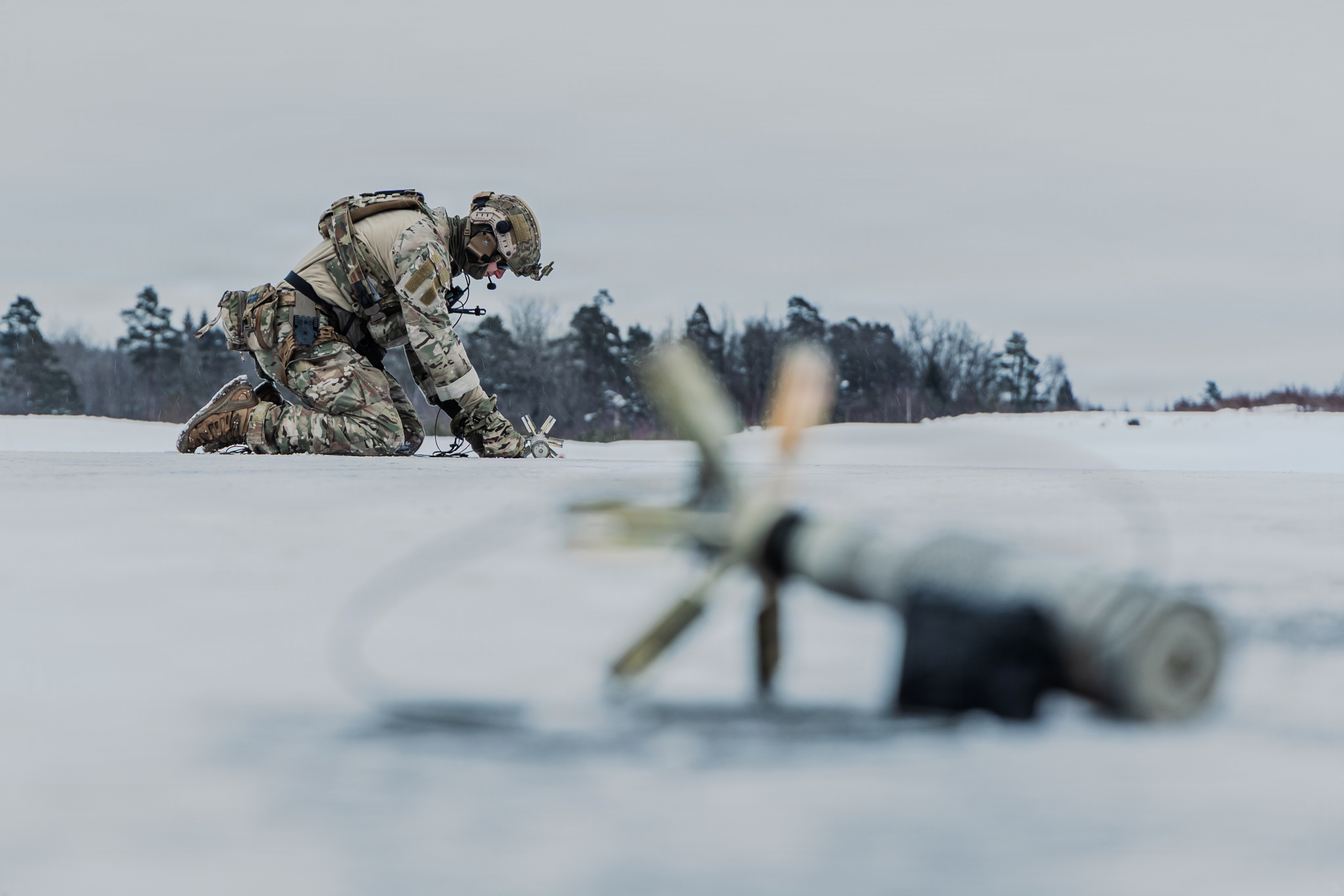
US Navy, NATO EOD Teams Conduct Arctic Sentry Operation in Norway
U.S., Swedish, and Norwegian explosive ordnance disposal teams executed the 'Arctic Specialist 26' exercise, enhancing interoperability in the High North. This annual event underscores NATO's commitment to Arctic security in response to evolving threats.
During early February, U.S., Swedish, and Norwegian explosive ordnance disposal (EOD) teams completed the 'Arctic Specialist 26' exercise as part of the larger 'Arctic Sentry' operation conducted in the High North. This annual training event focused on coordinating efforts in the detection, identification, and disposal of explosive hazards in extreme Arctic conditions, reflecting the increasing importance of Arctic operations for NATO member states. Specific details regarding EOD teams' performance metrics and potential incident responses remain classified, though the exercise was noted for its rigorous simulated scenarios.
The strategic context of the 'Arctic Specialist 26' exercise is crucial, as it emphasizes NATO’s preparedness and commitment to ensuring security in the Arctic region, which is experiencing heightened military interest due to emerging geopolitical threats, particularly from Russia. Melting ice and access to new maritime routes have transformed the Arctic into a focal point for military operations, further complicating the security environment. The collaborative nature of this exercise showcases NATO's ability to rapidly deploy combined forces in joint missions.
Key players involved include the U.S. Navy, Swedish Armed Forces, and the Norwegian Armed Forces, each utilizing the exercise to hone their capabilities and validate their EOD operational readiness. The collaboration aims to enhance mutual trust and procedural interoperability, which is critical for rapid response to real-world incidents such as ordinance discoveries or regional conflict escalations. Each nation is motivated by national security interests and the need to secure vital economic routes and resources in the Arctic's rapidly changing landscape.
The implications of exercises like 'Arctic Specialist 26' extend beyond the immediate operational capabilities. They serve as a deterrent against potential aggressors by openly demonstrating NATO's united front in defending shared interests within the Arctic. This joint operation sends a clear signal of commitment to collective defense among member states, potentially discouraging aggressive maneuvers by rival powers in this strategically important region.
Historically, such exercises have laid the groundwork for improved bilateral and multilateral cooperation among Arctic nations and have addressed the growing need for coordinated responses to security challenges. Similar engagements have occurred over the past few years, setting a precedent for sustained military presence and interaction in the High North as global competition increases.
Analyst assessment suggests that continued developments in Arctic training exercises like 'Arctic Sentry' will likely lead to enhanced tactical capabilities for NATO forces. Forward-looking, one can expect more frequent joint exercises as Arctic security becomes ever more paramount in the face of geopolitical competition and environmental changes impacting the region's stability.