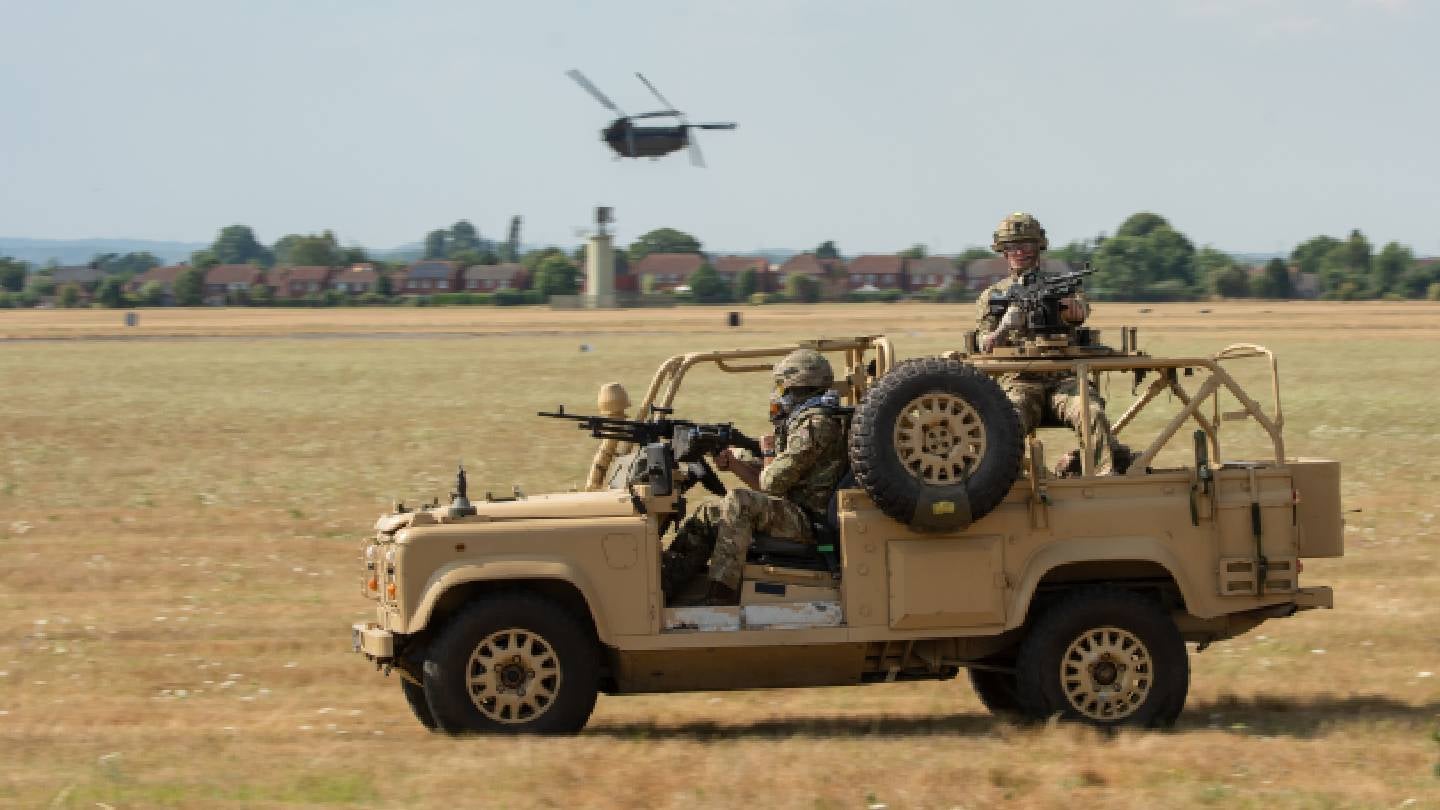
British Army Retires Land Rovers After 70 Years, Seeks New LMVs
The British Army is phasing out its Land Rover fleet after 70 years, signaling a major shift in tactical mobility. This transition aims to introduce a new generation of light mobility vehicles to adapt to modern combat environments. The move reflects evolving operational requirements against emerging global threats.
The British Army has officially commenced the retirement of its iconic Land Rover vehicles, ending seven decades of continuous operational service. These vehicles have been a backbone of British tactical mobility since the post-World War II era, deployed in countless military campaigns worldwide.
The Land Rover's long-standing legacy dates back to the late 1940s, serving in diverse and challenging theaters from desert to jungle environments. However, evolving threat landscapes and technological advancements have rendered the original design increasingly obsolete for modern expeditionary warfare and peacekeeping.
Strategically, replacing the Land Rover fleet represents the British Army’s shift to highly digitalized and modular light mobility platforms capable of hybrid propulsion, enhanced protection, and networked command and control. This transformation is critical to maintain operational edge against peer and near-peer adversaries.
The new generation Land Mobility Vehicles (LMVs) are expected to integrate cutting-edge automation, battle management systems, and multifuel engine configurations. While exact specifications remain classified, industry sources hint at a focus on agile 4x4 platforms with blast protection and rapid reconfigurability for reconnaissance, personnel transport, and light fire support.
This fleet transition will likely accelerate British Army modernization efforts and reinforce interoperability with NATO partners also upgrading mobility assets. Yet, it poses challenges in procurement, training, and logistics. Careful execution is necessary to avoid capability gaps during the handover period and ensure the British Army remains a leading expeditionary force.