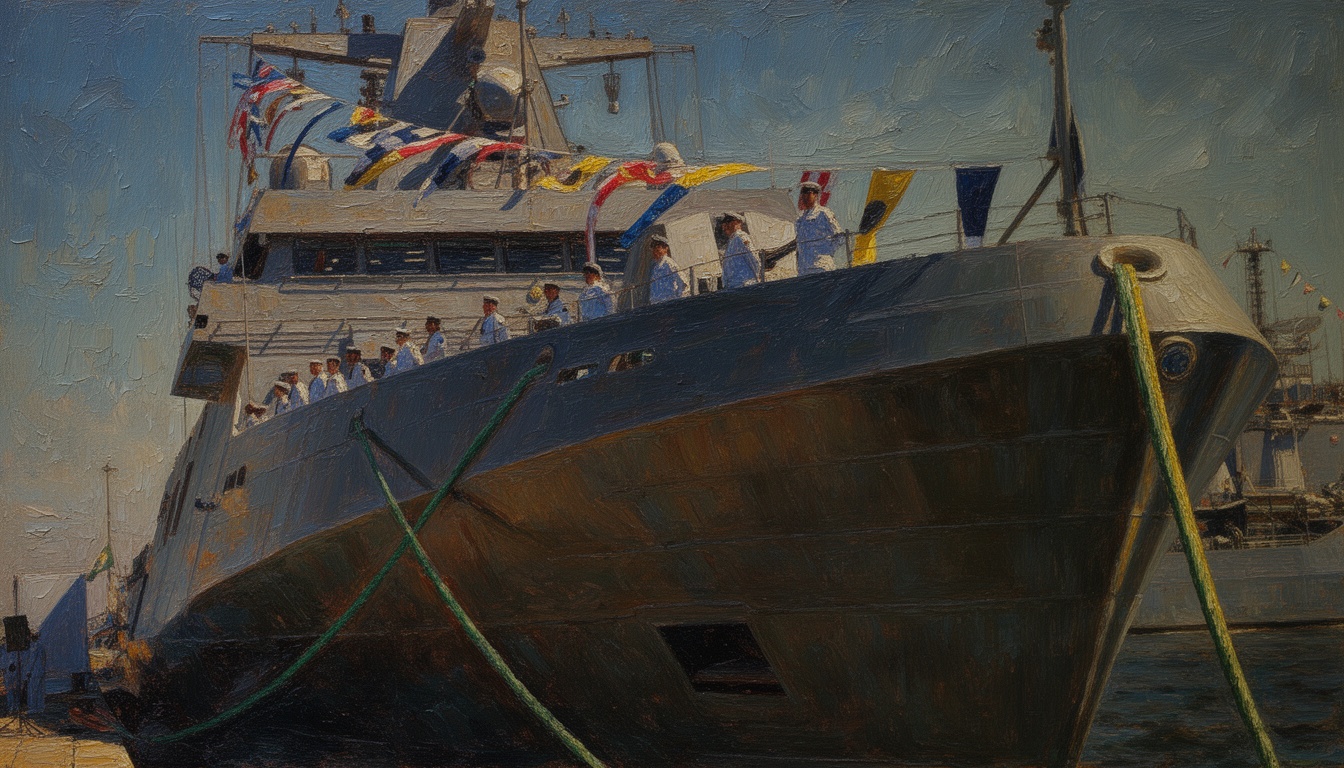
Brazilian Navy Commissions First Tamandaré‑class Frigate
The Brazilian Navy has officially commissioned the Tamandaré (F200), the lead vessel of the PFCT program, marking its transition into active service. Built at the TKMS yard in Itajaí in under four years, the ship inaugurates a new era of Brazil’s surface combatant capabilities. The deployment signals a significant upgrade in Brazil’s maritime deterrence and regional naval posture.
The Tamandaré frigate (F200) has been formally commissioned into Brazil’s Fleet, bringing the lead ship of the Tamandaré-class Frigates Program into active duty. The ceremony marked the start of its operational service, underscoring Brazil’s commitment to expanding its blue-water and littoral persistence. Construction occurred at the TKMS shipyard in Itajaí (SC) and was completed in a period of less than four years, illustrating a relatively rapid delivery for a modern frigate design. This milestone sets a clear precedent for the PFCT program as the centerpiece of Brazil’s naval modernization drive.
The Tamandaré program, designated as PFCT, represents Brazil’s most ambitious effort to upgrade its surface fleet with contemporary frigate capabilities. As the first vessel in the class, F200 embodies the program’s objectives to enhance surveillance, multi-mission combat potential, and interoperability with allied forces. The ceremony’s symbolism extends beyond a single hull launch; it signals Brazil’s intent to assert greater sea control and protection of strategic approaches along its Atlantic coast. The program’s advancement also has political and industrial implications, tying national shipbuilding capabilities to international defense partnerships.
Strategically, the introduction of the Tamandaré-class frigate strengthens Brazil’s maritime posture in a region characterized by complex security dynamics, including piracy risks, maritime trafficking, and regional power competition. The lead ship’s presence enhances Brazil’s ability to conduct surface warfare, fleet defense, and joint operations with partners in defense coalitions. The deployment is likely to influence naval diplomacy, signaling Brazil’s willingness to project power farther from its shores and to participate more actively in regional securitization efforts. It also affects the balance of naval capabilities among South American and Southern Atlantic states.
From a technical and operational perspective, F200 represents the culmination of a multi-year build program that leveraged TKMS design expertise and Brazilian industrial participation. Details on weapon systems, sensor suites, propulsion, and redundancy are closely watched by regional observers, given the implications for anti-submarine warfare, air defense, and surface engagement. The project’s procurement and integration milestones carry implications for domestic defense-industrial capacity, training regimes, and maintenance ecosystems required to sustain a modern frigate in active service. The broader fleet modernization plan will hinge on timely delivery of subsequent hulls and the harmonization of logistics across the PFCT program.
Looking ahead, Brazil is likely to pursue operational integration with allied navies, exercise participation, and potential upgrades to ensure the Tamandaré-class remains at the forefront of regional naval power. The first commissioning sets expectations for future ships to follow within the class, reinforcing Brazil’s maritime deterrence and blue-water ambitions. Long-term implications include enhanced sea-control capabilities, more robust protection for critical maritime routes, and a bolstered national defense-industrial sector capable of sustaining an expanded surface fleet.