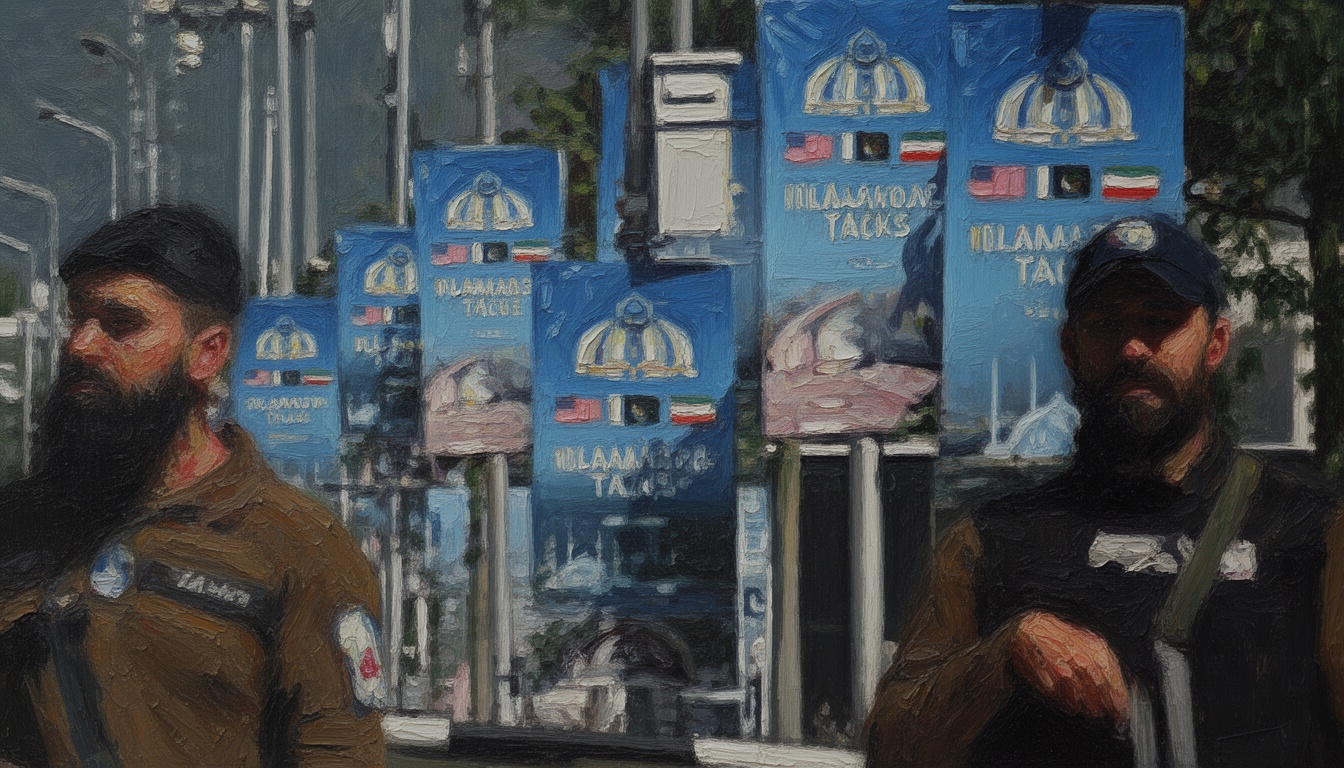
Blockade standoff between US and Iran as Pakistan pursues talks
The Strait of Hormuz remains volatile as the United States and Iran lock horns over maritime limits and sanctions enforcement. Islamabad signals a push for regional talks that could ease tension, but the strategic calculus remains sharp. The broader risk is a miscalculation that could escalate into broader confrontations impacting global energy routes.
The blockade standoff between the United States and Iran intensifies in the Hormuz region as navies maneuver to enforce maritime restrictions and deter what each side casts as destabilizing activities. The situation remains highly combustible, with both sides signaling redlines over cross-border shipping, sanctions enforcement, and coastal defense postures. Pakistan has signaled a readiness to broker talks, presenting itself as a potential diplomatic bridge in a crisis that could pull other regional actors into a wider confrontation. International observers warn that even small miscommunications or incidents could trigger disproportionate retaliation. The current dynamic underlines how maritime chokepoints can amplify geopolitical fault lines far beyond the Persian Gulf.
Background context places the standoff in a long arc of U.S.-Iran tensions that surged after unilateral sanctions and punitive actions in the broader Middle East. Tehran insists on strategic autonomy in the Strait of Hormuz, arguing that blockades impede legitimate regional security interests and threaten economic stability for Iran's energy sector. Washington, for its part, argues that robust control over sea lanes is essential to preventing illicit smuggling and deterring coercive behavior. Pakistan’s diplomatic outreach appears as a potential valve to de-escalate, though its influence is bounded by competing great-power interests and regional rivalries. Analysts stress that any breakthrough will hinge on credible guarantees, verification mechanisms, and a willingness to constrain escalation from both sides.
Strategic significance centers on the Strait of Hormuz’s role as a critical artery for global energy flows. A sustained block or a single incident could trigger price volatility, reserve actions, and broader sanctions realignments. For the United States, preserving freedom of navigation intersects with alliance commitments in the region and the broader effort to prevent Iran from advancing its strategic program. For Iran, preserving an ability to contest LNG and crude routes is tied to deterrence messaging and leverage against economic pressure. The potential for Pakistan to act as a mediator adds a variable to the regional balance, potentially expanding the bargaining space if it can secure verifiable de-escalation of both sides’ postures.
Technical and operational details highlight navies patrolling with combined air and surface assets, exercises around chokepoints, and the use of unmanned systems to monitor traffic. Reports indicate continued deployment of destroyers and patrol craft, with allied partners contributing surveillance capabilities and intelligence-sharing frameworks. Budget and capability signals remain opaque, but public statements emphasize deterrence rather than overt engagement. The risk calculus now centers on risk of misinterpretation, accidental escalation, and the thresholds at which either side would consider limited or broad responses.
Likely consequences include a period of heightened military vigilance, sustained diplomatic pressure, and intermittent incidents that test crisis management mechanisms. Islamabad’s effort to convene talks could yield a temporary cooling of rhetoric if verifiable steps are taken toward de-escalation and maritime norms. However, absent credible security guarantees and independent verification, the crisis could drift toward a broader confrontation affecting regional stability and global markets. The forward assessment warns that even modest provocations could escalate rapidly if signaling remains ambiguous or if external actors attempt to tilt the balance through sanctions or coercive diplomacy.