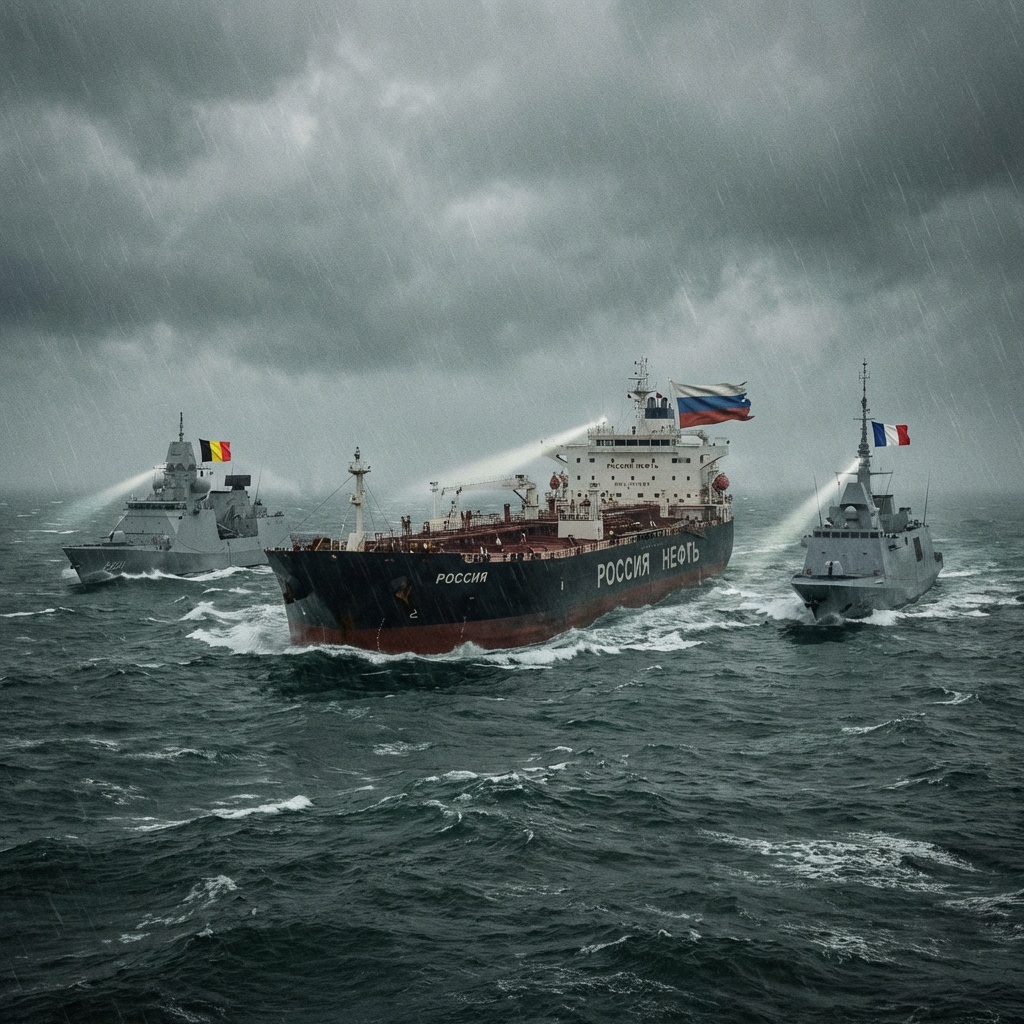
Belgium, France Seize Russian Tanker in North Sea Crisis
The seizure of a Russian tanker by Belgium and France sharply escalates tensions in the North Sea, highlighting vulnerabilities in maritime security and signaling a potential shift in European-Russian relations. This event underscores the increasing resolve of European nations against perceived Russian aggression.
Belgian and French authorities have successfully seized a Russian tanker, linked to an alleged 'shadow fleet' supporting Moscow's maritime operations, in the North Sea. This operation draws attention as the tanker was reportedly engaged in illicit activities, raising significant concerns about maritime security and the extent of Russia's naval support amidst ongoing geopolitical tensions.
The North Sea has become a focal point of friction between Western nations and Russia, particularly following the escalation of military operations in Ukraine. The tactics employed by Russia to circumvent international sanctions through this 'shadow fleet' demonstrate an evolution in its strategies to maintain logistical support for its forces abroad. Belgium and France's joint seizure not only disrupts this network but also mirrors a broader trend of European unity in countering Russian influence.
This development is significant as it signals a decisive move by European nations to confront illegal maritime activities linked to Russia, signaling that previous leniencies are being abandoned. The operational readiness of European maritime forces may be tested, potentially exposing gaps in response capabilities and coordination. Moreover, the seizure could inflame existing tensions, prompting a counter-reaction from Russia in both maritime and broader geopolitical contexts.
Belgium's maritime security capabilities, along with France's extensive naval power, illustrate a strategic shift towards proactive measures against threats in European waters. French authorities may be particularly motivated by a need to reinforce national security and assert the nation’s role in European defense. This incident showcases not only a united European front but also the desperation of Russia to maintain operational efficiency using covert tactics.
Operationally, the seized tanker has been identified as a part of a fleet allegedly employing dual-use maritime assets to facilitate trade during sanctions. Reports suggest that such vessels are equipped to evade detection, employing various tactics such as changing flags and altering identifiers, complicating enforcement efforts. The French and Belgian navies likely coordinated this operation utilizing advanced surveillance and naval interception technologies, highlighting improvements in joint maritime operational capacity.
The likely consequences of this seizure include potential retaliation from Russia, including disruptions to energy supplies through intimidation strategies or aggressive maneuvers in the North Sea. Escalated confrontations could emerge as the fallout from this operation ripples through Russian-European relations. Moreover, the incident raises the stakes for future maritime encounters, potentially attracting greater military presence in the region.
Historical parallels can be drawn from previous maritime seizures, such as the British interception of Iranian vessels in the Strait of Gibraltar. In those instances, immediate retaliation and maritime escalation followed, suggesting that Russia could similarly respond to this incident with aggressive posturing or targeted actions against Belgian or French interests.
Going forward, observers should track Russian naval movements and the response strategies of NATO's maritime security operations in the North Sea. Key intelligence indicators may include increased naval activity by the Russian Northern Fleet, deployment of additional air defense systems in coastal regions, and heightened surveillance activity of Western naval platforms in contested waters. The potential for confrontation remains high as both sides seek to assert control over vital maritime routes in a rapidly evolving security landscape.