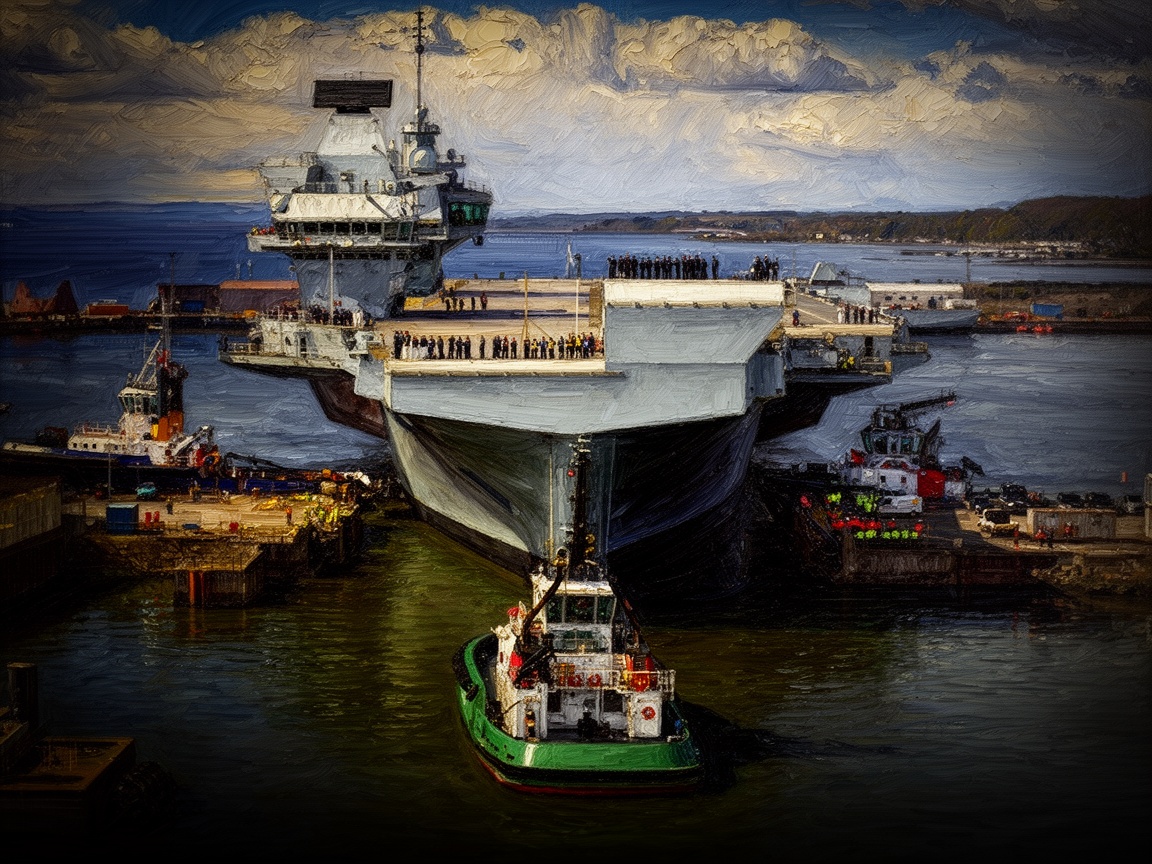
Babcock completes major maintenance programme supporting UK carrier capability
UK carrier readiness restored after Babcock finishes planned maintenance on HMS Queen Elizabeth at Rosyth. The overhaul reinforces propulsion, stabilisation and critical systems for sustained carrier operations. Strategic implications: extended operational window for UK carrier presence and NATO deterrence.
Babcock International Group has returned HMS Queen Elizabeth to full operational readiness after completing a planned maintenance programme at Rosyth. The work spanned thousands of engineering hours to inspect, maintain and refresh the ship’s critical systems, with emphasis on propulsion, stabilisation and renewal of key components. The carrier’s return to service sharpens UK naval reach and signals continued investment in carrier-based power projection.
The maintenance cycle followed a demanding schedule designed to sustain complex flight operations and maritime manoeuvrability. It encompassed deep inspections, component renewals and targeted upgrades intended to extend the vessel’s life and readiness margin. The programme also addressed wear and fatigue risks across essential machinery and deck-operations infrastructure to reduce in-activation risk.
Context matters: HMS Queen Elizabeth remains a central pillar of UK and allied power projection in the Atlantic and Indo-Pacific theatres. While not a deployment itself, the readiness of the flagship reinforces NATO deterrence postures and ensures allied interoperability during high-end exercises. The Rosyth programme demonstrates how industrial partnerships sustain strategic mobility without committing to new hulls or ships.
Technical work focused on propulsion systems, including main propulsion plant health, shaft line integrity, and auxiliary power gravitating towards higher reliability. Stabilisation and control surfaces also received attention to ensure precise sea-keeping under varied sea states. Additional repairs encompassed sizeable renewal tasks on combat systems interfaces, aviation support infrastructure, and essential hull coatings to extend service intervals.
Forward assessment suggests continued emphasis on maintenance cadence for carrier fleets and a broader push to preserve industrial capacity for future carrier cycles. The near-term outlook includes tighter schedule alignment with operational plans and potential further upgrades to enhance sortie generation rate and sortie availability. In summary, the Rosyth maintenance closes a gap in readiness and preserves UK carrier capabilities as NATO’s maritime deterrent remains under strain from global competition.