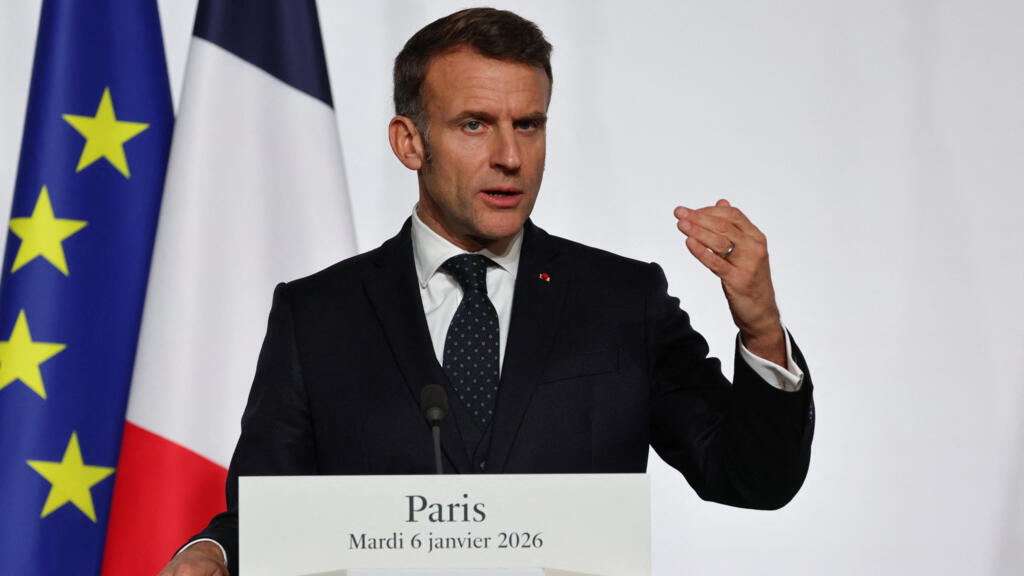
Macron Reveals Nuclear Strategy as Russia Threatens Europe
Macron's announcement underscores Europe's precarious security amid rising Russian aggression and wavering US support. This marks a pivotal shift in EU's nuclear posture amidst growing geopolitical tensions.
French President Emmanuel Macron has announced a new nuclear strategy for France, officially marking a turning point for European security as Russian forces continue aggressive actions against Ukraine and other neighboring countries. This strategy aims to clarify France's nuclear deterrent capabilities and its role as the custodian of the EU's only atomic arsenal, amid rising concerns of instability linked to Russian military posture and the perceived retrenchment of U.S. security guarantees in Europe.
Historically, France has maintained its independent nuclear deterrent since the Cold War, largely viewed as a counterbalance to both Soviet and, more recently, Russian military posturing. The situation has deteriorated with Russia's invasions and military assertiveness, alongside the backdrop of shifting U.S. foreign policy approaches, raising doubts about Washington's long-term military commitments to NATO members. The deterioration of transatlantic relationships and emerging threats from the likes of Iran only complicate the strategic landscape for Europe.
This development is significant as it highlights the increasing urgency for European nations to bolster their own defensive capabilities independent of U.S. support. The strategic implications could reshape the balance of power within the EU and the region, exposing vulnerabilities as European nations reconsider their defense postures. Macron's nuclear strategy could be seen as a preemptive measure against the unpredictability of both Moscow and a potentially disengaged Washington.
Key actors in this scenario include France, as the only EU state with nuclear weapons, and Russia, which has demonstrated a willingness to use hybrid warfare and military threats in pursuit of its geopolitical aims. Macron's motivations are not just to reinforce deterrence but also to bolster European unity in defense, as factions within the EU debate their reliance on U.S. military might.
The specifics of Macron's strategy remain to be detailed, but France's military capabilities include a nuclear triad consisting of air-launched cruise missiles, submarine-launched ballistic missiles, and air-delivered bombs, with a current estimated stockpile of around 290 nuclear warheads. The budget for maintaining and modernizing this nuclear arsenal is expected to be substantial, with investments aimed at enhancing missile systems and rapid response capabilities.
The likely consequences of Macron's announcement could lead to an escalation in nuclear rhetoric from Russia, prompting further military exercises and demonstrations of strength. Additionally, this could ignite a renewed arms race or force neighboring states to reconsider their own security arrangements, fostering a climate of uncertainty. The domestic ramifications for EU nations will likely drive dialogue around military spending and strategic partnerships.
Historically, similar moves have been met with mixed responses. Posturing by nuclear powers often breeds mistrust and competition; for instance, the Cold War greatly exemplified this dynamic with an eventual arms race in Europe. France's posture may parallel earlier preemptive strategies seen during earlier 20th-century conflicts where nations sought to ensure their deterrence capabilities.
In the coming weeks, key indicators to monitor will include shifts in military exercises by NATO and the EU, reactions from Moscow to France's announcements, and any new defense spending proposals from neighboring states. Intelligence analysts should keep a close watch on potential military deployments or alterations in Russian tactics that could signal a direct response to Europe's renewed military assertiveness.