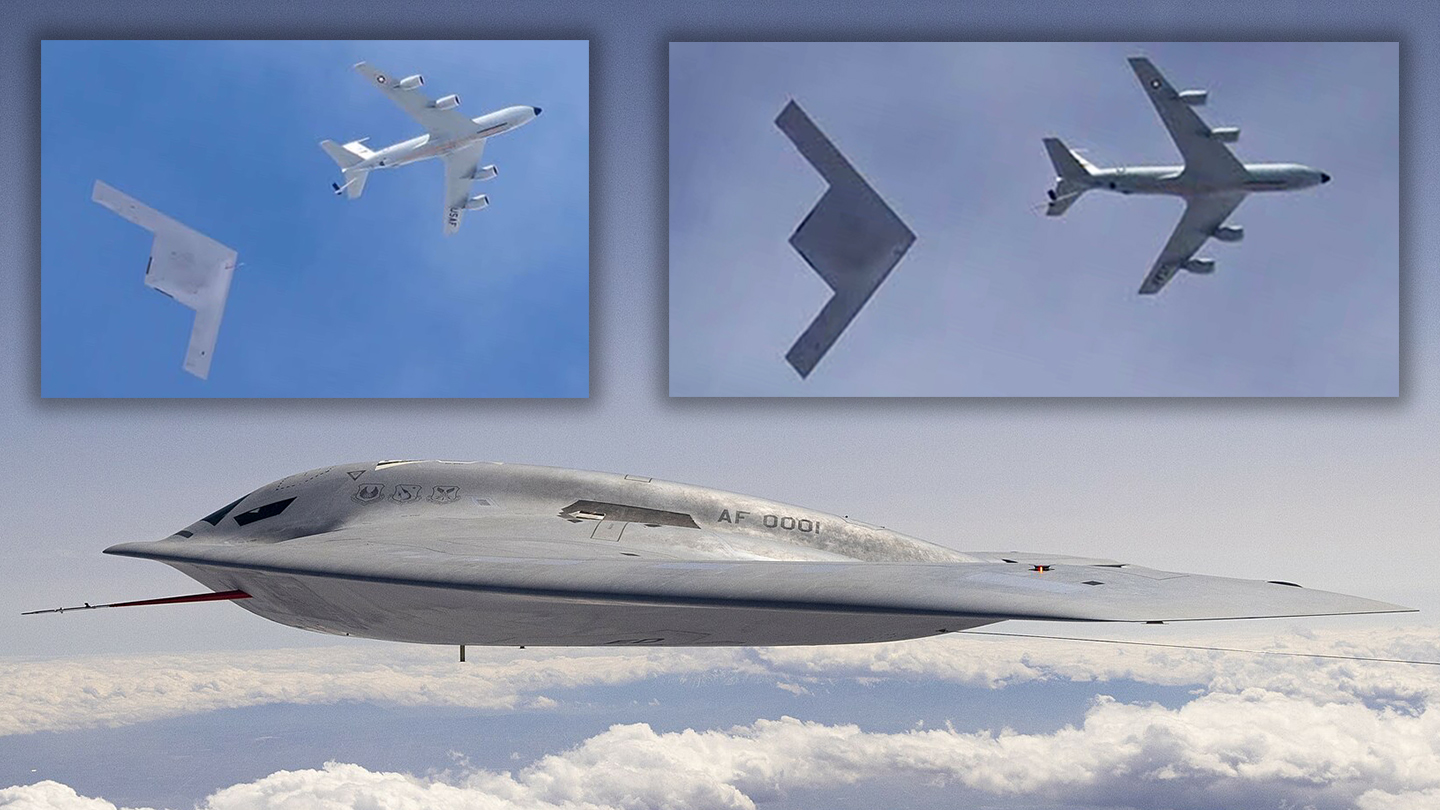
B-21 Raider Conducts First Aerial Refueling Amid Rapid Production Push
The B-21 Raider's successful aerial refueling marks a serious escalation in the USAF's operational capabilities as it races to deploy by 2027. This development signifies a potential shift in global airpower dynamics and could provoke responses from other military powers.
The B-21 Raider stealth bomber completed its first aerial refueling, a critical milestone that underscores the aircraft's readiness for future combat operations. Images capturing this event emerged as the U.S. Air Force (USAF) moves aggressively to accelerate production rates in anticipation of the B-21's operational deployment by 2027. This recent development raises stakes in the global military aviation arena, amplifying the strategic implications of the B-21's potential entry into service.
The B-21 Raider, developed by Northrop Grumman, represents a significant technological advancement over its predecessor, the B-2 Spirit. Since the program's announcement in 2015, it has been shadowed by extensive scrutiny regarding its cost, capabilities, and potential impact on international military balances. The pivot towards faster testing and production may be a response to escalating tensions in hotspots around the globe, pushing the USAF to ensure it maintains air dominance against adversaries like China and Russia.
The significance of the B-21 Raider's first aerial refueling extends beyond mere technical achievement; it signals the USAF's intent to enhance its strategic deterrence capabilities. With its expected range of over 6,000 nautical miles and a payload capacity that can accommodate advanced munitions, including nuclear warheads, the B-21 could redefine long-range strike operations, thereby complicating the military calculations of global competitors.
Key actors behind the B-21 program, including Pentagon leadership and defense contractors, are motivated by the necessity of maintaining U.S. air superiority in an increasingly contested environment. As military budgets swell—with the B-21 program expected to cost over $600 billion—the pressure mounts on the USAF to deliver capabilities that can respond effectively to near-peer adversaries readying their own advanced aerial platforms.
The B-21 Raider's design incorporates cutting-edge stealth technology and advanced sensors aimed at evading modern air defense systems. In addition to its long-range strike capability, the aircraft is expected to serve in various roles, including intelligence, surveillance, and reconnaissance missions. The urgent ramping up of production highlights the urgency felt within U.S. command, likely reflecting a broader strategic assessment of potential threats.
Likely consequences of this development include intensified investments in counter-stealth technologies by adversarial nations, as they seek to bridge the gap in capabilities. Escalation vectors may include increased military exercises near potential flashpoints and a renewed focus on advancing drone warfare strategies to match the capabilities of the B-21 and similar platforms.
Historically, the introduction of advanced military technologies has often led to an arms race, with nations scrambling to develop countermeasures or their own next-generation systems. The B-21's unveiling is reminiscent of previous developments, such as the deployment of stealth fighters in the 1980s, which precipitated significant shifts in global power dynamics and defense strategies.
Moving forward, analysts should closely monitor the operational tempo of the B-21 program, particularly any adjustments to its production timeline and testing phases. Signs of procurement contracts with allies for similar capabilities or investments in advanced air defense systems by rival states will also be critical indicators of the evolving military landscape, underscoring the B-21 Raider's potential impact on international security dynamics.