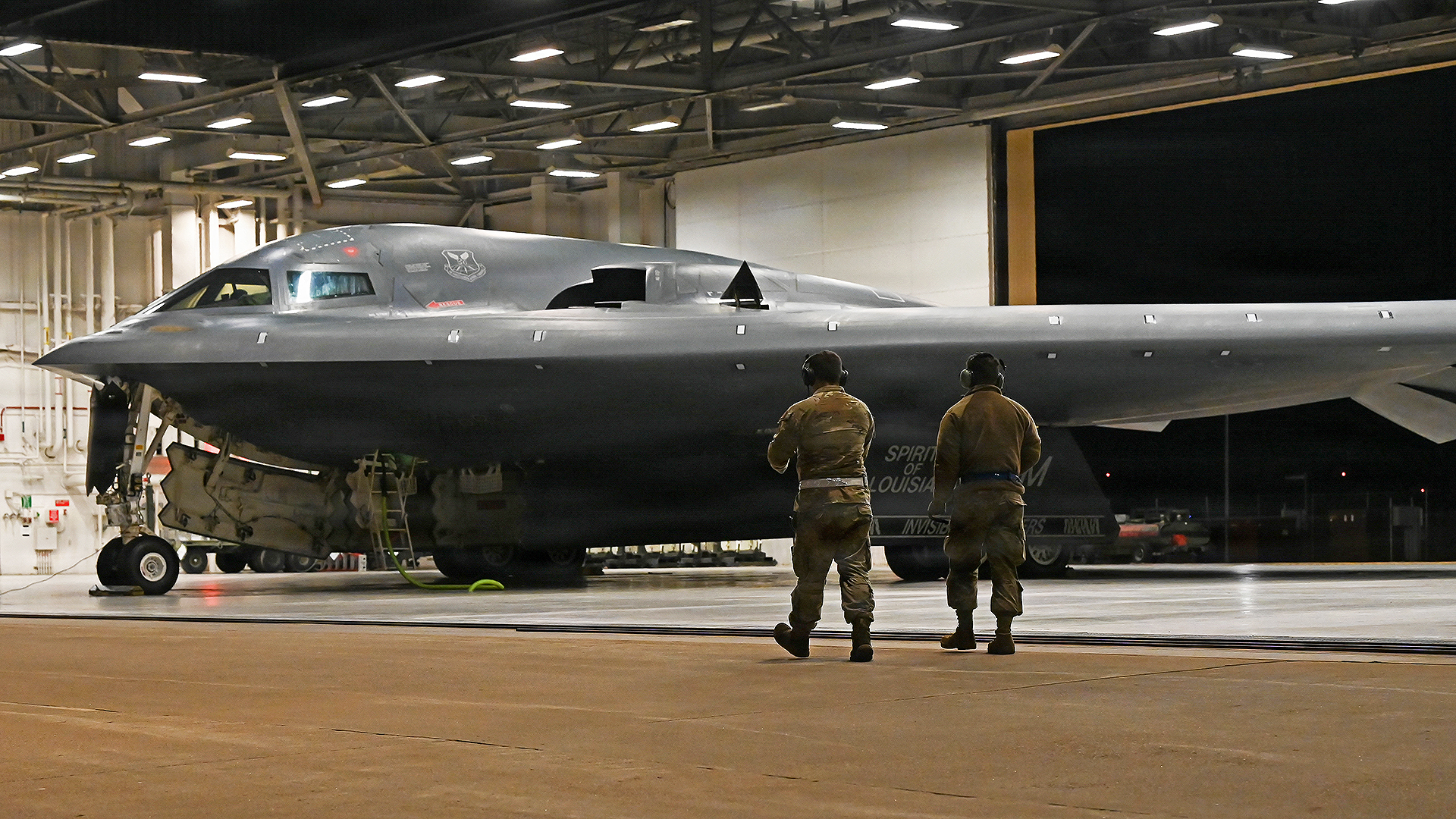
B-2 Bombers Deploy to Iran Display Unexplained Wing Features
Two B-2 stealth bombers en route to Iran exhibit unusual large square panels along their leading edges, signaling potential new modifications impacting stealth or sensor capabilities. This unprecedented alteration raises questions about evolving strategic roles amid rising tensions in the Middle East. The deployment may hint at forward basing or advanced electronic warfare readiness.
Two Northrop Grumman B-2 Spirit stealth bombers recently photographed during a sortie heading toward Iran show unusual large square features arrayed along their leading wing edges. This is an unexpected modification to the B-2's hallmark smooth, curved stealth shape, sparking theories about experimental sensor pods or new electronic warfare equipment.
The B-2 Spirit, a critical U.S. strategic bomber introduced in the late 1980s, is known for its low observable design to evade radar. These jets rarely display surface modifications as any external change can degrade stealth. The appearance of prominent square shapes is unprecedented and suggests a significant shift in mission focus or technology testing.
Strategically, this development could indicate preparations for a more aggressive posture over contested regions such as Iran. Enhanced electronic warfare capabilities would improve survivability and mission flexibility against advanced air defenses. It may also reflect U.S. efforts to project power and maintain aerial dominance amid regional escalations.
The technical details remain speculative, but the squares could house advanced sensors, radar-absorbent materials, or jamming equipment integrated into the wing leading edges. The deployment involves only two aircraft, indicating a tactical trial rather than a full fleet upgrade. However, the move signals a willingness to experiment with legacy platforms in high-threat environments.
Looking forward, these modifications may represent a new era of stealth bomber adaptability, combining traditional bombing with electronic warfare and surveillance roles. This shift compels regional actors to reconsider Iran’s air defense vulnerability and U.S. strategic intentions, potentially escalating tensions in an already volatile zone.