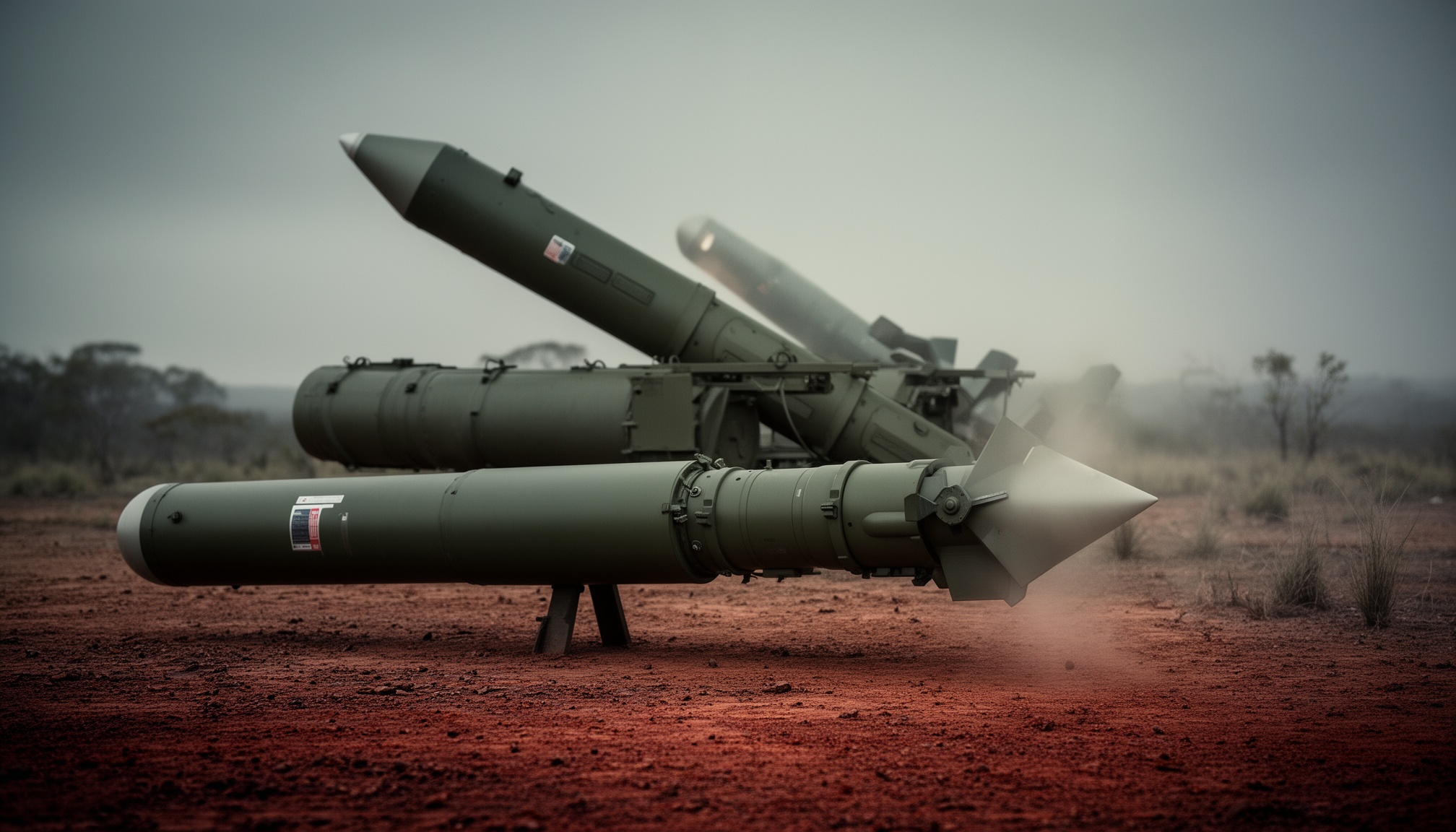
Australia test-fires first locally made GMLRS missiles
Australia demonstrates national missile manufacturing capability with a live-fire of its first domestically produced Guided Multiple Launch Rocket System missiles. The test confirms progress in the Australian defense industry and augments regional deterrence. Officials frame the event as a milestone in self-reliance for long-range fires.
Australia detonated a live-fire demonstration of its first domestically produced Guided Multiple Launch Rocket System missiles, marking a milestone in the country’s domestic munitions production. The test showcased a complete chain from design to launch, underscoring Canberra’s push to expand self-reliance in long-range strike capabilities. Observers note the exercise as a signal of increasing industrial maturity in the Australian defense sector.
The event occurs amid broader regional tensions and ongoing modernization within allied forces that stress supply chain resilience and rapid fielding of advanced weapons. Analysts interpret the test as a practical step toward reducing dependence on foreign suppliers for critical munitions. It also aligns with Australia’s broader strategy to diversify its defense industrial base and sustain deterrence credibility.
Strategically, the live-fire demonstration elevates Australia’s status as a capable producer of precision-guided munitions in the Indo-Pacific. It could influence regional arms dynamics, prompting neighboring states to reassess their own procurement and domestic production programs. The demonstration also serves to reassure domestic stakeholders about the reliability and performance of locally manufactured components in high-end fires.
Technically, the missiles tested are part of Australia’s guided rocket family designed for precision and extended range. While the article does not disclose specific payloads or range figures, observers expect alignment with standard GMLRS profiles: modular launch, unitary or multi-warhead options, and compatibility with existing launch platforms. Budgetary and procurement data remain unrevealed, but the milestone implies sustained investment in guided-munition capabilities and related factories. The forward outlook points to accelerated production cycles, supplier diversification, and potential export conversations if quality and cost targets are met.
The likely consequences include strengthened deterrence through domestic capability, reduced exposure to foreign supply shocks, and incentives for other regional players to pursue similar defense-industrial investments. If the program scales, Australia may broaden its participation in joint exercises that stress long-range, precision-strike readiness. Observers will watch for official disclosures on production rates, testing success criteria, and integration with trained crews for future fires.