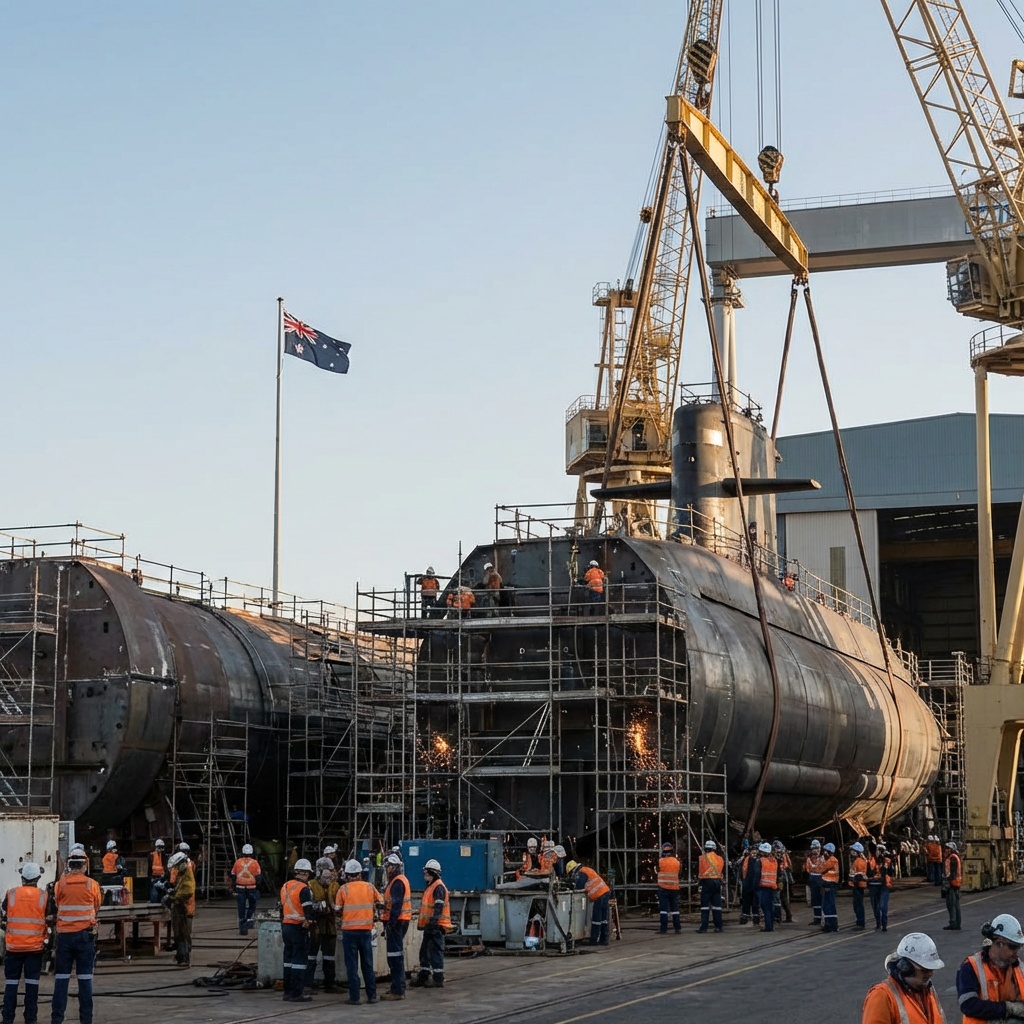
Australia Invests $2.7 Billion in Submarine Construction Yard at Osborne
The Australian government's commitment of A$3.9 billion initiates a significant enhancement of its naval capabilities. This investment aims to bolster regional maritime security and strengthen defense production infrastructure in response to emerging threats in the Indo-Pacific region.
The Australian government has announced an initial investment of A$3.9 billion (approximately $2.7 billion) to establish a new submarine construction yard in Osborne, South Australia. This development is part of Australia's broader strategy to enhance its naval military capabilities, particularly in light of increasing security challenges in the Indo-Pacific region. The new facility intends to facilitate the construction and maintenance of advanced submarines, aligned with Australia's Future Submarine Program which aims to acquire a fleet of conventionally-powered submarines with advanced capabilities by the 2030s.
The strategic context underlying this investment is grounded in the growing maritime tensions within the Indo-Pacific, particularly concerning China's expanding naval footprint and assertive territorial claims. Australia's enhanced submarine production capacity is anticipated to bolster its deterrence capabilities and maritime security posture, ensuring that it can efficiently respond to potential threats in a rapidly changing strategic environment. The increased investment in domestic defense production also aligns with the broader defense commitment emphasized in Australia's 2020 Defence Strategic Update.
Key players in this initiative include the Australian government, with its defense and security agencies, as well as industry partners involved in defense manufacturing. The motivation for this investment stems not only from the need for upgraded naval assets but also from a desire to sustain local jobs and stimulate economic growth within the defense sector. This investment also reinforces Australia’s strategic partnerships, particularly with allies such as the United States and the United Kingdom, as they look to collaborate on technology transfers and joint military capabilities.
The implications of this investment extend beyond Australia's borders, as it could potentially alter the balance of naval power in the Indo-Pacific. By developing an advanced submarine fleet, Australia signals its commitment to play a more prominent role in collective maritime security efforts alongside its allies. Additionally, this move may provoke reactions from regional powers, particularly China, who might perceive it as an escalating arms build-up that could lead to increased military competition in the region.
Historically, Australia's defense procurement decisions have been influenced by regional dynamics and global security considerations. The establishment of the Osborne yard is reminiscent of previous endeavors aimed at increasing self-reliance in defense production, such as past investments in shipbuilding and aerospace capabilities. These projects often faced scrutiny regarding their effectiveness and efficiency, underscoring the importance of transparent management and operational readiness moving forward.
Analyst assessment suggests that while the investment in the Osborne submarine yard represents a significant step towards enhancing Australia's naval capabilities, its success will largely depend on budget management, project timelines, and integration with international defense partnerships. Given the current geopolitical climate, continued investments in defense infrastructure may become imperative for maintaining regional stability and deterrence effectiveness in the years ahead.