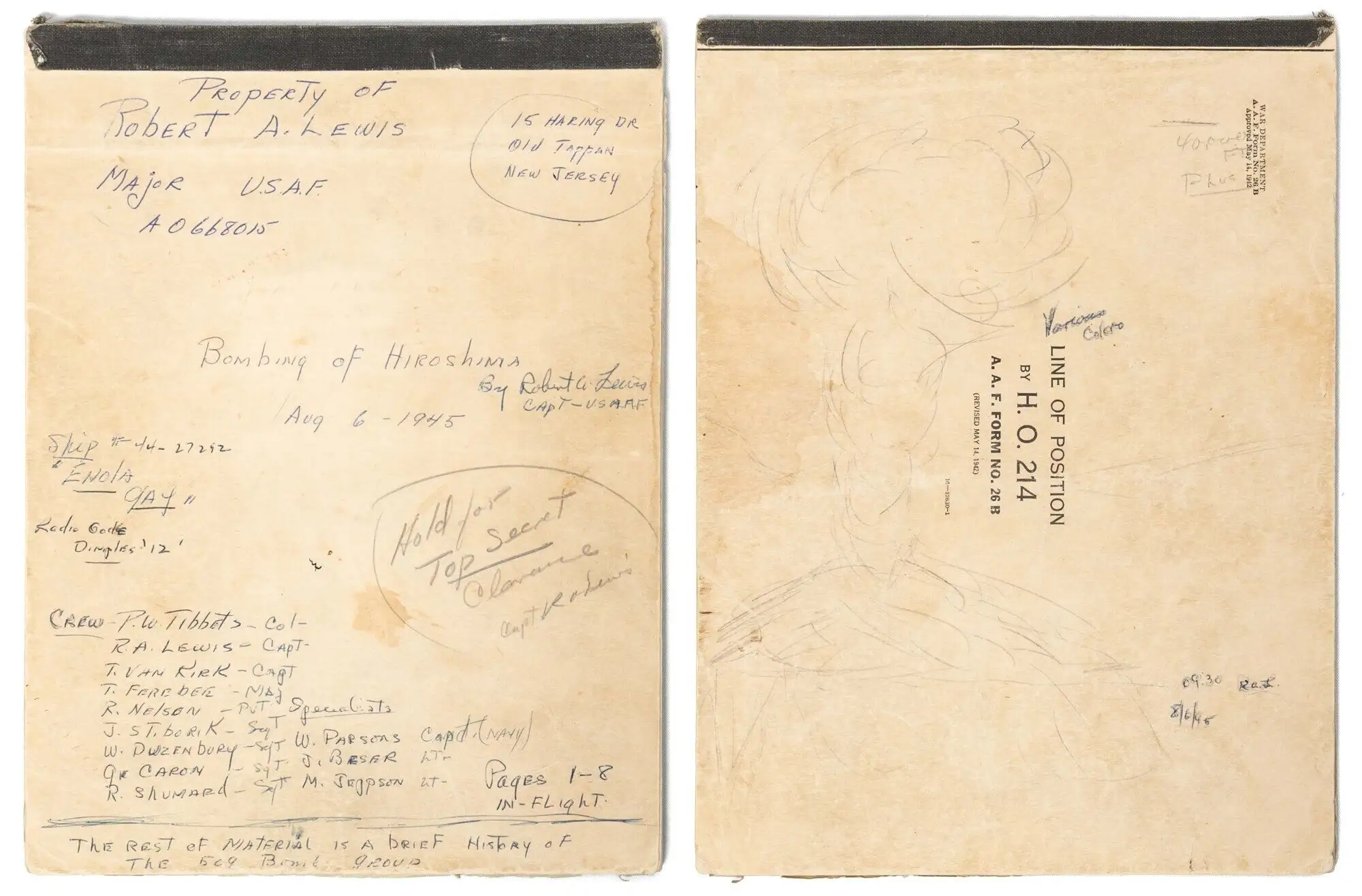
Atomic Bomb Pilot's Notebook for Sale Amid Rising Tensions
The sale of Capt. Robert A. Lewis's combat notebook underscores the dangers of nuclear proliferation as global tensions escalate. This historical artifact highlights the catastrophic implications of nuclear weapon usage, reminding the world of a volatile nuclear landscape.
Capt. Robert A. Lewis, pilot of the Enola Gay, meticulously documented the harrowing mission during which he unleashed the first atomic bomb on Hiroshima, Japan, in August 1945. His combat notebook, featuring chilling reflections on the destruction and human suffering caused, has recently been put up for sale, drawing renewed international scrutiny toward the legacy of nuclear warfare.
Leading up to this moment, the world has witnessed evolving geopolitical tensions, especially as countries continue to modernize their nuclear arsenals. The specter of nuclear conflict remains a critical concern with nations like North Korea and Iran advancing their capabilities, and existing nuclear powers like Russia and the United States engaged in arms buildup and strategic posturing. The emergence of new nuclear states complicates the already precarious global security environment, raising questions about an arms race.
The significance of this sale extends beyond mere historical interest; it serves as a timely reminder of the catastrophic power of nuclear weapons. As nuclear capabilities grow more accessible, the potential for miscalculation, escalation, and devastating conflict increases exponentially. Lewis's account represents the human cost of such military strategies and compels nations to reflect on the potential use of nuclear arms in current geopolitical flashpoints.
Key actors involved in this narrative include state governments and militant groups viewing nuclear acquisition as a means of power projection. For leaders across various nations, the deterrent effect of nuclear capabilities remains a primary motivation. In particular, nations with nuclear ambitions often cite national security and sovereignty, using fears of invasion or domination to justify their nuclear programs. This mindset significantly heightens international tensions.
From a technical standpoint, the atomic bomb dropped on Hiroshima was a uranium-based weapon nicknamed