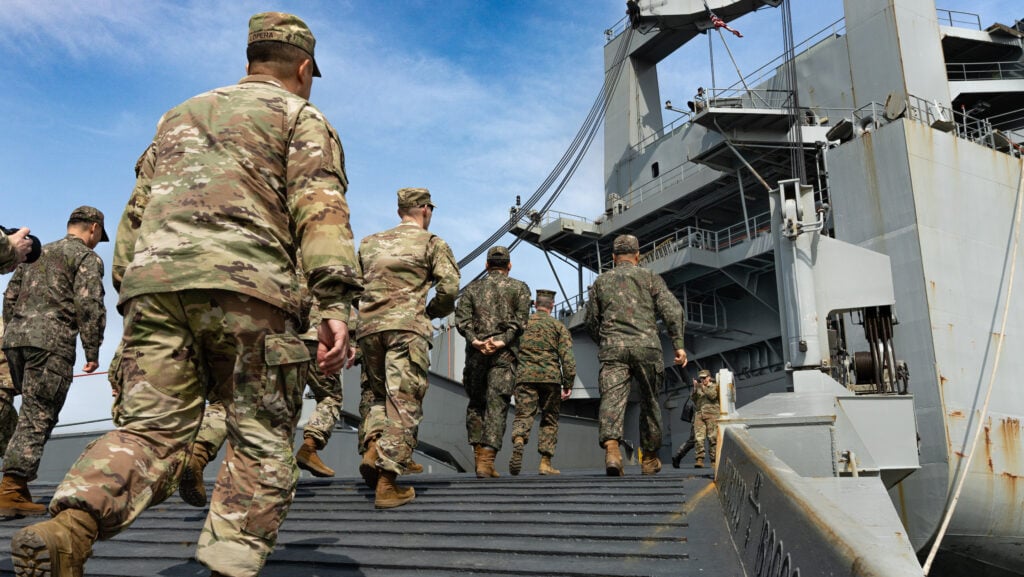
Army Questions Future of Mobile Prepositioned Stock Program
The U.S. Army is reconsidering the viability of its mobile prepositioned stocks (APS-3) following partial offloads to South Korea and the Philippines. This review signals possible shifts in strategic logistics and rapid deployment capacity in key Indo-Pacific regions.
The head of Army Materiel Command (AMC) announced uncertainty remains about the future of the Army's mobile prepositioned stock (APS-3) program. So far, equipment from APS-3 has been offloaded to U.S. bases in South Korea and the Philippines as part of repositioning efforts.
This program, designed to store equipment closer to potential conflict zones for rapid deployment, was initiated to enhance U.S. military readiness in contested theaters. However, evolving strategic priorities and budget constraints have raised questions about its sustainability.
Strategically, APS-3 plays a crucial role in the Indo-Pacific, enabling faster force projection amid rising tensions with China. Changes to this stock could impact the U.S. ability to respond swiftly to crises in the region.
The APS-3 consists of armored vehicles, helicopter units, and materiel necessary for brigade combat teams. The offload process involves relocating these assets from maritime prepositioning ships to land bases, a complex and resource-intensive operation.
Looking ahead, the Army faces decisions on whether to continue investing in mobile prepositioned stocks or pivot to alternative logistics models, potentially reshaping U.S. force posture in critical theaters with significant geopolitical ripple effects.