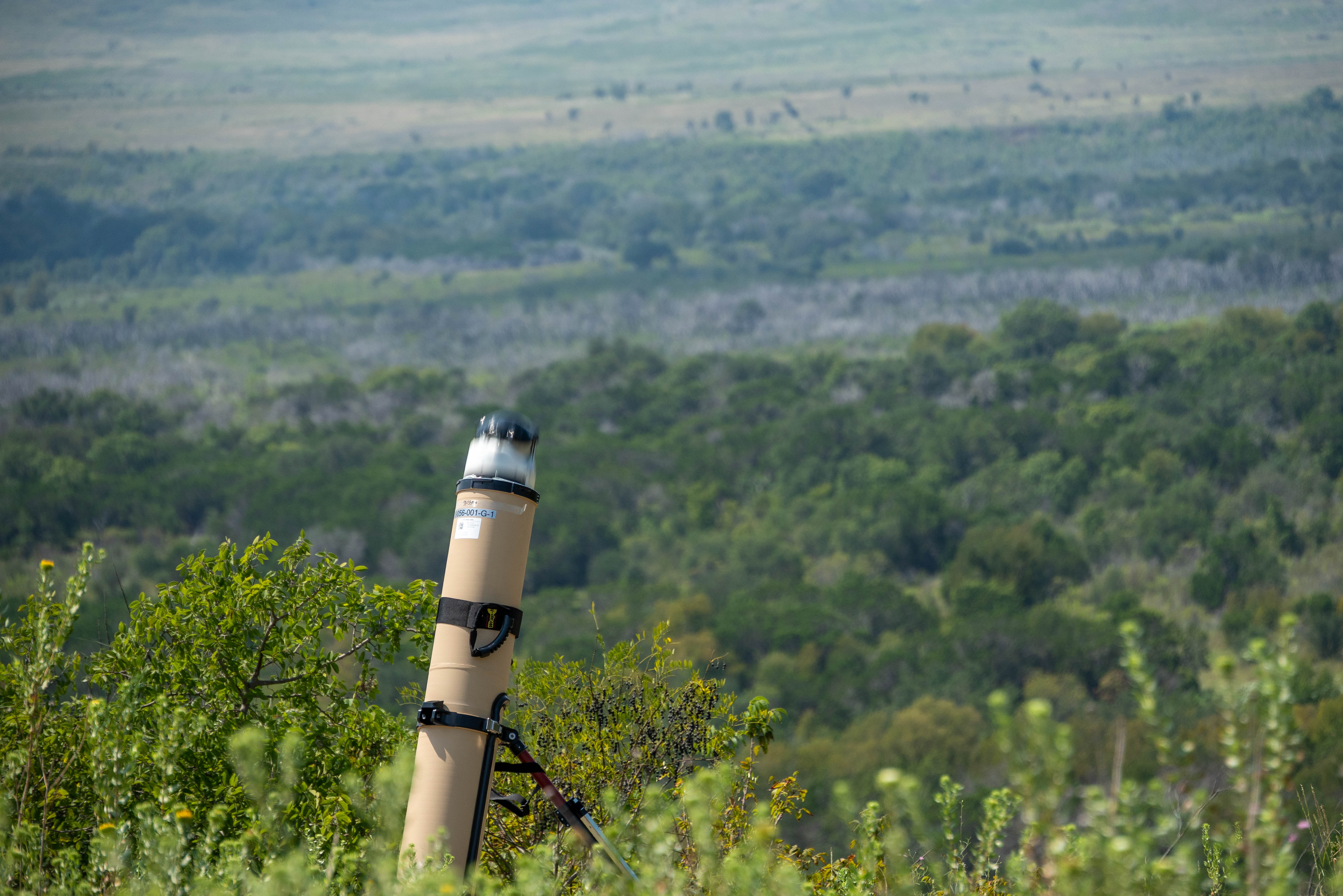
Army Orders $186 Million in Switchblade Drones, Escalating Warfare Capabilities
The U.S. Army's acquisition of $186 million worth of Switchblade drones signals a significant escalation in loitering munition technology aimed at countering advanced military threats. This procurement may shift power dynamics on the battlefield, providing the Army with enhanced offensive capabilities against armored assets.
The U.S. Army has ordered $186 million in loitering munitions from an autonomous systems manufacturer, specifically two variants of the Switchblade drone family designed for precision strikes against armored vehicles. This procurement comes as global military engagements intensify and demands for innovative, deployable strike solutions grow rapidly amid evolving threats.
Historically, loitering munitions like the Switchblade series were developed in response to the need for effective countermeasures against armored threats, especially given the increased proliferation of advanced armored systems among hostile forces. The rise of drone warfare, especially in conflict zones such as Ukraine and the Middle East, has propelled many military powers, including the U.S., to modernize and augment their arsenals with advanced strike capabilities.
The significance of this order extends beyond the sheer financial value; it underscores a broader strategic shift in military operations towards more precise, unmanned platforms capable of delivering lethal strikes in complex environments. As military capabilities in drone technology exponentially improve, the operational landscape is changing, presenting new risks such as escalated engagements and challenges in the balance of power in various conflict zones.
Key motivations behind this investment stem from the U.S. Army's need to address perceived gaps in its current capability to neutralize high-value, armored targets effectively. The Switchblade drones, particularly known for their versatility and ability to loiter before striking, provide commanders with flexible options in both urban and remote combat scenarios.
The technical specifications of the Switchblade drones highlight their operational advantages. The Switchblade 300 weighs approximately 5.5 pounds and has a range of 10 kilometers, while the larger Switchblade 600 can engage targets at distances up to 40 kilometers. This capability enables the U.S. Army to strike with remarkable precision, potentially altering ground combat dynamics by enabling quick, surgical strikes on enemy vehicles and installations.
The acquisition may lead to escalations in military confrontations as adversaries re-evaluate their tactics against a newly empowered U.S. Army equipped with loitering drones. This could prompt a ripple effect where rival nations intensify their defense technology developments, creating a cycle of armament competition that risks spilling into broader conflicts.
A historical parallel can be drawn to the rollout of tactical UAVs in the early 2000s, which fundamentally changed how the U.S. military engaged in operations worldwide. The Switchblade drones may similarly redefine engagement strategies by offering real-time battlefield response capabilities that previous systems lacked, reinforcing the importance of unmanned technologies in modern warfare.
Looking ahead, military analysts should monitor procurement patterns not only from the U.S. but also from other global military powers as they respond to this development. The evolution of drone warfare is likely to spur significant advancements in both unmanned and manned systems, indicating a turning point in future conflict strategies and international military engagements.