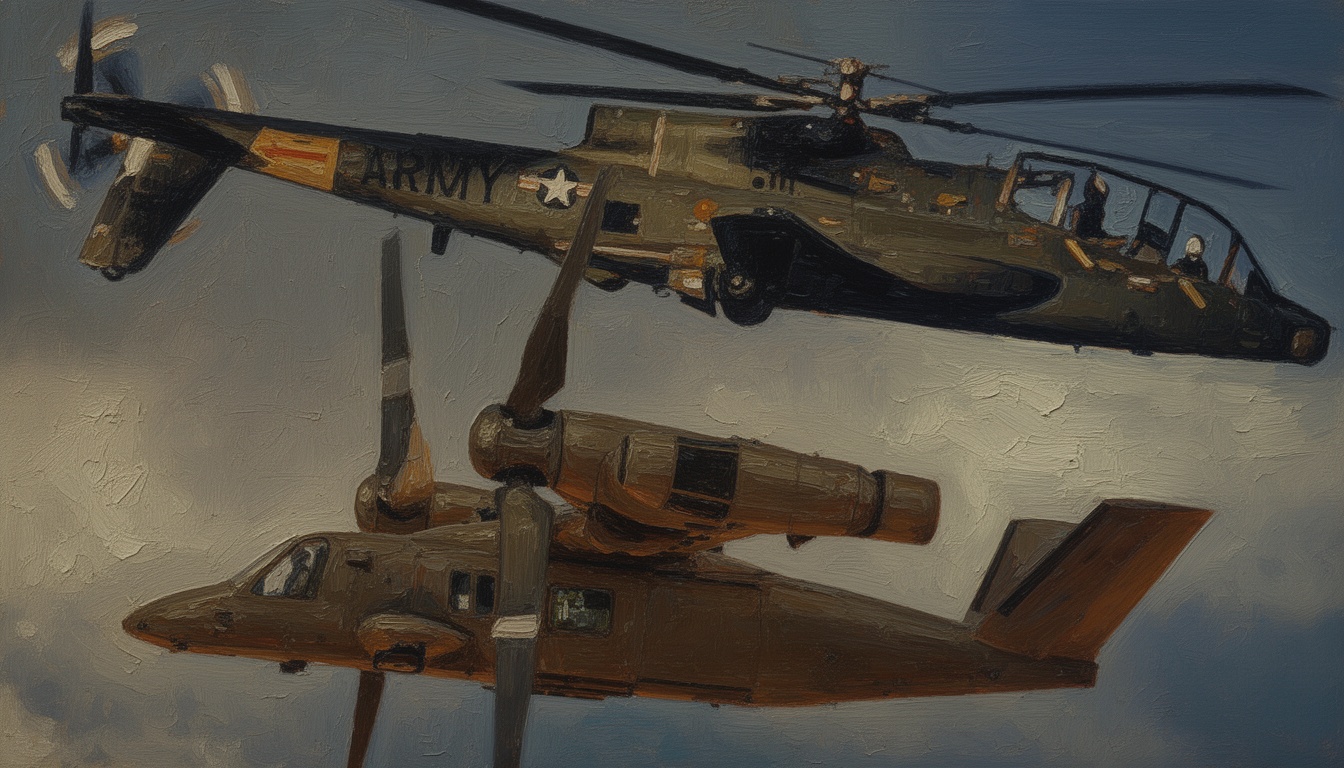
Army Names Its New MV-75 Tiltrotor Cheyenne II
The U.S. Army unveils the designation Cheyenne II for the MV-75 tiltrotor, reviving a storied name for a potentially decisive new rotorcraft program. The renaming underscores a push to modernize heavy-lift and scout capabilities with a matured tiltrotor platform. Analysts see the Cheyenne II as a bellwether for joint force mobility and high-end aircraft development in the next decade.
The Army has publicly designated the MV-75 tiltrotor as Cheyenne II, reclaiming the historic Cheyenne lineage after an earlier, failed attempt at a similar aviation concept. Officials insist the move signals a serious commitment to a next-generation rotorcraft that could combine long-range reach with multi-role versatility. The Cheyenne II would be expected to fill gaps in heavy-lift, reconnaissance, and rapid tactical maneuver for expeditionary operations. Early discussions indicate a focus on survivability, maintainability, and networked warfare integration.
Context around the Cheyenne II naming traces back to decades of rotorcraft experimentation within the Army and its aviation component. The original Cheyenne name, used in the late 1960s and 70s for scout and attack roles, became a cautionary tale about over-ambitious systems. The revival suggests a recalibrated appetite for a transformative platform that can operate in contested environments and support distributed ground forces. In parallel, the program faces the usual design, budget, and interoperability hurdles that haunt cutting-edge propeller-rotor projects.
Strategically, the Cheyenne II carries symbolic weight as part of a broader shift toward survivable, long-endurance vertical lift with enhanced situational awareness. It aligns with joint force modernization goals that emphasize rapid insertion, medical evacuation, and logistics resilience in austere theaters. Observers expect a stepped approach: initial capability releases followed by iterative upgrades to keep pace with evolving threats and air-defense suppression efforts. The name change could also influence public perception of the Army’s rotorcraft roadmap and its political support.
Operationally, scarce public data suggests the MV-75 Cheyenne II will leverage a hybrid propulsion or advanced engine concept, multi-mission sensor suites, and modular payload bays. Analysts anticipate a mix of fixed-wing-turboprop range advantages and tiltrotor agility to outmaneuver early air-defense networks. Budget planning, industrial baselines, and supplier diversity will shape milestones, with export prospects potentially affecting allied interoperability. If the program maintains its current trajectory, the Cheyenne II could begin risk-reduction flights within the next several years and enter limited service later in the decade.
Forward-looking assessments warn that survival in contested airspaces hinges on legitimate, proven military-technical advantages. The Cheyenne II’s success will depend on overcoming technical challenges, achieving cost discipline, and delivering a coherent training and maintenance ecosystem. Should the program drift toward riskier schedules or inflated costs, it could invite scrutiny from Congress and international observers. Still, the Cheyenne II stands as a high-stakes symbol of American rotorcraft ambition and a potential pivot point for allied mobility capabilities in future conflicts.