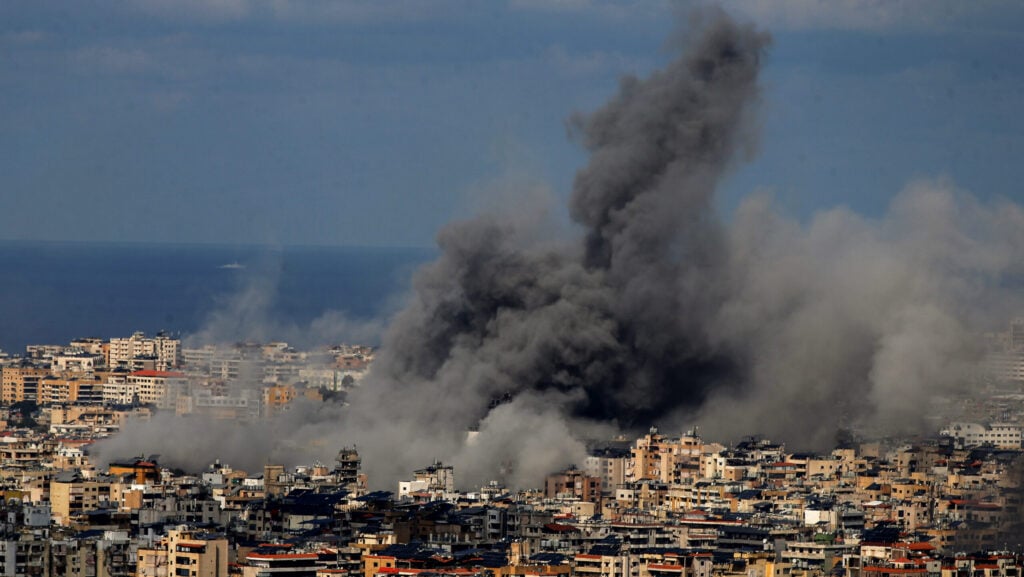
Analysts Warn Two-Front War Could Overwhelm Israel's Military Capacity
Israel's military strategies face severe scrutiny as analysts predict difficulties in a two-front conflict with Iran and Hezbollah. The potential for simultaneous engagement exposes vulnerabilities in Israel's defense posture.
Israel's military establishment is grappling with the stark reality that a two-front war against both Iran and Hezbollah could escalate rapidly beyond their prepared capabilities. Analysts asserts that the longstanding expectation within the Israel Defense Forces (IDF) has always acknowledged the likelihood of Hezbollah's involvement in any conflict with Iran. This assumption now raises urgent questions about Israel's overall readiness and strategic ability to handle simultaneous hostilities on both its northern and southern fronts.
The tensions between Israel, Hezbollah, and Iran have been escalating for years, fueled by Iran's significant military support for Hezbollah and its ongoing nuclear program. In the past decade, Hezbollah's military capabilities have advanced substantially, with estimates suggesting the group now possesses over 100,000 rockets and missiles targeting Israeli territory. This precarious landscape, alongside the volatile relationship with Iran, suggests that an all-out conflict may only be a matter of time.
This situation is critical for regional stability. A two-front conflict significantly raises the stakes not only for Israel but also for its neighbors and global actors involved in regional security. The inherent strategic risks associated with such a scenario demonstrate Israel’s vulnerabilities, including potential overload of military resources and logistical complications in managing multiple battlefronts. Failure to adapt could lead to catastrophic losses.
The IDF’s current rhetoric may downplay these risks, but motivations among key players reveal a more perilous state of affairs. Analysts believe Israel's military leadership may overestimate its operational capabilities while underestimating Iran’s commitment to support Hezbollah militarily and logistically. As tensions rise, both sides may feel pressured to pursue aggressive postures, potentially lighting the fuse on a broader conflict.
Operationally, Israel must contend with the challenges posed by Hezbollah's asymmetric warfare tactics and the technological advancements in Iranian missile capabilities. Reports indicate that Iran has been supplying Hezbollah with precision-guided munitions and UAV technology, posing a direct challenge to Israel's air superiority. This complicates the IDF's traditional reliance on air power to neutralize threats.
As the situation develops, the consequences of underestimating the potential for a simultaneous conflict could be severe. Israel's leaders must think strategically to avoid entrapment in a multifront war, while simultaneously addressing the existential threats posed by both Iran and Hezbollah. The potential for massive civilian casualties and widespread infrastructure damage could escalate quickly, drawing in regional and global powers.
Historical precedents highlight similar crises, with the 2006 Lebanon War serving as a stark reminder of the devastation that can result from underestimating Hezbollah's capabilities. During that conflict, Israel faced difficulties managing two separate fronts, a scenario that analysts now assert is even more dire considering the current military landscape.
Looking ahead, intelligence watchers should focus on key indicators such as Hezbollah's military movements along the Lebanon-Israel border, any uptick in Iranian arms shipments to Hezbollah, and the readiness levels of Israeli forces. Escalation into a two-front war remains a pressing concern, with strategic shifts likely if either side chooses to provoke a confrontation. Analysts will be closely monitoring the upcoming Iranian military exercises and Hezbollah’s rhetoric for signs of impending actions that could lead to wider conflict.