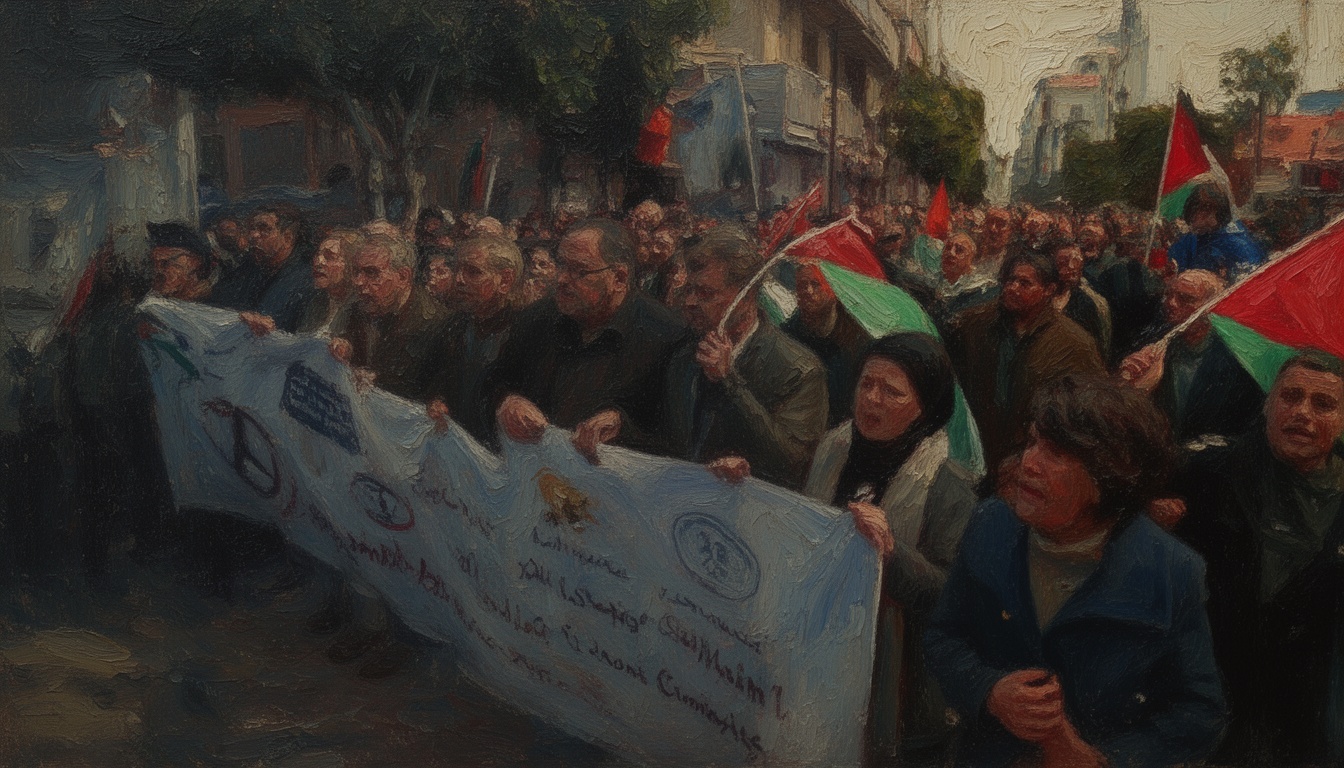
Alon-Lee Green: 'There are millions of Palestinians living under Israeli military rule for decades'
A prominent advocacy leader argues that millions of Palestinians live under decades of Israeli military rule, calling a new death-penalty bill discriminatory and abusive. The discussion centers on jurisprudence, occupation, and the strategic-ethical costs of ongoing campaigns. The interview frames diplomacy and equality as the path to ending occupation and reshaping regional security dynamics.
Alon-Lee Green, national director for Standing Together, presents a stark, issue-driven analysis of the Palestinian situation in a recent interview. He asserts that millions of Palestinians have lived under Israeli military rule for decades, a status he describes as a structural condition shaping every facet of life, governance, and risk assessment in the region. Green argues that the status quo is not merely a political impasse but a sustained, coercive framework that undermines legitimacy and long-term stability. He calls for a fundamentally different paradigm centered on diplomacy, equality, and an end to occupation.
Background context is critical to Green's case. He frames the conflict as one where occupation has become a permanent feature rather than a temporary condition, complicating security calculations for all parties. The veteran advocate emphasizes that current military campaigns, while intended to protect security, have yielded diminishing strategic returns and worsened moral legitimacy. He ties these outcomes to a broader regional dynamic in which external powers calibrate responses around leverage, identity, and bargaining power rather than sustainable peace.
Strategically, Green argues that maintaining the occupation erodes deterrence credibility and invites broader regional volatility. He contends that defensible security requires inclusive governance, rule of law, and an end to discriminatory policies that target a protected civilian population. The framing shifts from tactical maneuvers to political architecture, suggesting that conflict outcomes depend on whether the international community can reframe the stalemate as a peace process rather than a perpetual security regime.
Technical and policy details in Green's critique focus on the new death-penalty legislation. He describes the bill as explicitly targeting Palestinians, while effectively exempting Israeli citizens and West Bank settlers from the same punitive framework. The policy design is presented as not only morally corrosive but also politically instrumentalized, potentially heightening tensions and complicating any transition to a negotiated settlement. Green argues that such legislation would entrench separation, unequal protection under the law, and a legitimacy gap that destabilizes both domestic governance and cross-border relations.
Forward assessment points to a narrowing window for diplomacy. If the status quo persists, Green warns of escalating cycles of violence, diplomatic isolation for Israel, and growing internal political fragmentation across communities deemed to be under occupation. He urges international actors to promote a rights-based framework, insist on accountability, and support an inclusive process that can produce a viable and monitored end to occupation. The overarching implication is clear: regional security hinges on a credible commitment to equality, rule of law, and negotiated transitions rather than coercive governance models.