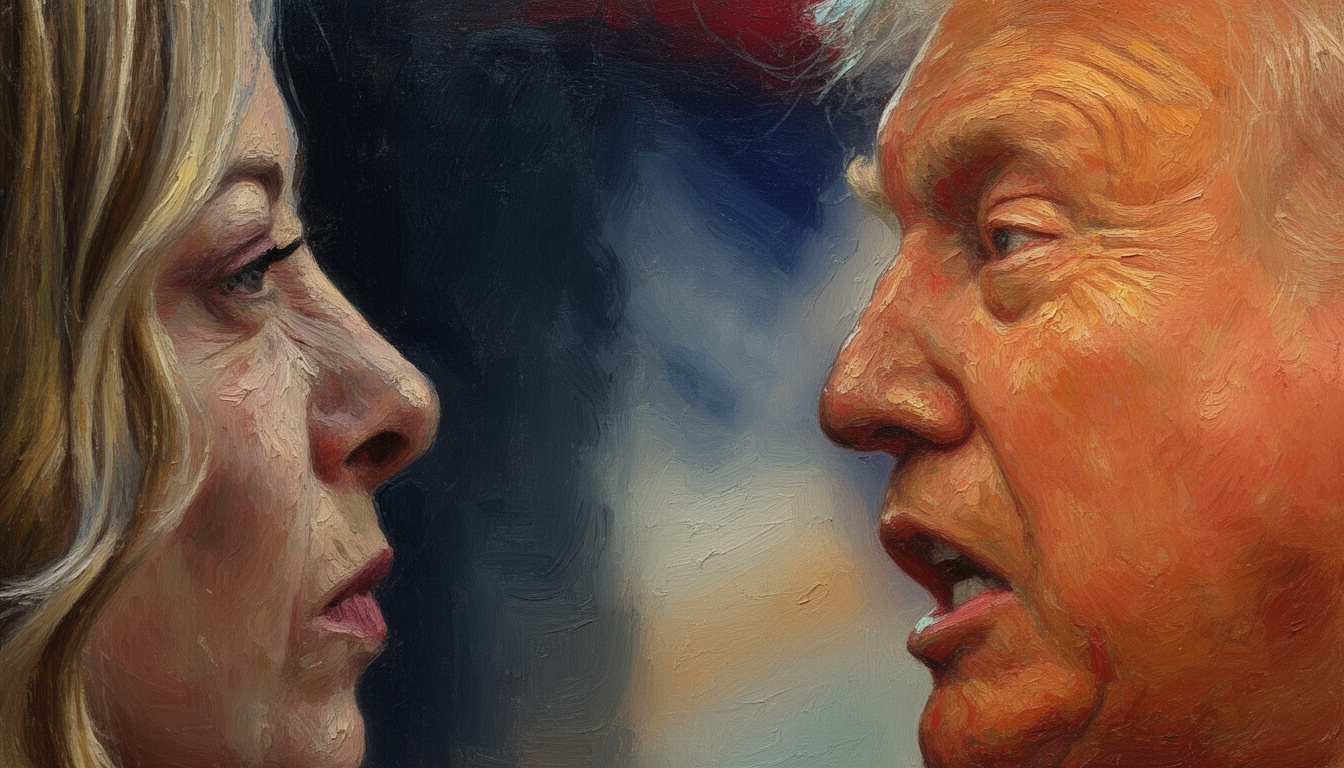
'Allies, not vassals': How Meloni's break with Trump became a political moment for Italy
The rupture between Italy's prime minister and the former U.S. president marks a rare moment of clarity in Rome’s alignment amid the Iran-Israel dynamic and the pope controversy. It reframes Meloni's domestic narrative toward advantage ahead of the 2027 vote, signaling a broader realignment of NATO-friendly blocs. The clash foregrounds how Washington’s attention to the Iran-Israel war factors into European political calculations.
The break between Italy's prime minister and Donald Trump has become a defining domestic and international moment for Giorgia Meloni. This week, Trump publicly rebuked Meloni over the pope, Iran, and a defense deal with Israel, forcing a high-stakes display of political nerve in Rome. The episode crystallizes a longer tension that began as the US-Israel theatre against Iran intensified and now presses Meloni to navigate a shifting alliance framework. In Rome's corridors, the question is whether this crisis accelerates Meloni's disavowal of a Trump-centric line or cements a more autonomous European posture.
Background matters. Meloni has positioned Italy as a steady, contentiously independent voice within NATO and the EU, seeking to balance transatlantic ties with regional pragmatism. The pope, Iran, and defense deals with Israel have been flashpoints that reveal fault lines between national sovereignty and alliance expectations. Washington's public rebuke arrives amid a broader debate about how much bridle Rome will give to Washington on strategic issues that touch Rome's own diplomatic and defense industrial ambitions. The moment tests Meloni's political instincts for absorbing a shock without unraveling a broader reform agenda.
Strategically, the episode arrives at a critical moment for Italy’s role in Mediterranean security and defense markets. Meloni's government has pressed for greater Italian influence in defense procurement and in shaping EU deterrence capabilities. A sustained rift with Trump could push Rome to deepen ties with other regional players or to lean on EU mechanisms to preserve autonomy. Yet the symbolism of a public split with a former U.S. president raises questions about Rome's ability to maintain credibility with Washington while advancing its own legislative priorities.
Operationally, the incident coincides with Italy's defense budget choices and industrial partnerships. Rome has pursued domestic production and western-aligned capabilities, including multi-domain missile and air-defense programs, as part of a broader push to bolster deterrence. The Trump confrontation could affect Italian political capital, influence defense spending rhythms, and shape next steps in Italy's partnerships with Israel and the wider Middle East. Analysts anticipate a recalibration of how Italy leverages its veto powers, parliamentary majorities, and EU alignment to influence regional security outcomes.
Looking forward, the episode will likely shape Meloni's electoral messaging and coalition calculus ahead of the 2027 elections. A crafted narrative—emphasizing national sovereignty, principled independence from unilateral pressures, and a responsible pace of defense collaboration—could consolidate support among key constituencies. Conversely, a deeper rift with Washington risks complicating Italy's access to U.S. intelligence and security guarantees during a volatile European security environment. The coming months will reveal whether this moment becomes a turning point for Italy's role in the NATO-EU balance or just a political footnote in a longer national reform process.