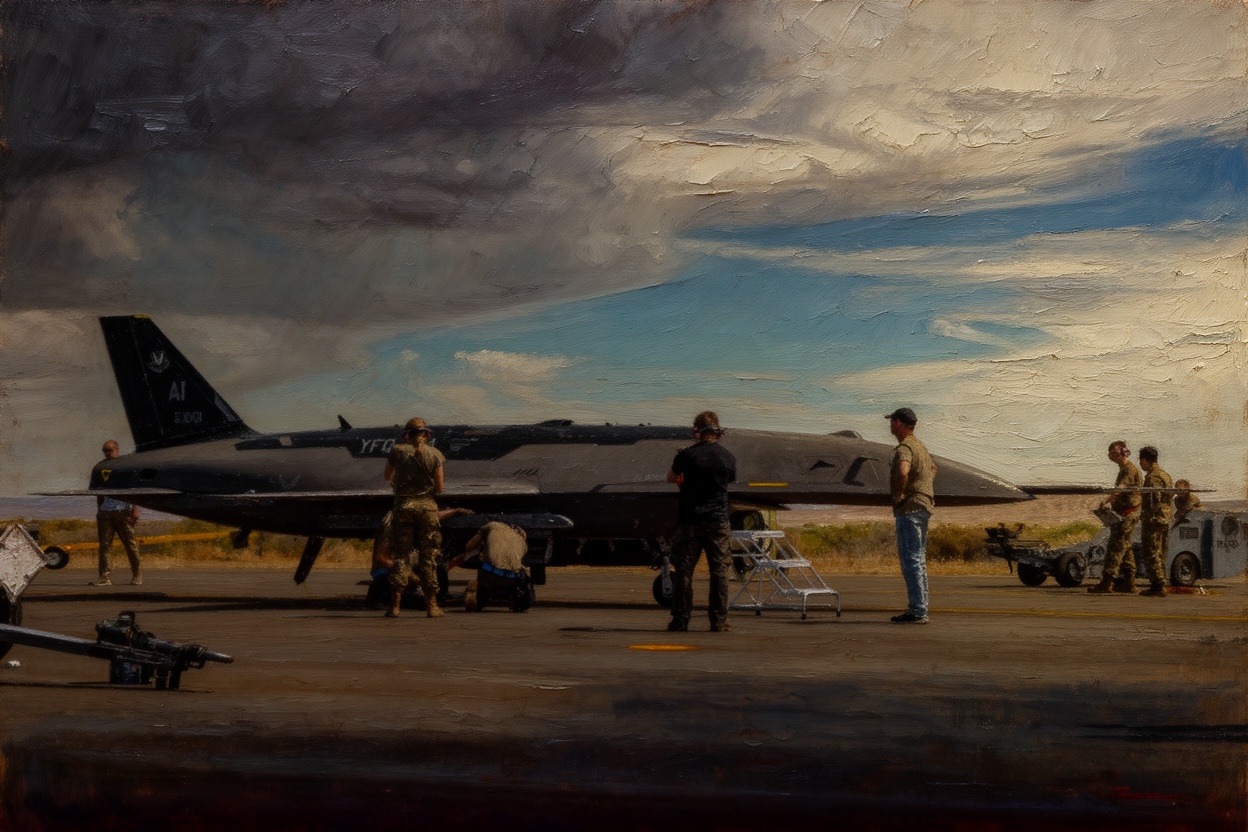
Air Force tests Anduril semiautonomous drone in flight trial
An Air Force unit demonstrated Anduril’s YFQ-44A jet-powered semiautonomous combat drone. The trial explored coordination with piloted fighters, signaling potential future mixed formations. The move underscores rapid advances in autonomous air systems and joint-wapability concepts.
An Air Force unit conducted a test flight of Anduril’s YFQ-44A jet-powered semiautonomous combat drone. The aircraft executed scripted maneuvers and target engagement drills, while a human operator supervised the mission. The emphasis was on autonomy levels, sensor fusion, and reliability of control links during extended operations. The drone’s performance in this staged scenario informs future concepts where unmanned systems accompany manned fighters in hostile airspace.
The test follows broader push in air forces to integrate AI-enabled systems into combat roles. Analysts see potential for semiautonomous drones to handle high-risk scouting, suppression of enemy air defenses, or long-endurance patrols that relieve pilots for higher-priority tasks. While the YFQ-44A remains under evaluation, the exercise demonstrates a path toward mixed formations that could alter mission planning and basing strategies. Critics caution that autonomy must remain under meaningful human oversight to manage ethical and safety concerns.
From a strategic perspective, the trial reflects accelerating competition in unmanned aerial capabilities among defense powers. Anduril’s involvement signals private sector acceleration feeding into military modernization programs. The joint demonstration highlights not just a transportable airframe but a software stack designed for rapid updates, sensor integration, and secure data links. The outcome will influence procurement debates and alliance interoperability considerations across theaters.
Technical notes indicate the YFQ-44A is jet-powered, designed to complement piloted fleets rather than replace them. Key specs disclosed in briefings include thrust class, flight endurance, and the nature of mission payloads that can be mounted for future experimentation. Operational concepts tested include formation flying, collision avoidance, and real-time decision-making under simulated threat conditions. As the program matures, analysts expect budgetary requests to align with broader autonomy roadmaps and safety-case requirements.
Looking forward, the explicit goal is to validate safe, scalable autonomy in contested airspace. If the YFQ-44A proves adaptable to different mission types, it could influence how air forces structure wings, share data between unmanned platforms, and allocate training resources. The coming months will reveal whether this test translates into formal programs, adjusted rules of engagement, or new international partners seeking similar capabilities.