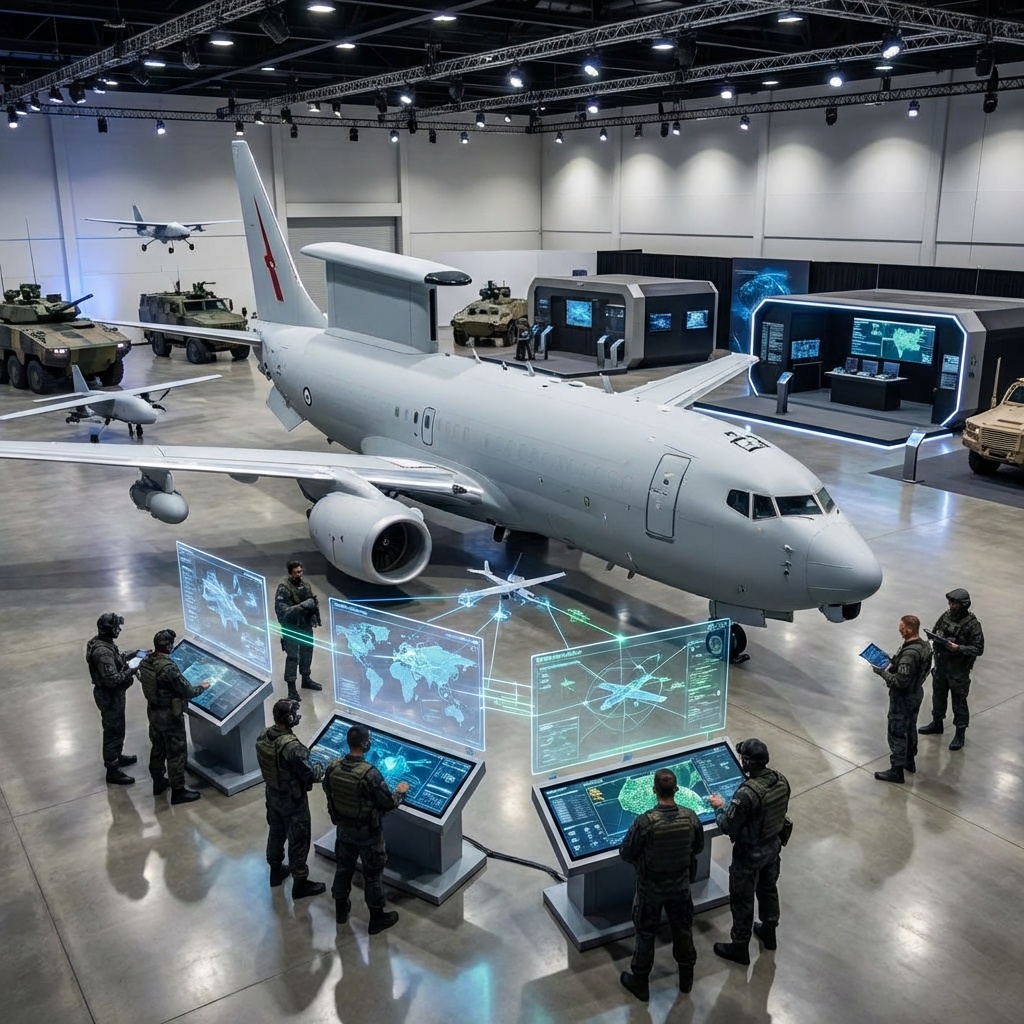
Air Force Initiates Comprehensive Sensor Fusion Experiments
The Department of the Air Force has announced plans for extensive sensor fusion experimentation to enhance operational capabilities. Concurrently, work continues on rapid prototypes for the E-7 Wedgetail, though official commitment remains tentative.
The Department of the Air Force has embarked upon a significant initiative aimed at developing a comprehensive sensor fusion capability. The focus of this program, referred to as 'Ringleader,' is to integrate various sensor feeds into a unified operational picture, thereby enabling enhanced decision-making and situational awareness for commanders in complex operational environments. This initiative aligns with broader military objectives of achieving advanced multi-domain operations where real-time data integration is critical.
During this announcement, Air Force Secretary Troy Meink emphasized the importance of these sensor fusion experiments for modern warfare. The aim is to combine inputs from airborne, ground-based, and maritime sensors into a single system that can be utilized for strategic operations. By harnessing advanced algorithms and artificial intelligence, the Air Force seeks to process and analyze vast amounts of data quickly, allowing for faster response times and improved operational effectiveness.
In addition to the sensor fusion initiative, Secretary Meink confirmed that the Air Force will proceed with the development of two rapid prototypes for the E-7 Wedgetail surveillance aircraft. However, he did not fully commit to the full-scale implementation of the program, suggesting that further assessments are necessary before definitive resource allocations are made. The E-7 Wedgetail is designed to replace aging airborne warning and control systems with enhanced capabilities, including modern radar technology and advanced signal processing.
The strategic significance of the 'Ringleader' program cannot be overstated, as it represents a leap forward in the Air Force's approach to integrated air and space operations. With adversaries increasingly investing in advanced counter-detection technologies, having an effective sensor fusion capability is essential for maintaining a competitive edge in critical missions. This capability is expected to bolster the U.S. military's integrated deterrence strategy, enabling forces to operate cohesively across domains.
The manufacturer behind the sensor fusion technologies has not been disclosed, but it is anticipated that collaborations with industry leaders specializing in data processing and military communication systems will be instrumental in developing these capabilities. Potential applications extend beyond traditional combat scenarios, as effective sensor fusion could also improve humanitarian assistance and disaster response operations by providing real-time intelligence to responders in chaotic environments. This broadens the tactical versatility and operational readiness of the Air Force, thereby enhancing national security objectives.