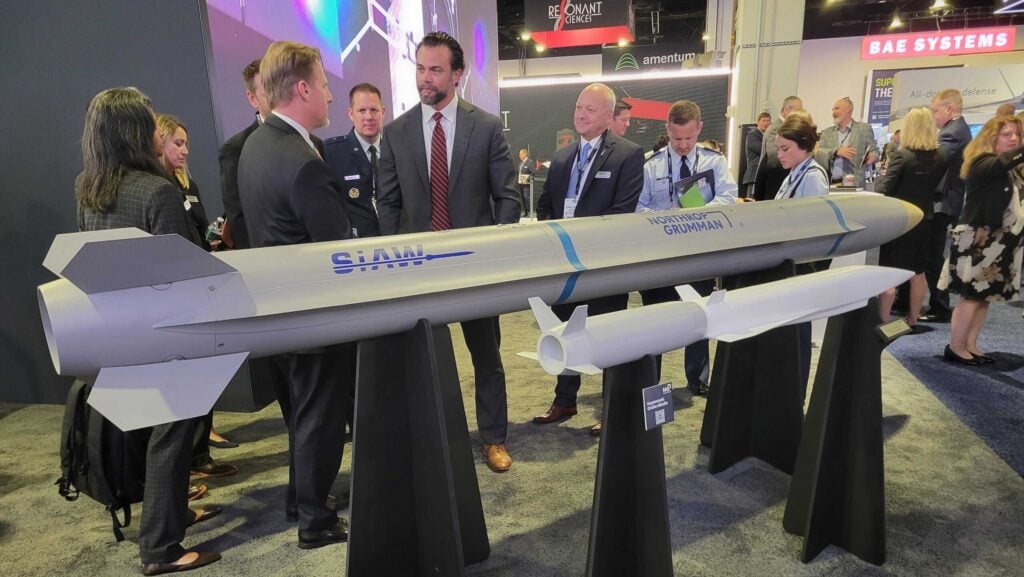
Air Force Eyes Faster, Cheaper Northrop Missile Production
The US Air Force is probing industry for alternatives to Northrop Grumman’s Stand-in Attack Weapon, seeking faster and cheaper missile delivery. This signals potential acceleration in missile production and competition to upgrade tactical strike capabilities.
The US Air Force has formally solicited industry feedback to evaluate options for producing a missile comparable to Northrop Grumman’s Stand-in Attack Weapon (SiAW). The service emphasizes finding munitions that can be delivered more quickly and at lower cost than current capabilities. The inquiry reflects a strategic push for enhanced strike readiness amid rising global tensions.
Northrop’s SiAW represents an advanced air-launched missile designed to engage targets in contested environments. With its ability to penetrate enemy defenses stealthily, SiAW fills a critical role in future air combat scenarios. The Air Force’s initiative to benchmark progress may lead to new missile programs or expanded production lines.
Strategically, improving strike weapon speed and affordability strengthens deterrence and operational flexibility against peer adversaries like China and Russia. Faster delivery times mean quicker response options, while cost reductions allow for larger inventories and sustained engagement capabilities, addressing growing demands in multi-domain operations.
Technically, SiAW integrates stealth, electronic warfare survivability, and precision guidance. Industry feedback aims to identify improvements or alternative designs leveraging emerging technologies such as advanced propulsion, materials, or targeting systems that could outperform existing models. Such developments could reshape missile procurement and battlefield dynamics.
Looking ahead, the Air Force’s move may spark competitive bids and innovation races across defense contractors. It signals increased investment and urgency in missile modernization efforts tied to strategic deterrence and readiness. Regional and global security dynamics could see shifts if new systems alter force balances or accelerate missile deployment timelines.