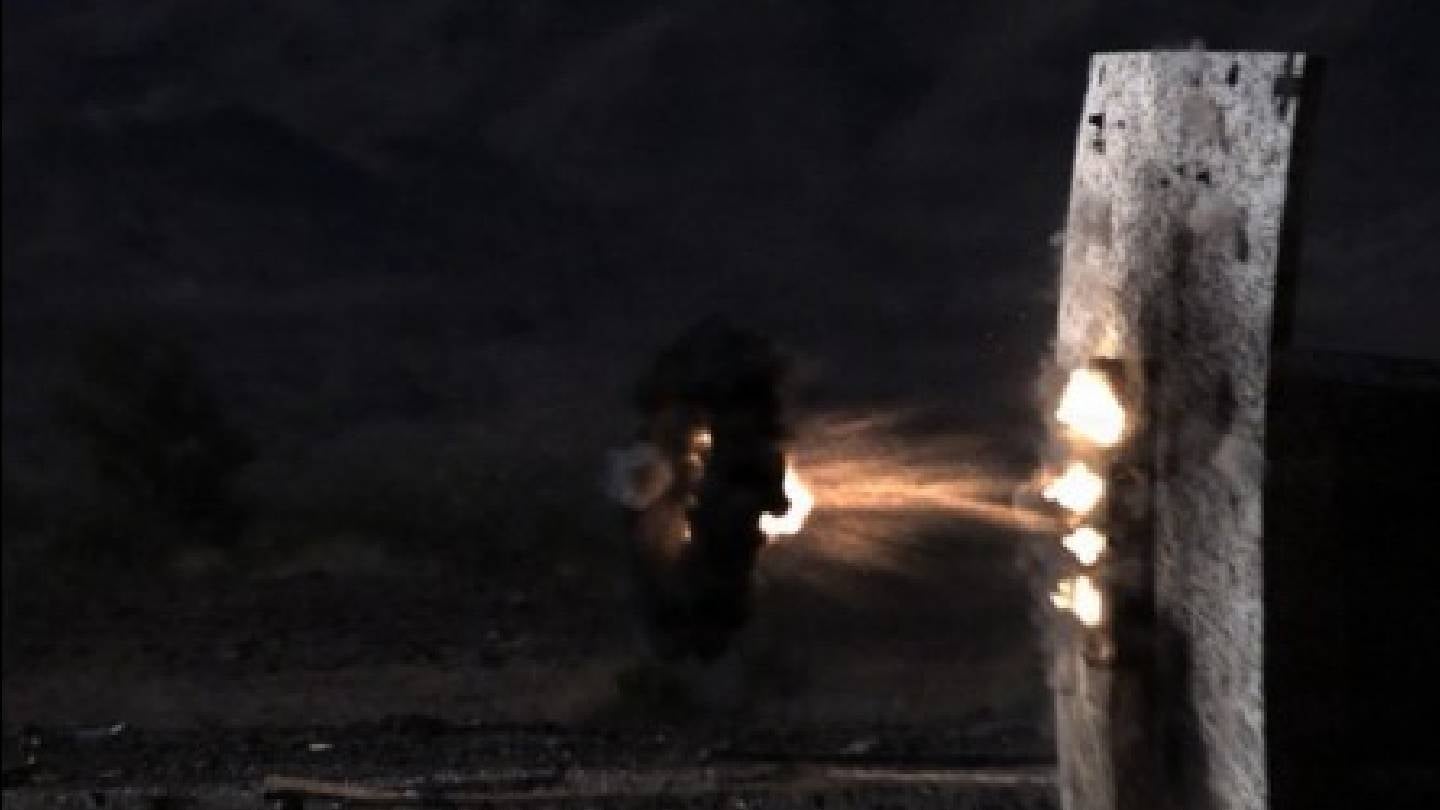
AH-64 Apache Successfully Tests New XM1225 APEX Ammunition During Live Fire Exercise
The AH-64 Apache attack helicopter has demonstrated the efficacy of the new XM1225 APEX ammunition during live fire trials. This development enhances the Apache's operational capabilities, potentially affecting its role in international military operations.
The Boeing AH-64 Apache attack helicopter has successfully conducted a live fire trial utilizing the newly developed 30x113mm XM1225 Aviation Proximity Explosive ammunition. This testing, conducted on [insert date], involved multiple firing scenarios aimed at assessing the effectiveness and reliability of the XM1225 in realistic combat conditions. The ammunition, designed to detonate in proximity to targets, enhances the lethality and versatility of the Apache, which is already one of the most advanced attack helicopters in service worldwide.
This development is strategically significant as it reflects ongoing advancements in aircraft munitions capabilities, which have implications for air combat efficacy in international military engagements. Improved ammunition technology can alter the dynamics of airborne engagements and ground support operations, giving the AH-64 Apache a critical edge in contested environments. Furthermore, the introduction of the XM1225 could compel adversarial nations to enhance their anti-aircraft measures, thereby escalating arms races around key regions.
The primary player in this context is the United States, which operates the AH-64 Apache to a substantial extent within its military and provides it under foreign military sales programs to allies worldwide. Countries such as Egypt, India, and the United Arab Emirates utilize the Apache and would be closely monitoring these advancements to assess their implications for their own capabilities and defense strategies. The motivation for the U.S. is to maintain its technological superiority and ensure allies have access to cutting-edge military hardware.
Globally, the introduction of the XM1225 into the Apache's arsenal could lead to shifts in military doctrines, especially among nations that rely on fixed-wing aircraft or other rotary-wing platforms for ground support operations. As nations seek to counterbalance U.S. technological advantages, one could anticipate increased investments in drone and anti-air weaponry among adversarial states. This could further lead to unintended escalations in regional conflicts where Apache helicopters may be deployed, such as in the Middle East or Southeast Asia.
Historically, significant advancements in aerial munitions have driven shifts in warfare tactics, exemplified by the introduction of precision-guided munitions during the Gulf War, which redefined air-ground combat dynamics. The XM1225 APEX ammunition may represent a similar inflection point regarding the engagement strategies employed by the Apache helicopter and its operators.
In assessment, the successful testing of the XM1225 APEX rounds enhances the Apache's operational profile, potentially altering the balance of power in air-to-ground combat scenarios. Moving forward, it will be essential to monitor how adversaries adapt to these advancements and whether the U.S. will pursue further enhancements to maintain its technological edge in the operational theater.