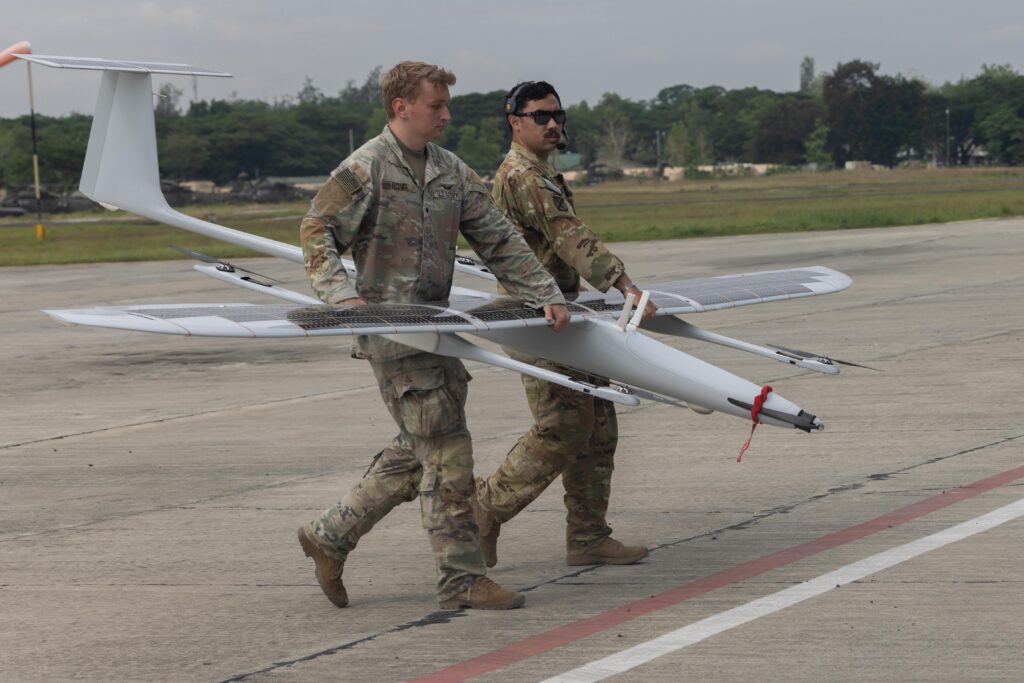
AFCENT Awards $270M for Solar-Powered Long-Endurance Drones
AFCENT has awarded Kraus Hamdani $270 million to develop the K1000ULE, a solar-powered drone that set a three-day endurance record and participated in multiple military exercises. This funding aims to enhance persistent aerial surveillance and operational capabilities across multiple Areas of Responsibility (AORs). The development signals growing interest in renewable energy-powered UAVs for extended missions.
The United States Air Forces Central Command (AFCENT) has granted Kraus Hamdani a $270 million contract to advance production and deployment of the K1000ULE drone, a solar-powered unmanned aerial vehicle known for its exceptional long-endurance capabilities. The K1000ULE set a record with a continuous three-day flight, demonstrating remarkable persistence for surveillance and reconnaissance missions.
Kraus Hamdani’s K1000ULE has featured prominently in several military exercises across diverse operational theaters, validating its utility for sustained intelligence, surveillance, and reconnaissance (ISR) roles. The aircraft’s ability to remain airborne for extended durations allows forces to maintain continuous coverage over wide geographic areas without frequent returns to base.
Strategically, this contract reflects a move by AFCENT to integrate renewable-powered drones into its operational framework, responding to increased demand for persistent ISR platforms capable of operating in contested environments. The K1000ULE’s solar power reduces reliance on fuel logistics, enhancing operational endurance and flexibility.
Technically, the K1000ULE utilizes integrated solar cells distributed across its wingspan to harness energy throughout daylight hours, facilitating uninterrupted flight over multiple days. Its endurance record flight spanned 72 hours, a significant feat compared to traditional battery or fuel-powered UAVs. The drone’s design supports modular payloads suitable for various missions including photography, signals intelligence, and electronic warfare support.
Looking forward, the infusion of $270 million promises accelerated production and broader deployment of these solar-powered long-endurance drones. This capability could shift ISR paradigms within AFCENT’s Area of Responsibility, enabling persistent wide-area coverage while reducing operational costs and logistical burdens. It also places Kraus Hamdani as a key player in the evolving market of renewable energy UAVs.