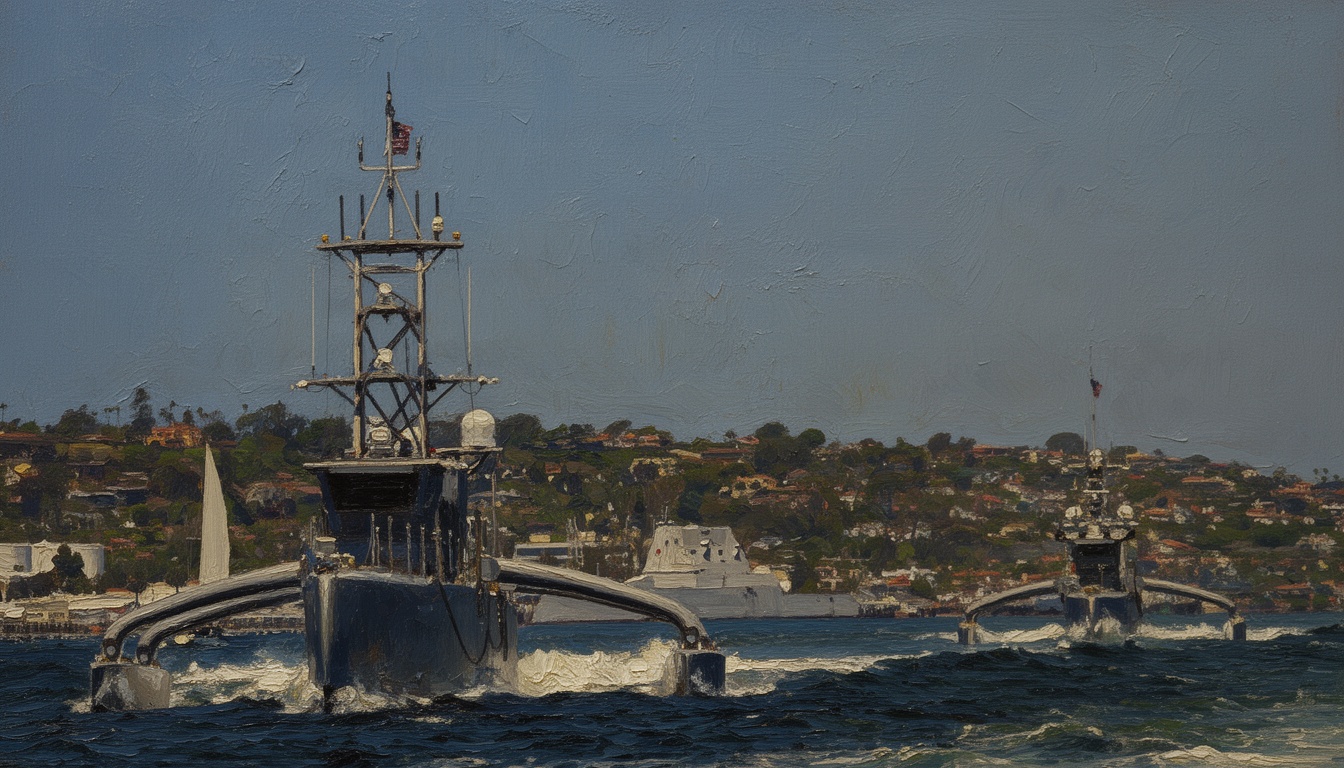
Admirals urge mission-tailored unmanned systems for each theater
Senior leaders push for unmanned platforms designed to fit specific missions and regions. They warn that capabilities effective in Europe-Cussia and the Middle East may not translate to the vast distances of the Pacific. The message: adapt, don’t default to a one-size-fits-all drone fleet.
Unmanned systems cannot be exported as a universal toolkit. Admirals at the Sea-Air-Space conference underscored that mission context drives architecture, sensor suites, endurance, and autonomy. The takeaway is blunt: what proves transformative in EUCOM or CENTCOM may underperform in the Pacific's vast distances and harsh maritime environment. Leaders emphasized a shift from generic drone catalogs to region-specific, mission-dependent designs.
The discussion framed unmanned assets as force multipliers, not stand-alone solutions. Commanders argued that electronic warfare resilience, air-sea integration, and logistics tail must be co-designed with the platforms themselves. The goal is to reduce gaps between intent and execution under real-world constraints. Across theaters, the emphasis is on hastening learnings from exercises into fielded capabilities.
Strategic implications center on deterrence and risk management. A theater-tailored approach tightens the alignment between drone potential and joint force operations. It also complicates adversaries’ planning by complicating their targeting and intelligence, surveillance, and reconnaissance (ISR) assumptions. The regional differentiator matters, because adversaries adapt to the specific geography and climate of each front.
Technical and operational details were sketched rather than spelled out. Officials noted the need for longer endurance, modular payloads, and robust autonomous decision-making that can adapt to local rules of engagement. They highlighted the importance of survivability in contested airspaces and the ability to operate from dispersed basing. Budgets, industrial base considerations, and supplier diversity were cited as critical to achieving true regional adaptability.
Looking ahead, analysts expect a tiered unmanned landscape. Near-term gains will come from incremental improvements in existing platforms tuned to theater needs. Long-term progress hinges on devoting resources to cross-domain integration, regional testbeds, and export controls that prevent leakage of sensitive capabilities. The overarching forecast: force design will reflect a mosaic of theater-focused systems rather than a single global drone solution.