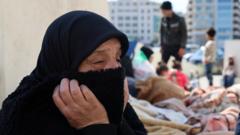
Hezbollah's Aggression Risks Broader Conflict, Displaces Thousands in Lebanon
Hezbollah's recent offensive against Israel, backed by Iran, not only escalates regional tensions but also threatens Lebanon's stability as mass displacements rise. The backlash from Lebanese citizens underscores the growing discontent and potential for internal strife.
Hezbollah's recent military actions against Israel have plunged Lebanon into a new crisis, triggering a wave of bombings and mass displacements across the country. Over the past week, Israeli airstrikes have reportedly targeted Hezbollah positions, resulting in casualties on both sides and displacing thousands of civilians. This escalation underscores a dangerous pivot, as a proxy conflict fueled by Iranian support now risks engulfing Lebanon in violence once again.
Historically, Lebanon has been a battleground for conflicting powers, particularly between Israeli military interventions and Hezbollah's operations. The organization, established in the early 1980s with Iranian backing, thrives on armed resistance against Israel and has previously engaged in multiple wars. As part of Iran's wider strategy to exert influence in the region, Hezbollah's recent escalation appears to be a calculated move to assert its power during a time of perceived vulnerability in both Lebanon and Israel.
The significance of Hezbollah's actions cannot be understated. By engaging in direct conflict with Israel, Hezbollah not only risks igniting a broader war but also reveals the precariousness of Lebanon's internal balance. As the Lebanese economy collapses, civil discontent is growing. Thus, Hezbollah's military pursuits may fuel not only external threats but also internal dissent, increasing the probability of a civil crisis.
Key actors in this extended confrontation include the Israeli Defense Forces (IDF) and various Iranian military advisors embedded within Hezbollah. While Hezbollah frames its offensive as a defense of Lebanese sovereignty, its actions are more about securing Iranian interests in the region and detracting from domestic woes. For Israel, the stakes are high as any sustained military engagement could draw in other regional adversaries, potentially broadening the conflict.
Military specifics remain crucial in understanding the implications of the recent hostilities. Reports indicate that Israeli airstrikes have targeted missile launch sites and command infrastructure belonging to Hezbollah, using precision munitions like JDAMs. Simultaneously, Hezbollah is likely deploying a mix of old and new weapons, potentially including Iranian-supplied drones and long-range missiles, illustrating a worrying escalation in both the technology used and tactical approaches observed.
In terms of consequences, the ongoing confrontation risks a complete breakdown of Lebanon's already fragile state order. Internal displacement could lead to humanitarian crises, further exacerbating an economic crisis already crippling the nation. Moreover, ongoing clashes may attract the involvement of additional regional players, including Iran and potentially Saudi Arabia, raising the specter of a multifaceted war that draws in multiple state actors.
Historically, this situation echoes the 2006 Lebanon War, where Hezbollah's provocations led to extensive Israeli military actions resulting in significant civilian casualties and displacement. The lack of resolution during that conflict has laid the groundwork for current tensions, demonstrating that lessons from previous engagements have yet to be learned or applied.
Looking ahead, analysts should closely monitor troop movements and the rhetoric from Hezbollah and Israeli officials. Increased military readiness on both sides could signal an impending escalation, while shifts in Iran's strategic directives may also play a role in shaping the next phases of conflict. The potential for further mass displacements exacerbated by military operations could lead to a humanitarian nightmare in Lebanon, making the crisis even more pressing as regional dynamics evolve.