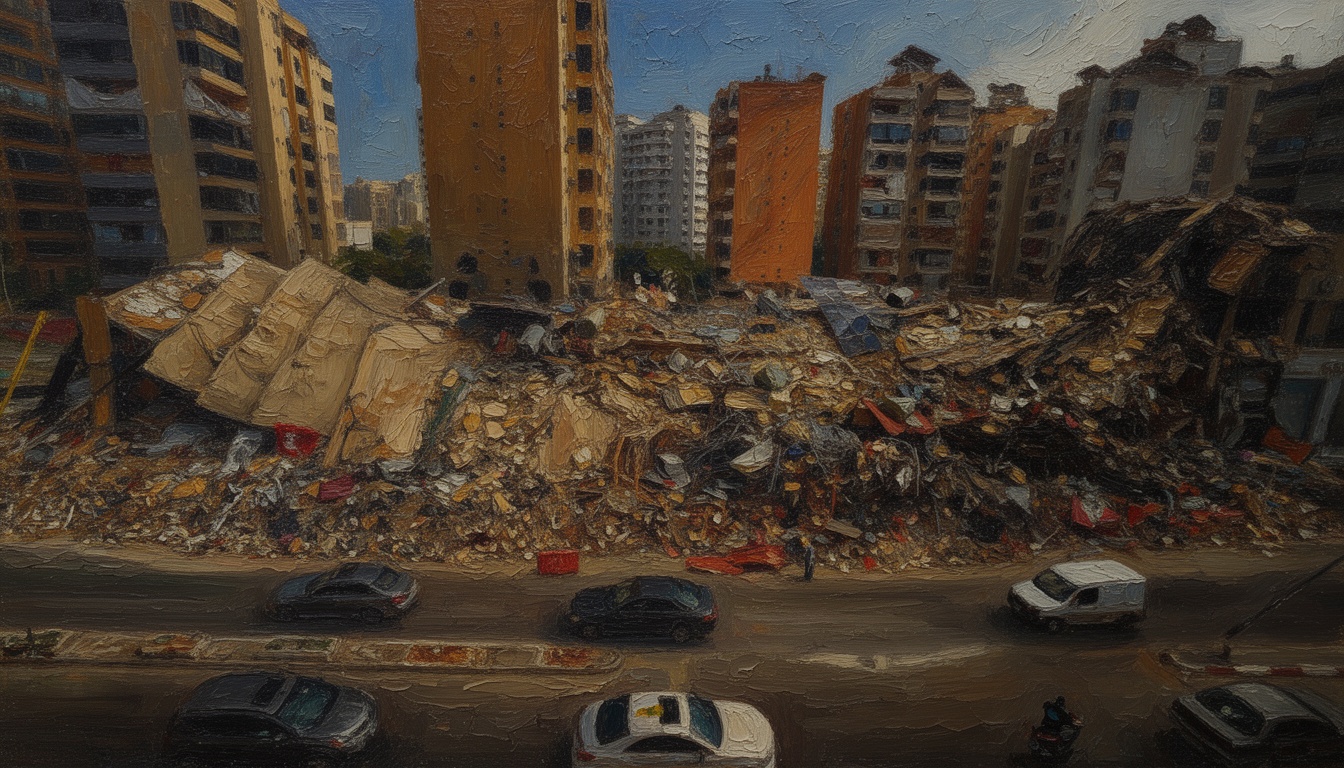
A petition called 'Lebanon will not be the next Gaza' calls on French leaders to take action
A petition titled 'Lebanon will not be the next Gaza' pressures French President Macron to push for stronger action to sustain the Israel-Lebanon ceasefire. Civil society figures allege last year’s truce was repeatedly violated and urge European leadership to prevent a Gaza-like relapse. The campaign underscores the ongoing fragility of regional calm and the reputational weight of Paris as a guarantor power.
The petition titled 'Lebanon will not be the next Gaza' calls on French President Emmanuel Macron to take decisive steps to bolster the current ceasefire between Israel and Lebanon. It positions Macron as a key guarantor of regional stability and argues that action is needed to prevent a relapse into broader hostilities. The initiative has attracted signatures from a broad array of French public figures, signaling wide civil society concern about the risk of renewed violence along the Lebanon-Israel frontier. The organizers frame the request as a test of European resolve to maintain a durable truce and avert a Gaza-style humanitarian and strategic crisis in the Levant.
Background context shows that the Israel-Lebanon dynamic has long been a flashpoint in the Eastern Mediterranean, with past breaches and escalations raising regional spillover concerns. The petition emerges as part of a broader debate about European diplomacy in the Middle East and the role of major powers in sustaining fragile ceasefires. Advocates warn that absence of credible European pressure could embolden actors on both sides to press for gains, raising fears of a wider confrontation around Beirut, southern Lebanon, and potentially beyond. The transition from conflict management to durable disarmament and deterrence remains a central challenge for Western mediators.
Strategic significance centers on the credibility of France as a stabilizing actor in a volatile theater. By elevating the ceasefire as a policy test, the petition seeks to shape not only messaging but concrete measures—monitoring mechanisms, violence-withdrawal assurances, and humanitarian safeguards—that reinforce dissuasion against renewed fighting. The case highlights how domestic civil society mobilization can influence international diplomacy, particularly when a major ally is perceived as the linchpin for regional restraint. The outcome could influence European security policy toward the Levant and recalibrate Paris’ balancing of its regional interests and alliance commitments.
Technical or operational details are limited in the petition description, but the thrust is procedural: to press for robust verification of ceasefire commitments, sustained interdiction of cross-border fire, and consistent political engagement with Lebanese authorities and Israeli counterparts. It underscores the importance of credible enforcement, potential sanctions or diplomatic penalties for violations, and the need for continued humanitarian access for civilians along the border zone. While the petition does not propose specific weapon systems or budget figures, it signals a demand for hard-edged diplomacy backed by European leverage and multilateral coordination.
Likely consequences and forward assessment point to a sharpened political debate in Paris and among European capitals about how to translate guarantees into action. If Macron and other leaders respond with concrete steps, the current truce could solidify and reduce the risk of a Gaza-like escalation spilling into Lebanon. Conversely, weak or ambiguous European signaling could erode deterrence, embolden hardliners on both sides, and prolong the lull while leaving civilians exposed to intermittent violence. The international balance of power in the Levant could hinge on whether external actors with leverage can sustain disciplined diplomacy under pressure.