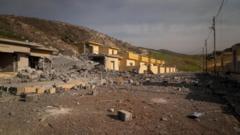
Iran Bombards Kurdish HQ in Iraq, Heightening Regional Tensions
Iran's missile strikes against Kurdish forces in Iraq provoke serious escalation and highlight the increasing volatility in the region. This action signals not just military aggression, but also the potential involvement of external powers in the ongoing conflicts.
Iranian forces launched missile and drone strikes targeting the headquarters of Kurdish militant groups in Iraq's Erbil province, resulting in multiple casualties. Reports indicate that this latest assault has left at least 15 dead and numerous injured, escalating military tensions in a region already fraught with instability. The strikes were aimed specifically at Iranian Kurdish groups that Tehran accuses of harboring dissent and inciting violence within its borders.
This incident is the culmination of long-standing hostilities between Iran and Kurdish factions that have historically sought greater autonomy or independence. Kurdish groups have been a thorn in Iran's side, leveraging their presence in the mountainous border areas for operations against the Iranian government. With Iran perceiving increasing threats to its territorial integrity from these groups, the recent assaults mark a significant escalation in response to both internal and external pressures.
The ramifications of these attacks extend beyond Iranian borders, as they threaten to destabilize the already fragile security landscape in Iraq and invite greater international involvement, notably from the United States. Speculation suggests that Washington may be seeking to align with Kurdish groups as a counterbalance to Iranian influence in the region, a move that could provoke further Iranian retaliation. Additionally, this situation underscores Iran's vulnerability, as it seeks to project strength while combating internal dissent.
Key actors in this crisis include Tehran's leadership, who are likely motivated by a desire to silence opposition voices domestically and assert their influence externally against perceived threats. Conversely, Kurdish groups are fighting not only for ideological reasons but also for their survival amid fiscal and military pressures. The dynamics of their fight could shift if external powers decide to overtly support these factions against Iran.
On a technical level, Iran demonstrated its missile capabilities with strikes reportedly involving precision-guided munitions aimed at specific command structures of Kurdish factions. The Iranian military is honing its operational capacity through these vigilant assaults, raising questions about the sustainability of its current military strategy and potential retaliatory measures from Kurdish forces in the future.
The likelihood of an escalated conflict remains high as Iranian forces are expected to continue their aggressive posturing, while Kurdish groups may retaliate or receive increased external support. The strategic landscape could shift dramatically if Western powers decide to more formally supply arms or intelligence to Iranian Kurdish factions, further inciting Iran's ire.
Historically, the Iranian state has engaged militarily with Kurdish groups before—especially during the 1980s and 1990s—when conflicts often led to significant loss of life and drawn international condemnation. Precedents for such violent engagements exist, hinting at a cycle of violence that may repeat itself as parties become entrenched in their positions.
In the coming weeks, analysts should closely monitor Iranian military maneuvers along the Iraqi border, Kurdish increases in military readiness, and the response from external powers interested in the power dynamics within Iraq. The engagement of U.S. and allied forces with Iranian Kurdish groups may serve as a pivotal flashpoint in this ongoing rivalry.