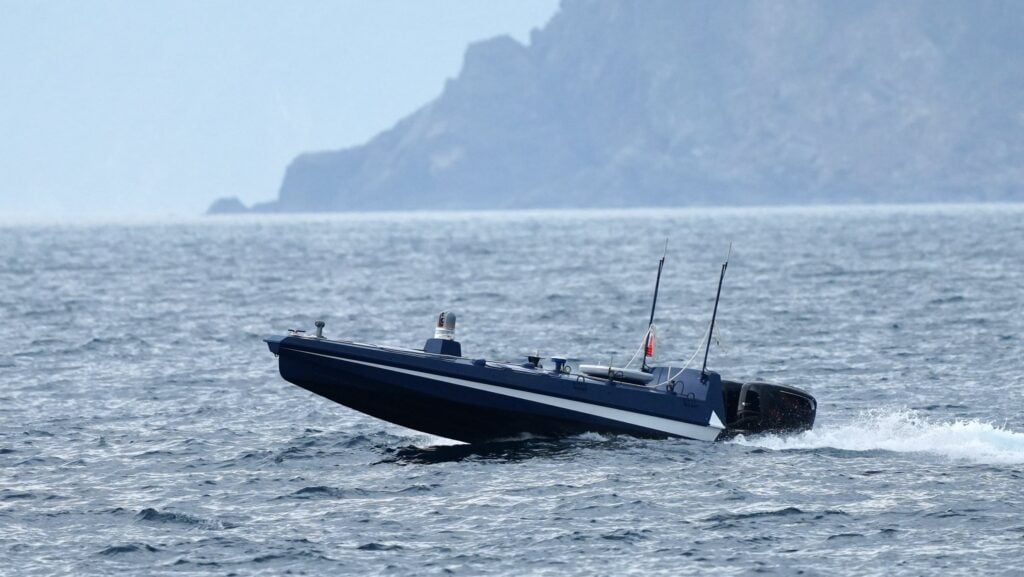
Taiwan Urged to Develop Drone Swarms to Counter Chinese Invasion Threat
Taiwan faces an urgent requirement to bolster its defense capabilities against an increasingly aggressive China. The proposal to develop drone swarms highlights both the urgency of Taiwan's military modernization and the risks of further escalating tensions in the region.
Taiwan must urgently develop drone swarms to counter imminent Chinese invasion threats, according to a recent report from the Center for New American Security. This strategic pivot aims to enhance Taiwan's defense capabilities amidst a backdrop of escalating military posturing from Beijing. The proposed drone swarms could provide Taiwan with an affordable yet effective means to deter and disrupt a larger, more powerful adversary without risking military personnel in high-stakes environments.
The historical context points to a decades-long struggle for Taiwan's sovereignty, amplified by China's relentless military expansion and belligerent rhetoric. In recent years, China's active military operations, including air incursions near Taiwan's airspace and naval exercises in the Taiwan Strait, have increased regional tensions significantly. As Taiwan's conventional military capabilities remain limited compared to China, innovative solutions like drone swarms offer a potential strategic advantage.
This development is significant as it could alter the balance of power in the Taiwan Strait. China views Taiwan's moves toward asymmetrical warfare as direct provocations, leading to heightened military preparedness and potential escalations. By deploying drone swarms, Taiwan could exploit vulnerability while also raising the stakes for China, compelling it to reassess its military options.
Key actors in this scenario include Taiwan's military leadership and its international allies, particularly the United States. Taiwan's motivations are clear: the preservation of its sovereignty and the deterrence of Chinese aggression. Meanwhile, the US, which has been supportive of Taiwan's military modernization efforts, is also wary of provoking China, further complicating the strategic landscape.
In practical terms, the envisioned drone swarms would comprise various models like the AeroVironment Switchblade, potentially utilizing swarm tactics that create overwhelming local superiority in the air and disrupt enemy operations. Such systems are relatively inexpensive, offering a cost-effective way to amplify Taiwan's defense strategy without escalating overall military expenditures to unsustainable levels.
The potential consequences of Taiwan deploying drone swarms are far-reaching. A successful implementation could deter Chinese military actions and embolden Taiwan’s defenses, but it could also provoke China into aggressive military demonstrations or an acceleration of forces in the region, creating a dangerous cycle of escalation. This tactic might provoke immediate responses from the PLA, leading to a precarious situation where a clash may seem inevitable.
Historically, asymmetric warfare tactics have shifted the paradigms of traditional conflict, evident in situations ranging from the Vietnam War to modern-day conflicts in Iraq and Afghanistan. The success of such tactics hinges on swift adaptability and the element of surprise, which Taiwan aims to exploit against China's conventional superiority.
Looking ahead, surveillance and intelligence gathering will be crucial for monitoring Chinese responses to Taiwan's drone swarms. It is vital to watch for any shifts in PLA forces, increased aerial and naval drills, or posturing that could indicate a heightened state of readiness. Taiwan’s next moves in drone development and deployment will be key indicators of its strategic commitment to countering Chinese military threats.