El Mencho: Drug Lord's Death Highlights Security Crisis in Mexico
The killing of notorious cartel leader El Mencho underscores Mexico's ongoing security crisis. His burial in a gold coffin draws attention to the opulence and power of drug cartels in the region.
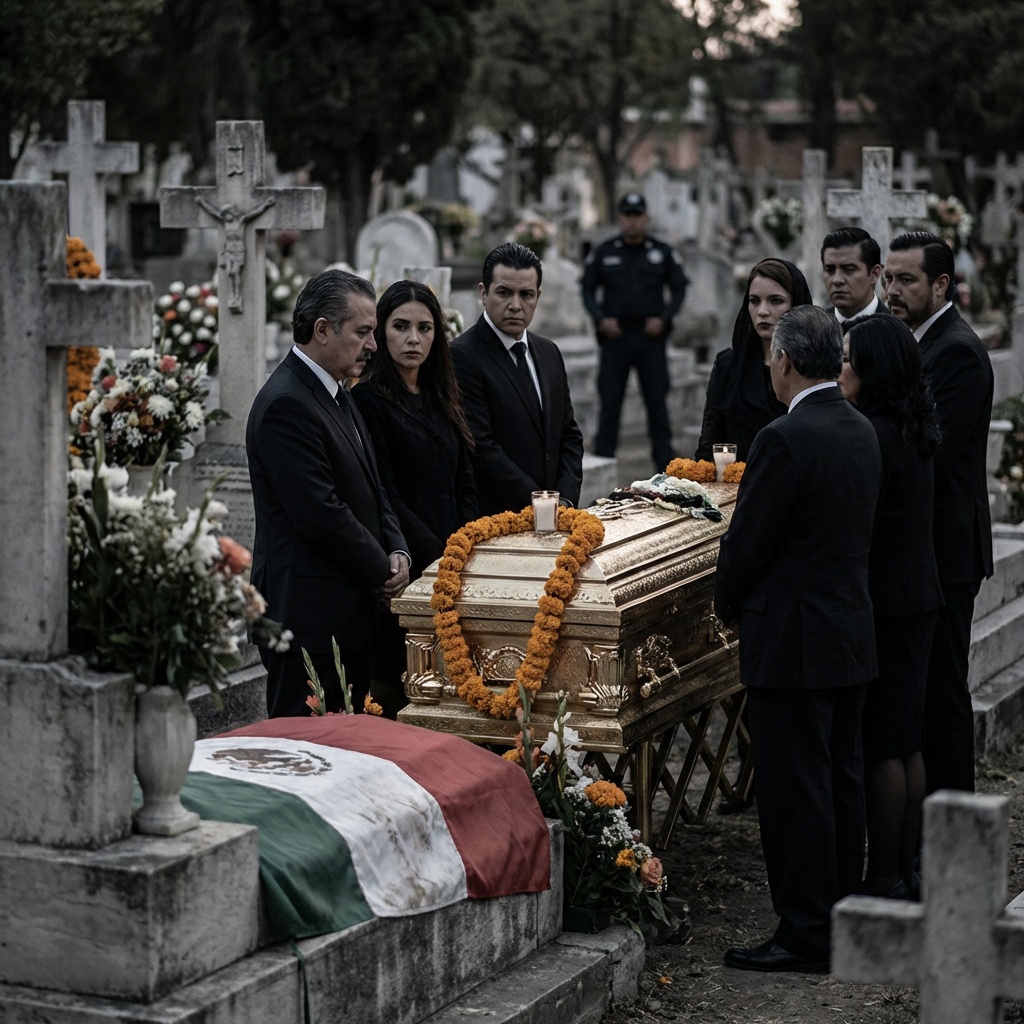
Nemesio Oseguera Cervantes, known as 'El Mencho,' was killed on February 22 during a military operation in Jalisco, marking a significant blow to his criminal empire. His death has been met with mixed reactions, as his lavish burial in a gold-colored coffin has sparked outrage and highlighted the cultural phenomena surrounding drug lord reverence in Mexico. Crowds gathered at his funeral, showcasing the stark reality of cartel influence on society, violence, and governance in the region.
El Mencho was the leader of the Jalisco New Generation Cartel (CJNG), a powerful organization known for extreme violence and rapidly expanding territory since its founding in the early 2010s. His reign was characterized by ruthless tactics against rival factions and even state forces, consolidating power through both fear and wealth. His operations have been crucial in Mexico's ongoing drug wars, which have claimed over 300,000 lives since 2006.
The significance of El Mencho's death lies not only in the potential power vacuum it creates within the CJNG, but also the likely retaliatory violence from his loyalists. The Mexican government has struggled to contain these cartels, and El Mencho's death could provoke retaliatory strikes against state forces as the organization seeks to maintain its drug trafficking routes and control over territory. The incident exposes the vulnerabilities in Mexican security apparatus and the desperation of the state to combat this entrenched narcotrafficking menace.
Key actors in this situation include state security forces, which have been criticized for their inability to effectively combat organized crime, and rival drug factions that might seek to exploit CJNG's disarray. On the cartel side, El Mencho’s successors are likely contenders for leadership, and they may pose an immediate threat to his former alliances. A power struggle is anticipated not only within the CJNG but also against other competing cartels eyeing the opportunity to expand their control.
Operationally, El Mencho's influence has relied on a sophisticated logistics network and state-of-the-art weaponry, including military-style arms and armored vehicles. Recent estimates placed the CJNG's annual revenue from drug trafficking at around $1 billion, primarily from methamphetamine and fentanyl. Following El Mencho's assassination, the Mexican military is expected to ramp up its operations to seek out remaining CJNG leaders, while also bracing for escalation in violence.
Immediate consequences may include a surge in violent confrontations, both between rival gangs and against law enforcement, as competing factions vie for territory. This could lead to a further destabilization of regions in Jalisco, Michoacán, and beyond, where CJNG exerted considerable power. An escalation of violent crime rates and public unrest is likely as the cartel and state forces react to the power vacuum.
Historically, similar scenarios from the killings of drug lords like Joaquín 'El Chapo' Guzmán have illustrated a tendency toward chaos during transitional periods within cartel leadership. El Chapo's death led to fierce battles among various factions, and the fragmentation of organizations often results in increased street-level violence against civilians and security forces.
Going forward, key indicators to watch include any signs of new leadership emerging within the CJNG, territorial disputes leading to clashes, and the Mexican government’s capacity to manage escalating violence. Intelligence agencies will likely monitor cartel communication channels for indications of their operational shifts and retaliatory strategies to maintain control in the highly volatile drug trafficking environment.