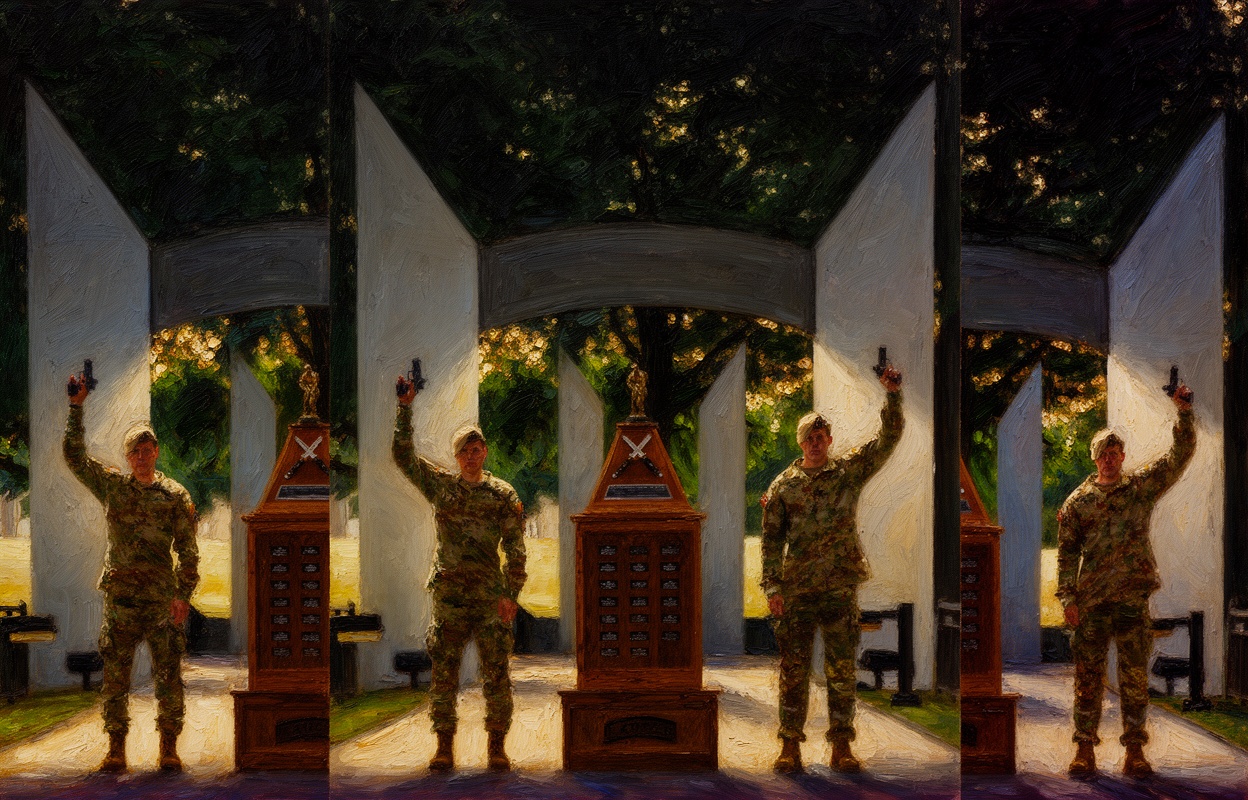
75th Ranger Regiment Soldiers Clinch Sixth Consecutive Best Ranger
The 75th Ranger Regiment dominates the Army's Best Ranger Competition at Fort Benning, marking their sixth straight victory. The event tests endurance, land navigation, and small-unit tactics under demanding conditions. The sweep underlines the Regiment's elite-level readiness and proficiency in light infantry operations.
The 75th Ranger Regiment has won the Army's Best Ranger Competition for the sixth year in a row, asserting a rare streak at Fort Benning, Georgia. The victory comes after a grueling multi-day challenge that blends navigation, endurance marches, and tactical scenarios designed to replicate the pressures of high-intensity combat. The winners stood out for their cohesion, speed, and execution under stress. The competition serves as a high-profile demonstration of the Regiment's overall readiness and proficiency across essential infantry competencies.
The Best Ranger Competition traces its heritage to the post-World War II era, but the modern format highlights the modern Ranger's demanding skill set: long-range navigation, crisis decision-making, and rapid execution of missions with limited support. Fort Benning provides a demanding arena where teams must demonstrate not only physical stamina but also discipline, communication, and leadership across variable terrain and obstacles. While individual excellence matters, the event ultimately rewards a unit-level performance that mirrors real-world operations.
Strategically, the win reinforces the U.S. Army's emphasis on rapid, light-infantry capable forces that can operate across diverse environments. The Best Ranger Contest is less about spectacle and more about validating the integration of physical conditioning with tactical acumen. In the current security climate, where joint operations and expeditionary readiness are focal, such demonstrations are proxies for broader capabilities that might be deployed in a crisis.
Technical and operational details of the competition include a grueling sequence of navigation challenges, day and night landings, obstacle courses, and simulated mission sets that require coordination among rifle squads and reconnaissance teams. The winning squad reportedly excelled in map reading, pace management, and target acquisition under time pressure, while maintaining radio discipline and effective command-and-control across the team. The event also emphasizes the Ranger creed: conservative risk-taking with a bias toward mission success and troop welfare.
Looking forward, the six-year dominance by the 75th Ranger Regiment raises questions about unit resilience, training pipelines, and talent retention within the force. If the pattern holds, rivals will seek to dissect the Regiment's preparation regimen and identify gaps to close in future iterations. For defense planners, the outcome underscores the ongoing importance of elite light infantry capabilities in maintaining strategic flexibility and deterrence in a wide range of potential conflict theaters.