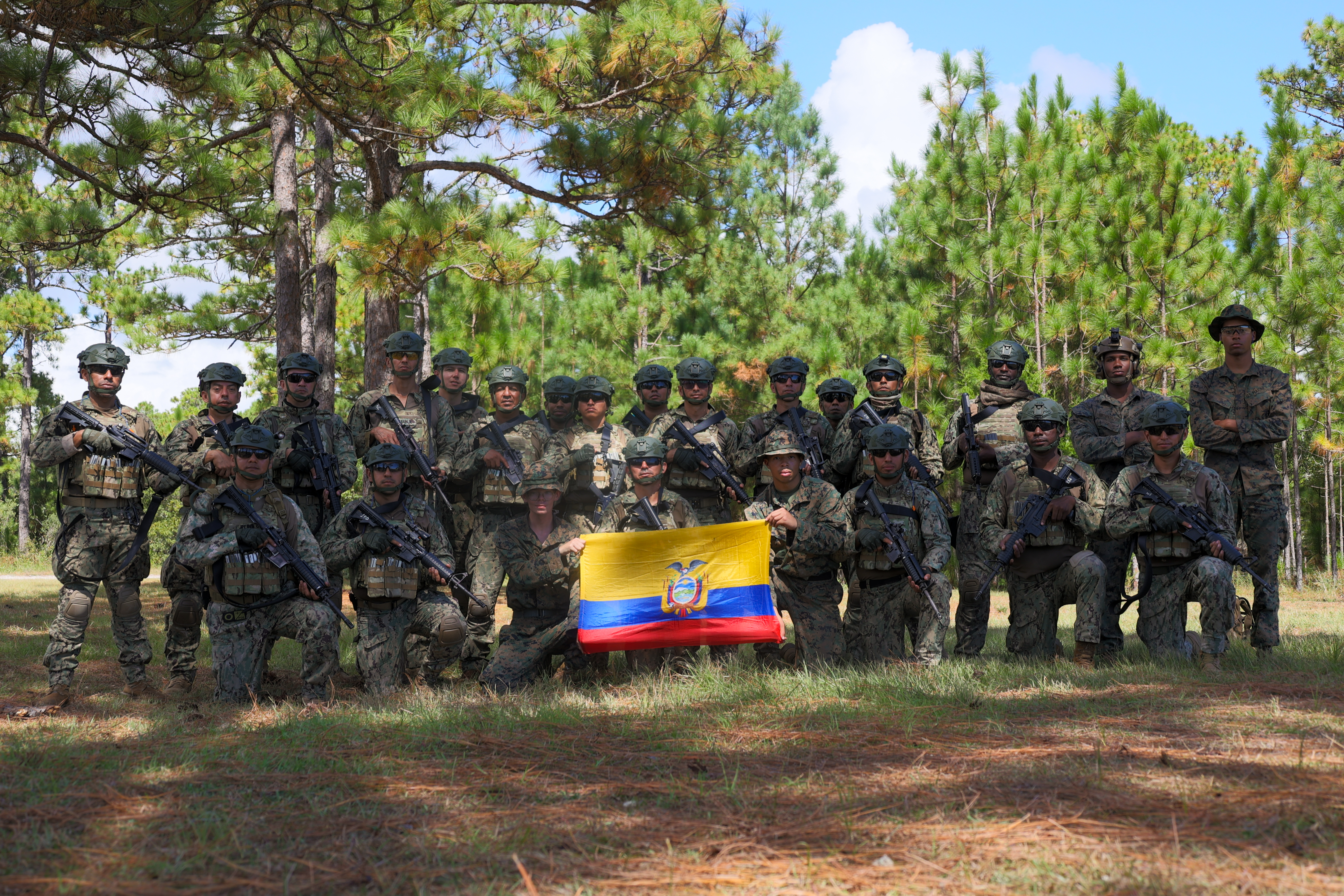
US-Ecuador Military Operation Escalates Against Organized Crime Groups
The joint military operation signals a serious escalation in the fight against organized crime, representing a strategic partnership that directly challenges drug trafficking networks threatening regional stability.
Ecuador and the United States have launched a coordinated military operation targeting organized crime groups that have increasingly destabilized the region. This initiative comes as both nations confront soaring levels of violence tied to narcotrafficking, with significant resources being funneled into efforts to dismantle these criminal networks. Although described as a joint operation, it reveals deeper issues of governance and control that Ecuador struggles to maintain against powerful drug trafficking organizations.
The context of this operation is steeped in the recent surge of violence in Ecuador, especially in cities like Guayaquil, where murder rates skyrocketed to 25 per 100,000 inhabitants in 2022, a stark rise from 5 per 100,000 in previous years. The increase parallels the rise of criminal groups, such as Los Choneros, which have exploited weak law enforcement and pervasive corruption within the government. With its strategic location along major drug trafficking routes, Ecuador has become a battleground for rival gangs, creating dire consequences for both national and regional security.
This military operation is globally significant as it highlights an emerging risk for South America’s security landscape. The collaboration allows the U.S. to extend its influence in the region while simultaneously addressing threats that could spill over internationally. Failure to stabilize Ecuador could lead to an increase in drug trafficking operations, with potential repercussions for neighboring countries, as well as the United States.
Key actors include Ecuador's President Daniel Noboa, who is under pressure to show strength against crime, and the Biden administration, which aims to bolster regional allies in its efforts to curb drug flow into the U.S. Both parties understand that ineffective measures could embolden organized crime, perpetuating dangerous power dynamics and societal instability within Ecuador.
Operationally, this initiative will involve Ecuadorian Armed Forces and U.S. Special Operations Forces working together to conduct intelligence-gathering and direct action missions. Integrated air support, surveillance drones, and the deployment of advanced equipment are crucial elements in this effort. The scale of U.S. resources, estimated to exceed $50 million in military and logistical aid in recent years, amplifies the operation's operational capability.
The immediate consequence of this operation could escalate violent confrontations between law enforcement and organized crime. Armed clashes could spike as gangs resist crackdowns, creating a volatile environment that may further deteriorate public safety. Additionally, further militarization of the region raises concerns over human rights abuses and the militarization of domestic security.
Historically, similar scenarios in Latin America have often led to increased violence and societal division. The deployments of security forces in Colombia, for instance, initially aimed to combat drug cartels but resulted in extensive civil conflict. This backdrop suggests that Ecuador's military operation may have long-lasting repercussions, challenging the balance of power between the state and criminal organizations.
Moving forward, look for indicators such as shifts in gang territorial control, rising casualties among law enforcement, and the political fallout for President Noboa. Intelligence analysts will need to monitor any significant changes in violence levels, public sentiment around the military operations, and potential external influences from other countries seeking to capitalize on Ecuador's instability.