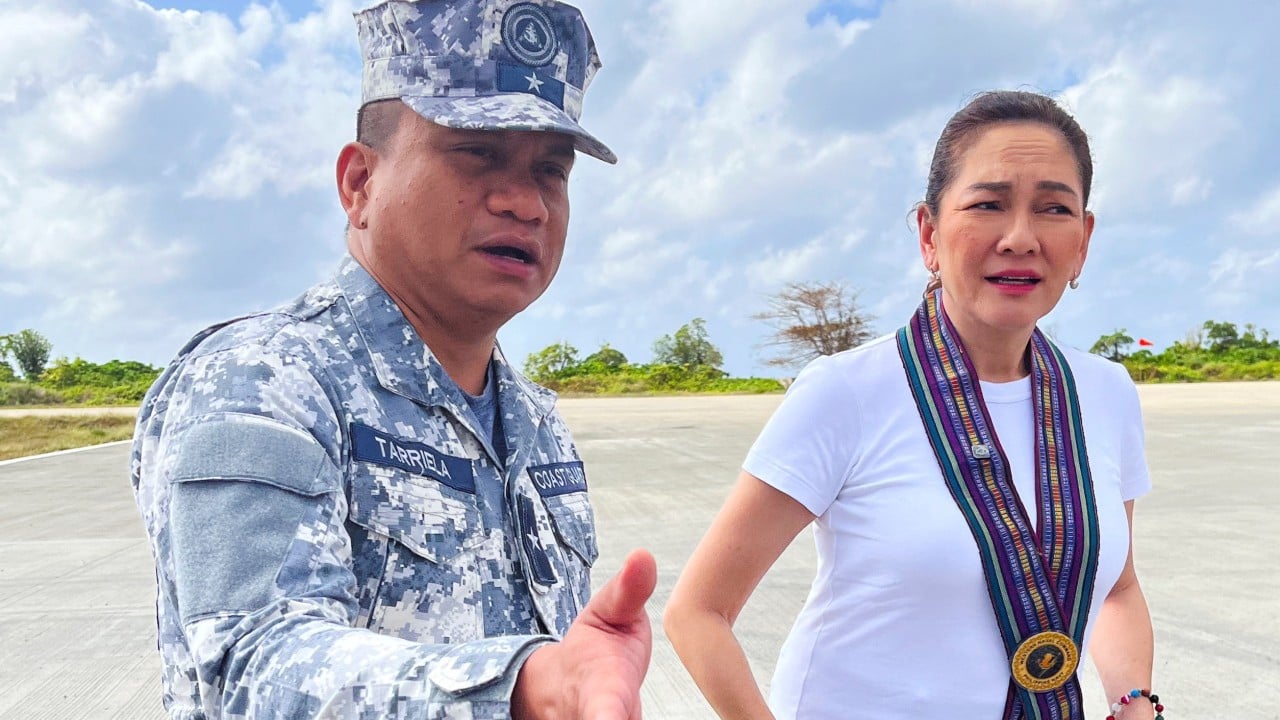
Philippines Escalates South China Sea Standoff with Coast Guard Officer Promotion
The Philippines amplifies tensions with China by promoting a vocal coastguard officer, signaling an unyielding stance on disputed maritime claims. This move highlights Manila's enhanced commitment to counter Beijing's aggressive expansion in the South China Sea.
The Philippines has escalated its maritime confrontation with China by promoting coast guard officer Jay Tarriela, a prominent critic of Beijing's actions in the South China Sea. President Ferdinand Marcos Jr.'s decision to elevate Tarriela comes despite strong calls from China for him to face sanctions, indicating a firm stance in the ongoing territorial dispute. This development is not merely administrative; it represents a strategic signal of the Philippines' commitment to assert its territorial claims amid heightened tensions.
Historically, the South China Sea has been a flashpoint for conflict, with China asserting expansive claims that overlap with those of several Southeast Asian nations, including the Philippines. The situation has worsened in recent years as China has militarized artificial islands and engaged in aggressive maneuvers against Philippine vessels. The Marcos administration, inheriting this troubled legacy, has thus far attempted to balance diplomatic relations with Beijing while also bolstering national sovereignty in the region—a delicate dance that has now taken a more confrontational turn.
This promotion carries significant ramifications for regional security dynamics. By showcasing Tarriela, a vocal advocate for maritime sovereignty, the Philippines signals to both its domestic audience and international observers that it will not back down against Chinese provocations. Analysts interpret this as a clear message of resistance to China’s encroachment, potentially galvanizing support from allies and enhancing defense posturing against aggressive maneuvers in contested waters.
Key actors in this escalating narrative include President Ferdinand Marcos Jr., whose administration seeks to assert its maritime rights while managing relations with Beijing, and Chinese officials who demand respect for their claims. Analysts assert that Marcos aims to bolster national pride and sovereignty, even as his government struggles to maintain economic ties with the world's second-largest economy. The promotion of a figure like Tarriela signals a decisive pivot toward a more confrontational policy in the South China Sea.
The move highlights the Philippines' strategic adjustments in military capabilities. Tarriela, now elevated within the Coast Guard, will play a crucial role in overseeing responses to the increasing presence of Chinese vessels, including construction work on disputed islands and potential naval confrontations. This comes at a time when the Philippines' defense budget is under scrutiny, yet the need for a fortified maritime capability is more pressing than ever, especially given the ongoing military exercises with the United States.
The consequences of this promotion could lead to an increase in confrontations at sea, especially around the Scarborough Shoal and Spratly Islands, where Chinese and Philippine vessels operate in proximity. This escalation could trigger further backlash from Beijing and could complicate bilateral relations, potentially drawing in the United States and regional partners supportive of the Philippines' stance. Already, the South China Sea is one of the world's most disputed maritime regions, and this military build-up risks inflaming an already volatile situation.
Historically, similar moves have often led to heightened tensions, such as during the 2012 Scarborough Shoal standoff, when Philippine forces attempted to engage the Chinese military. The regional response to this latest promotion will likely focus on whether it catalyzes a robust defense strategy among Southeast Asian states or deepens China’s militarization efforts.
Going forward, analysts will closely monitor the reactions from Beijing and how the Philippines navigates this renewed posture. Intelligence indicators to watch include shifts in naval deployments, changes in rhetoric from both governments, and the possibility of increased diplomatic engagement with U.S. forces. The fate of maritime security in the South China Sea hangs in the balance as Manila embarks on this assertive course of action.