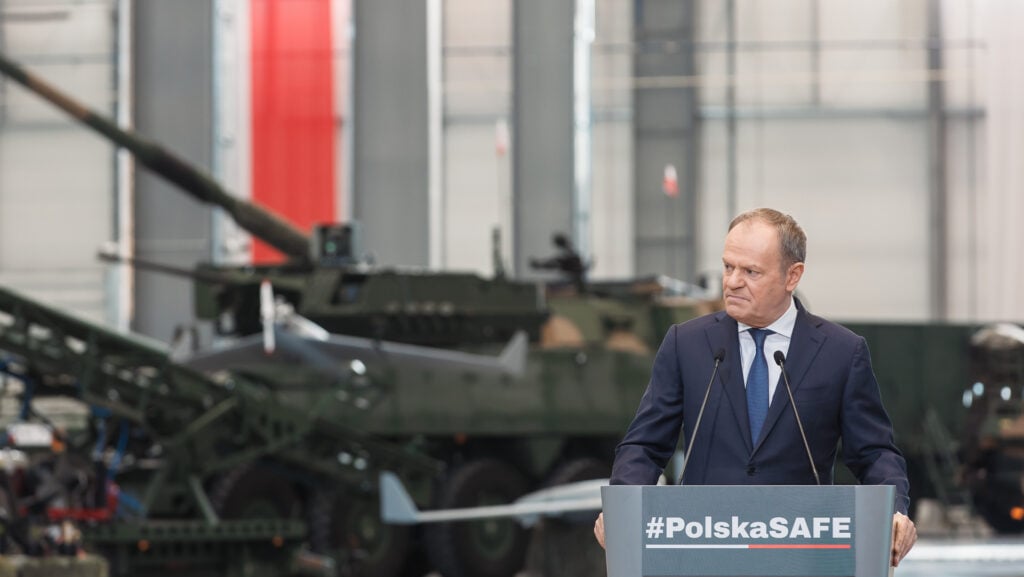
Poland Secures $51 Billion in EU Loans for Military Upgrades
Poland's $51 billion defense spending plan significantly enhances its military capabilities amid rising regional tensions. This funding marks a pivotal shift in Poland's military posture as it aims to fortify its defenses against potential threats.
Poland has unveiled a staggering $51 billion defense budget, supported by EU SAFE loans, to be allocated for military enhancements between 2026 and 2030. This initiative focuses on modernizing various military sectors, including artillery systems, cybersecurity, and ground combat capabilities. The scale of the investment reflects a desperate need for Poland to fortify its defenses in the face of escalating regional threats, particularly from Russia’s increased military activity in Eastern Europe.
Historically, Poland has been on the front lines of NATO's eastern flank, contending with Russia’s aggressive tactics in Ukraine and Belarus. The resurgence of Russian military maneuvers has triggered a significant reassessment of national security throughout the region. Poland’s previous investments in its military were substantial but did not match the scale now proposed, marking a distinct shift in strategy influenced by Moscow’s belligerent actions.
The significance of this funding is profound, given that it positions Poland as a formidable military power in Central Europe. With potential vulnerabilities exposed by Russia, this acquisition program aims to enhance deterrence capabilities while simultaneously bolstering NATO's eastern defenses. Poland's commitment to defense spending illustrates a broader trend amongst Eastern European nations striving to secure their borders, thereby altering local power dynamics and security calculations.
Key actors in this development include Poland's government, focused on ensuring national security, and the EU, which is looking to bolster member states' defenses against external threats. The Polish leadership advocates for a robust military as essential, but underlying motivations also stem from domestic political considerations, alongside a need for deepening partnerships with NATO allies. The strategic push is also intertwined with Poland’s aspirations to assert itself as a leader in regional defense.
Operationally, the $51 billion budget will enhance crucial military capabilities across various domains. Investments will cover advanced artillery systems—like the advanced Krab self-propelled howitzers—while also upgrading Poland’s cyber capabilities to counter hybrid threats. The plan includes acquiring a new ground combat fleet as well, intended to replace aging equipment and strengthen operational readiness.
The consequences of this monumental funding plan may ripple through the region. Increased military readiness in Poland could provoke a more aggressive stance from Russia, prompting retaliatory actions or escalatory posturing. Additionally, as Poland enhances its military strength, it may encourage neighboring countries to follow suit, potentially igniting an arms race in Central and Eastern Europe.
Historical precedents underscore the risks inherent to military build-ups in response to perceived threats. The pre-World War I arms race, fueled by nationalism and regional tensions, serves as a cautionary tale. Similarly, Poland's ambitious defense expenditure plan could evoke a detrimental cycle of provocation, response, and further militarization among state actors in the area.
Moving forward, attention should center on Poland's military procurement timeline and any announcements regarding specific systems or partnerships. Intelligence indicators to monitor include defense contract awards, military exercises with NATO allies, and Russia’s military deployments in proximity to Polish borders. This will elucidate the developing security situation and reveal signals of potential conflict escalation or diplomatic shifts in the region.