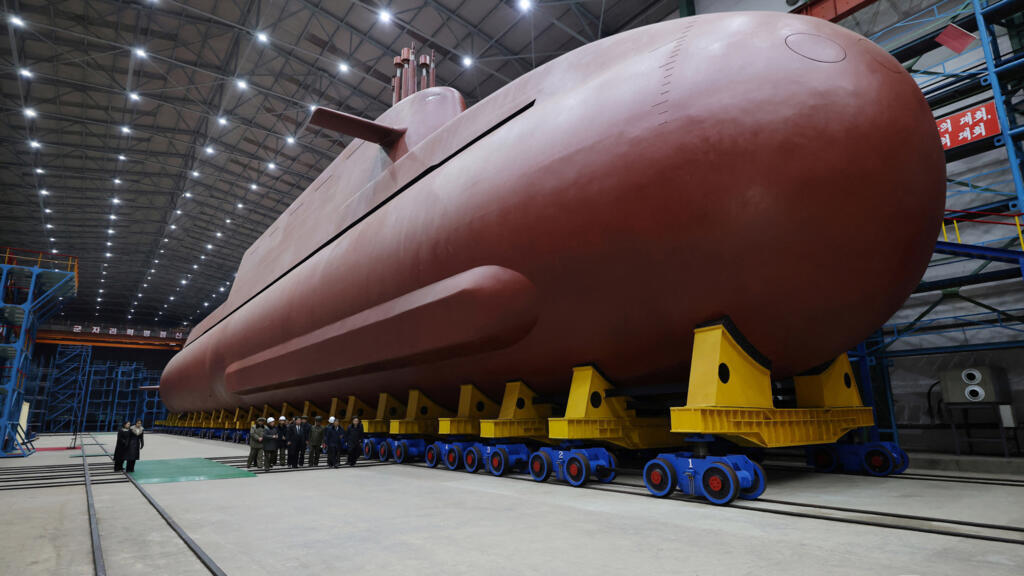
North Korea Accelerates Naval Nuclear Capabilities Amid Escalating Tensions
Kim Jong Un's inspection of a new destroyer highlights urgent advancements in North Korea's naval nuclear strategy. This military escalation signals significant implications for regional stability and power dynamics.
North Korea has publicly unveiled a push for naval nuclear expansion as leader Kim Jong Un inspected a new 5,000-ton destroyer and observed cruise missile tests over two days. This emphasizes an intensified military doctrine focused on enhancing maritime capabilities, directly threatening stability in the already volatile Indo-Pacific region. The North’s military showcases align with ongoing ballistic missile developments, raising alarms about expanding nuclear options.
This naval development is not an isolated initiative. North Korea's maritime ambitions date back decades, but they have gained critical urgency following continual international sanctions and geopolitical isolation. The history of engagement with external powers, particularly the United States and South Korea, has led Pyongyang to seek more diversified military assets, thus accelerating its naval programs as a counter to perceived threats.
The significance of this naval expansion lies in its potential to alter regional power dynamics. North Korea’s advancement into naval nuclear capabilities demonstrates a strategic pivot that poses increased risks to neighboring countries, particularly South Korea and Japan. The introduction of nuclear-powered vessels amplifies deterrence strategies at sea, fundamentally challenging the existing security architecture in Northeast Asia.
Kim Jong Un’s motivations are rooted in a combination of survival and national pride. He seeks to reinforce the military's prestige within North Korea while showcasing resilience against external pressures. The emphasis on naval power serves to project strength, fulfilling both domestic propaganda needs and strategic military aspirations amid a complex geopolitical landscape.
Recent reports detail the 5,000-ton destroyer's capabilities, though specifics regarding its armament remain ambiguous. If equipped with nuclear-tipped cruise missiles, its operational range could extend towards US military assets stationed in the region. The funding required for this naval upgrade is substantial, with estimates indicating billions are being diverted from the national budget, reflecting the regime’s prioritization of military advancements over domestic economic needs.
The immediate consequence of this focus on naval capabilities could lead to increased military confrontations in contested waters, particularly around the Korean Peninsula and the surrounding maritime zones. Potential provocations, such as unannounced missile tests or naval drills involving aggressive maneuvers, are likely to escalate tensions with other regional powers and the United States.
Historically, Japan's 1941 attack on Pearl Harbor serves as a stark reminder of the perils associated with underestimating an adversary’s maritime capabilities. The rapid development of North Korea's naval forces mirrors previous military buildup patterns seen in other states, indicating a clear path towards increased militarization of maritime domains and confrontation.
Intelligence assessments should focus on subsequent developments stemming from Kim Jong Un's inspection. Key indicators to monitor include the frequency and scope of naval exercises, updates on destroyer integration within the fleet, and potential partnerships with other naval powers like Russia or China, which could further complicate geopolitical alignments in the region.