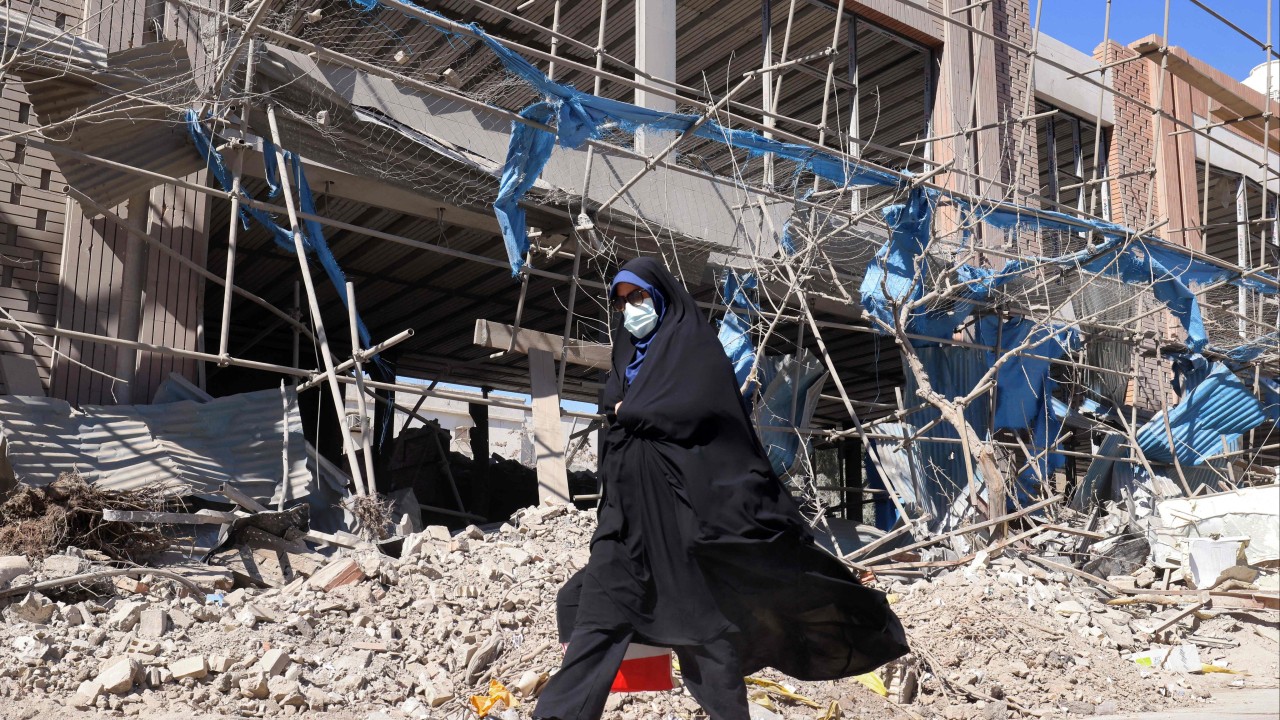
China and France Conspire to Counter US-Israeli Strikes on Iran
China and France's alliance to challenge US-Israeli military actions could destabilize alliances and escalate tensions globally. Their focus on upholding international law may embolden Iran and deepen regional splits.
China's Foreign Minister Wang Yi and France's Jean-Noel Barrot held talks emphasizing a collective effort to counter U.S. and Israeli military strikes on Iran, depicting these actions as violations of international law. This move indicates a deliberate pivot by Beijing and Paris to vocalize their opposition to Washington's actions and bolster Iran amidst its growing isolation. Both nations are looking to exert their influence over a sensitive issue that threatens to spiral into greater conflict.
The backdrop to these discussions includes a history of escalating tensions between the U.S. and Iran, particularly following years of sanctions, military provocations, and Israel's repeated airstrikes on Iranian interests in Syria and elsewhere. Iran's atomic ambitions only further amplify these tensions, with the U.S. and its allies arguing that Tehran's nuclear program poses a direct threat to regional and global security. The crumbling nuclear deal and ongoing negotiations mark a deteriorating diplomatic landscape, setting the stage for conflict.
This alignment between China and France is significant, as it signals possible fractures in traditional alliances and a shift in global power dynamics. Should Tehran feel reinforced by this support, it may embolden Iranian aggression against both regional adversaries and U.S. troops stationed in the Middle East. Such empowerment could lead to heightened military confrontations and complicate security frameworks currently dominated by Western influence.
Motivations behind this coalition are clear. China seeks to expand its footprint in the Middle East, aiming to position itself as a counterweight to U.S. hegemony while securing oil supplies. France, for its part, aims to reclaim its role as a significant player in international diplomacy and potentially restore its influence which has waned during the past few years. Their unified stance against perceived U.S. overreach underscores a significant geopolitical shift.
In terms of operational details, both nations have been active in Middle Eastern diplomacy, with China increasing its investments in the region through its Belt and Road Initiative. France maintains military collaborations with various nations in the region, further complicating the landscape. The U.S. spends close to $36 billion annually on defense-related assistance to Israel and its partners, which might be jeopardized by this new Franco-Chinese commitment to challenge its policies.
Consequences of this diplomatic maneuvering could be dire. Heightened U.S.-Iran tensions may lead to increased hostilities in Iraq and Syria, where Iranian proxies could engage more aggressively against U.S. assets. Meanwhile, China's involvement could lead to a more extensive commitment to regional powers like Iran, thereby stoking existing conflicts.
Historically, attempts by major powers to divide regions based on geopolitical interests frequently yield persistent instability. The Cold War era's proxy wars and diplomatic stand-offs had lasting effects, drawing in countries on both sides into catastrophic conflicts. This current scenario risks a similar trajectory as the ideological and power-based clash unfolds in the Middle East.
Looking ahead, attention will be focused on how the U.S. responds to this Franco-Chinese axis, particularly considering potential military actions or escalated sanctions against Iran. The emergence of intelligence indicating coordinated military activity by Iran, or tighter security ties between Tehran and its new allies, will be critical indicators to watch as this situation develops further.