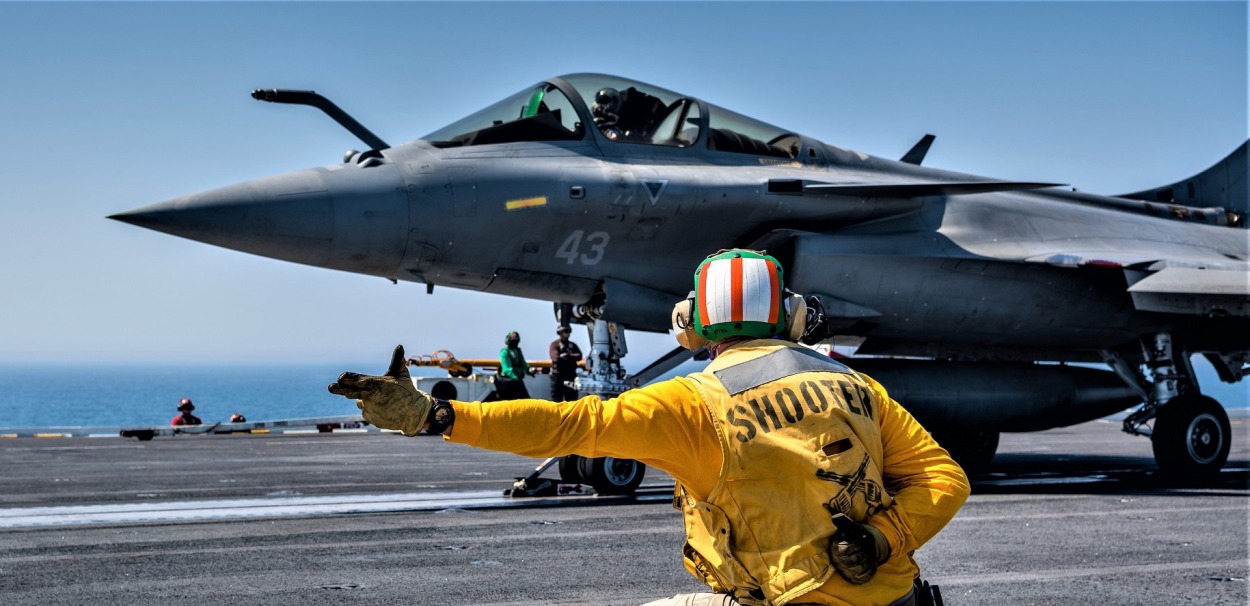
France Deploys Rafale Fighters, Escalating Tensions Over Iranian Threats
France's deployment of Rafale jets to the UAE signifies a serious escalation in military readiness against Iran. This move reflects growing concerns over regional stability and defense commitments amid Iranian aggression.
France has escalated its military posture in the Gulf region by deploying Rafale fighter jets to the United Arab Emirates (UAE) to safeguard its air and naval bases in the face of increasing Iranian threats. This strategic reinforcement was confirmed by French Foreign Minister Jean-Noel Barrot, highlighting the urgency of the situation as Tehran's aggressive maneuvers raise alarms across the region.
This move follows a series of provocations from Iran, including missile tests and military exercises designed to demonstrate its regional influence and capabilities. France has maintained a military presence in the UAE for years, significantly bolstering its role in Middle Eastern geopolitics. The deployment of Rafale jets to Al-Dhafra Air Base, located near Abu Dhabi, is a tactical response to Iran’s recent hostile rhetoric and actions that threaten diplomatic and military stability in the Gulf.
The significance of this development cannot be overstated. France's deployment symbolizes a critical shift in European defense commitments and amplifies tensions in a volatile region already strained by the ongoing Iran-U.S. confrontation. It serves as a clear warning to Iran that any aggression aimed at French interests or allies will be met with a robust military response, further complicating an already intricate security landscape in the Middle East.
Key actors in this situation include not only France and Iran but also other Gulf nations who may feel pressured to enhance their own military readiness. Iran appears to assert its strength in the region, while France aims to uphold its strategic alliances and protect its geopolitical interests. This contradiction underscores a broader struggle for influence in the Middle East among global and regional powers.
Operationally, the Dassault Rafale is a multirole fighter jet, capable of air superiority and ground attack missions, equipped with advanced avionics and weaponry. France's military presence in the UAE consists of hundreds of personnel across various branches, indicating a long-term commitment to regional security. With Rafale jets operational at Al-Dhafra, France could implement rapid response operations within minutes, representing a significant enhancement in combat readiness against potential Iranian incursions.
This deployment could have immediate consequences, including a heightened risk of confrontation between Iranian forces and those of allied nations. Should Iran view this as a provocation, it may react through military exercises or aggressive posturing along maritime choke points like the Strait of Hormuz. The potential for miscalculation exists, making this a critical flashpoint that could spark further conflicts in the Middle East.
Historically, this situation echoes past military escalations in the region, such as the French-led operations against Libyan forces in 2011 or the broader NATO engagement in the region post-9/11. Each of these instances demonstrated how military deployments can rapidly spiral into larger conflicts, suggesting a precarious path ahead.
Moving forward, intelligence observers should monitor Iran’s military activities closely, particularly regarding missile launches or naval exercises that could test France's resolve. Additionally, any shifts in U.S. or regional ally policies towards Iran could either escalate or de-escalate tensions and influence France's continued military posture in the Gulf, setting the stage for future engagements or diplomatic interventions.