Philippines Secures Strategic Patrol Vessel Amid Regional Tensions
The South Korean delivery of a key patrol vessel to the Philippines signals a critical shift in regional naval capabilities as tensions escalate in the South China Sea.
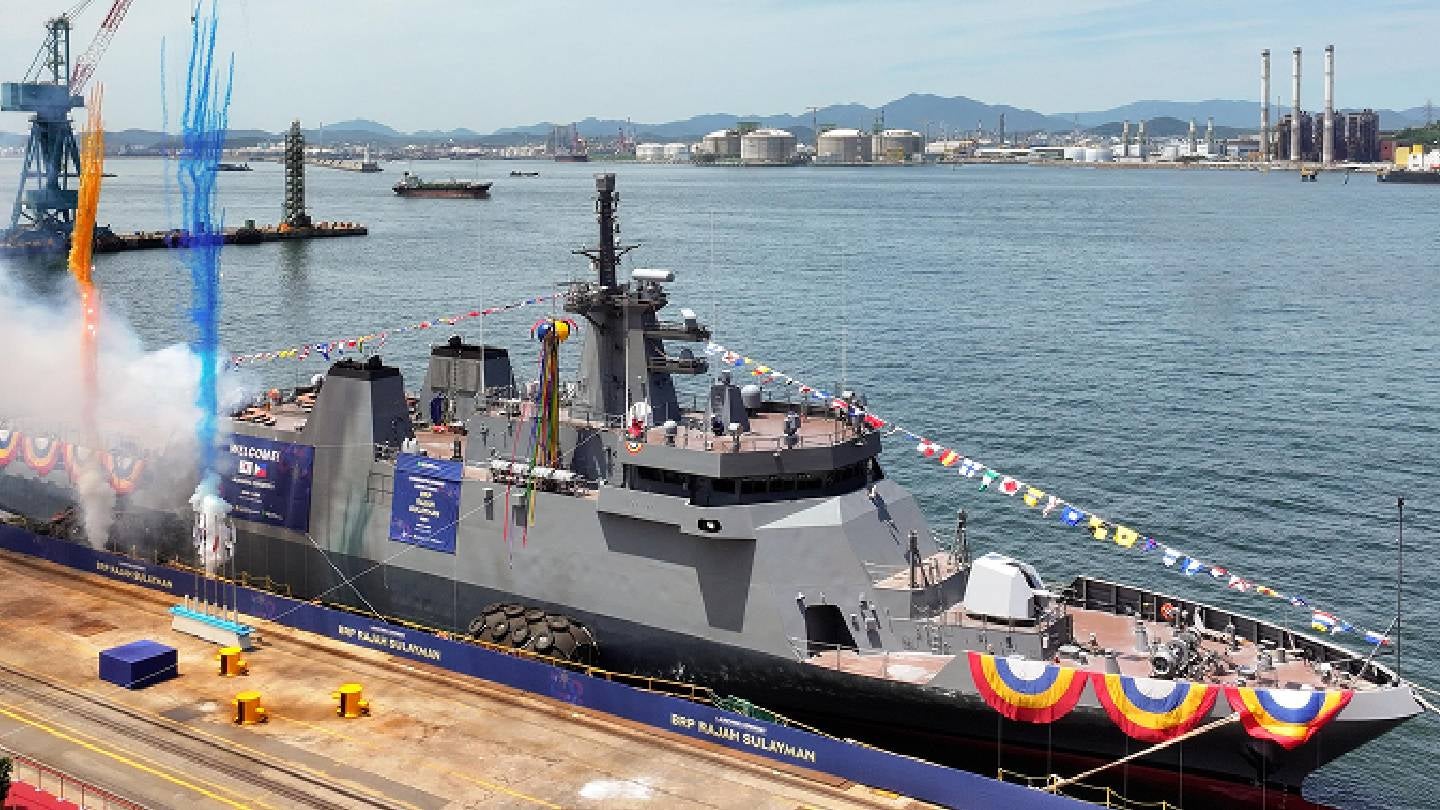
Hyundai Heavy Industries (HHI) has delivered the BRP Rajah Sulaiman, the first of six offshore patrol vessels (OPVs) for the Philippine Navy, ahead of schedule. This move comes as the Philippines intensifies its maritime security efforts amid growing territorial disputes in the South China Sea, particularly with China. The arrival of the BRP Rajah Sulaiman represents a significant enhancement of the Philippine naval fleet, which has long been hampered by insufficient resources and aging vessels.
The Philippines has faced increasing encroachments in its maritime territory, particularly regarding the Spratly Islands and Benham Rise, where Chinese militarization has reached alarming levels. The decade-long strategic partnership with South Korea has allowed the Philippines to modernize its military assets, particularly in naval capabilities, and the expedited delivery of these OPVs exemplifies this growing defense cooperation. With China’s assertive presence in the region, the Philippines is under tremendous pressure to bolster its naval deterrent.
The strategic significance of this development is multi-faceted. The acquisition of these OPVs enhances the Philippines' maritime surveillance and patrolling capabilities, thus improving its response to unauthorized incursions in its Exclusive Economic Zone (EEZ). Additionally, this procurement marks a pivotal point in the regional balance of power, potentially emboldening other Southeast Asian nations to pursue similar defensive upgrades in response to Chinese expansionism.
Key actors involved in this transaction include the Philippine Navy, which aims to modernize its fleet to protect national interests, and South Korea, which sees this as an opportunity to expand its defense exports and enhance its influence in Southeast Asia. The motivations are twofold: the Philippines seeks to fortify its maritime security, while South Korea desires to solidify defense ties and proliferate its military technologies in an increasingly competitive market.
The BRP Rajah Sulaiman is outfitted with advanced surveillance systems, anti-ship missile capabilities, and can operate efficiently in both shallow and open waters. The vessel is expected to enhance the Philippine Navy’s operational range, allowing it to conduct more effective anti-piracy and counter-smuggling operations alongside territorial defense. Each OPV is valued at approximately $15 million, contributing significantly to the overall modernization budget projected at $200 million for the fleet.
This delivery raises the likelihood of further tensions in the region, as increased maritime patrols by the Philippines may provoke more aggressive posturing from Chinese naval forces. The introduction of the OPVs into operational service will not only enable the Philippines to bolster its maritime claims but could also lead to more direct confrontations at sea, particularly in confrontational hotspots like Scarborough Shoal.
Historically, the upgrading of naval forces in the Asia-Pacific region often foreshadows heightened military activities and alliances. The Philippines’ recent action reflects a broader trend where nations feel compelled to invest in naval capabilities due to perceived existential threats. The introduction of modern naval assets has been a catalyst for prior regional skirmishes, indicating a potential for increased maritime conflict.
Going forward, intelligence indicators to monitor will include the frequency of Philippine naval patrols, the reactions of Chinese maritime forces, and potential geopolitical shifts as other Southeast Asian nations respond to the perceived imbalance. Observers should remain vigilant for any signs of military exercises or aggressive maritime activity stemming from these developments, which could foreshadow a new era of naval confrontations in the Asia-Pacific region.