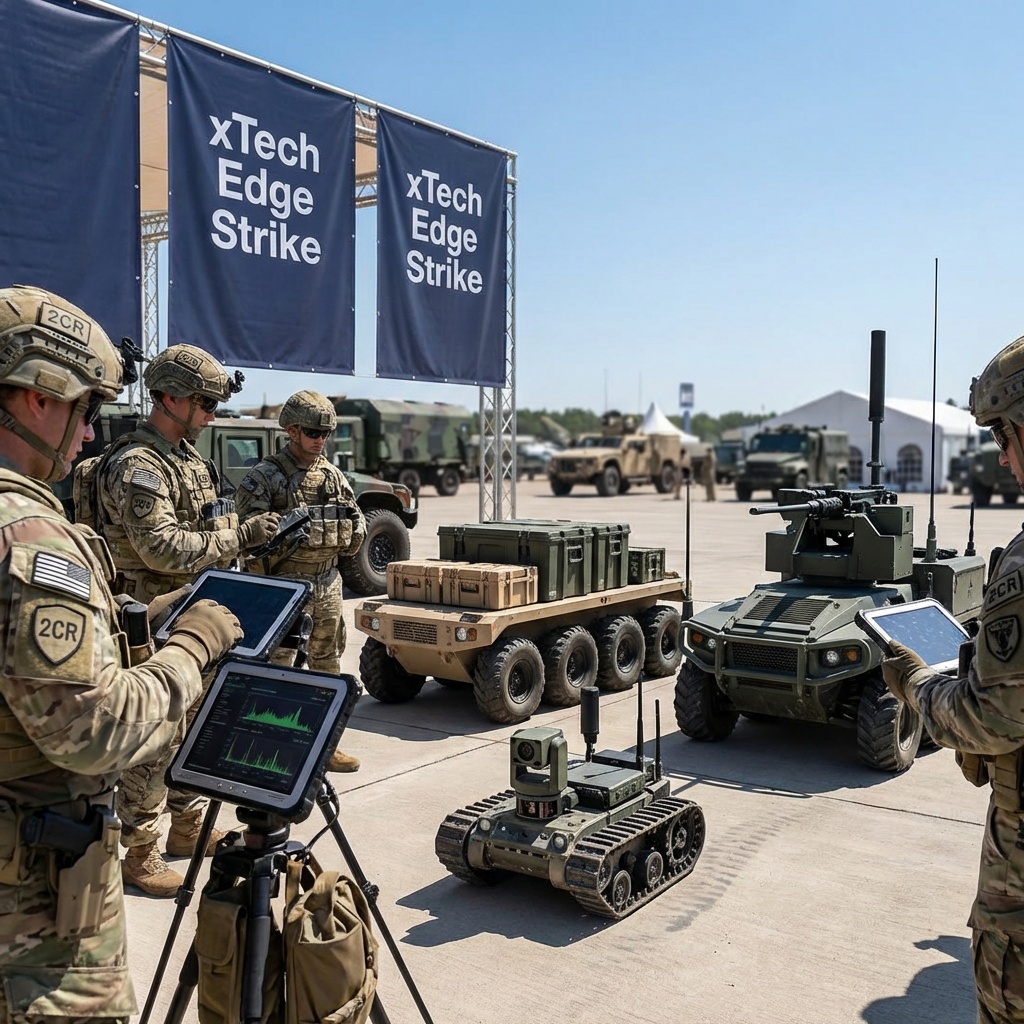
2nd Cavalry Regiment Trials UGVs in xTech Edge Strike Competition
The 2nd Cavalry Regiment is testing over 17 Unmanned Ground Vehicles (UGVs) as part of the U.S. Army's xTech Edge Strike Ground competition. The trials aim to assess performance and viability against operational cost challenges.
The U.S. Army's 2nd Cavalry Regiment, stationed in Europe, has initiated comprehensive testing of over 17 Unmanned Ground Vehicles (UGVs) as part of the xTech Edge Strike Ground competition. This initiative is designed to explore advanced technological solutions that could enhance ground operations, particularly in contested environments. However, the testing has revealed concerns regarding the overall costs associated with fielding these robotic systems within the Army’s operational framework.
The UGVs being evaluated span a variety of configurations and capabilities, ranging from logistical transport to reconnaissance and weapon systems integration. Each unit comes equipped with advanced sensors, navigation systems, and varying payload capacities, aimed at fulfilling mission requirements such as surveillance, supply delivery, and support for dismounted infantry. However, as detailed specifications vary widely, the central analysis will focus on operational efficiency versus costs, a crucial factor for Army budgeting and long-term adoption strategy.
Strategically, this testing phase underscores the Army's prioritization of robotics and autonomous systems as essential components for modern warfare. With the military landscape continually shifting toward multi-domain operations, the inclusion of UGVs could significantly enhance the 2nd Cavalry Regiment's operational capabilities, allowing for better resource management and reduced risk to personnel. Nevertheless, this potential is tempered by the financial implications of deploying and maintaining these systems, which could influence future investment decisions.
The xTech Edge Strike Ground competition is facilitated by Army Futures Command, which emphasizes innovation and agile development methodologies in military technology. The program aims to scout and cultivate emerging technologies from various sectors, including commercial markets and domestic startups. As the competition progresses, the Army's ability to balance innovative advancements with fiscal responsibility will determine how quickly and effectively these UGVs can be integrated into existing forces.
Overall, while the trials present a promising avenue for enhancing ground operations, they also highlight ongoing challenges related to investment in unmanned systems. The outcomes of the competition will likely shape future Army capabilities and drive technological adoption across numerous platforms, underscoring the necessity for a strategic approach to UGV integration in line with budgetary realities.