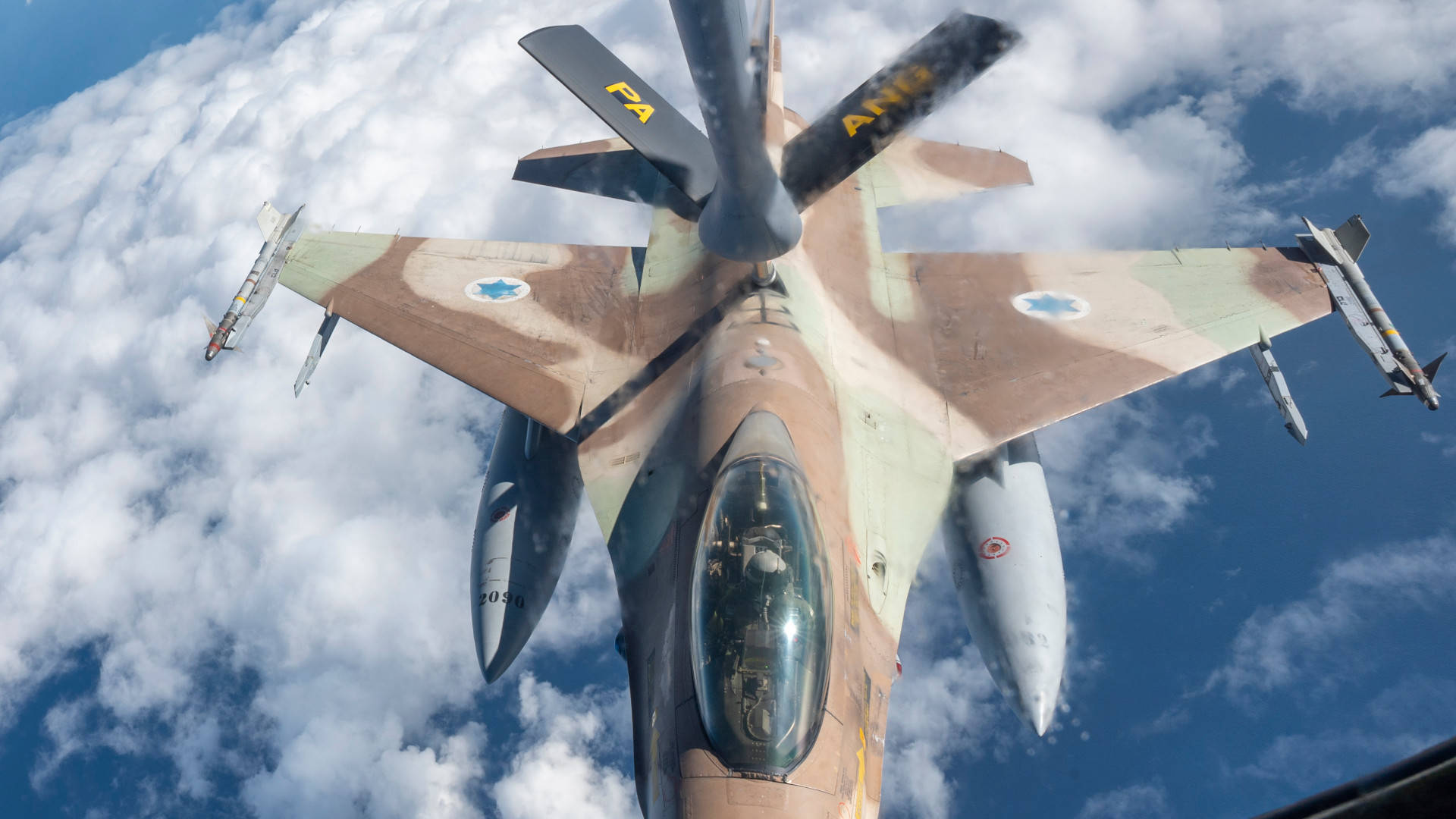
USAF Tankers Enhance Israeli Air Force Capability Ahead of Potential Iran Conflict
The deployment of USAF tankers in Israel significantly boosts the IAF's operational range against Iran. This escalation in support indicates an impending willingness to engage directly in the region's intensifying tensions.
The recent deployment of U.S. Air Force tankers in Israel marks a pivotal moment in the looming conflict between Israel and Iran, intensifying military preparations. These tankers, which allow for mid-air refueling, enable the Israeli Air Force (IAF) to extend its operational reach, enhancing strike capabilities against Iranian targets. This logistical enhancement could fundamentally alter the dynamics of a potential confrontation, allowing for longer missions and sustained engagement against adversaries.
This strategic move follows years of escalating tensions between Israel and Iran, characterized by proxy conflicts, cyber warfare, and direct military engagements. Iran's nuclear program has been a focal point of concern for Israel, and recent military exercises and drone developments only heighten the stakes. Israel's focus on mitigating Iranian influence in Syria and Lebanon has further complicated the regional security landscape, pushing it to seek robust partnerships with allies, particularly the United States.
The significance of this deployment cannot be overstated; it exposes vulnerabilities within Iranian defense strategies while demonstrating the increasing military collaboration between the U.S. and Israel. Enhanced air mobility amplifies the threat perception in Tehran, potentially provoking a hurried response or countermeasures that could destabilize the region further. If conflict erupts, the extended operational range could embolden Israeli actions, escalating a conflict that could easily spiral out of control.
Key actors in this dynamic include the United States, Israel, and Iran, whose motivations extend beyond mere territorial control. For Israel, neutralizing the Iranian threat is existential, while the U.S. seeks to maintain its influence and deter Iranian aggression in the Middle East. Iran, on the other hand, perceives these developments as a direct challenge to its sovereignty and could resort to asymmetric warfare tactics to counterbalance the expected IAF advantages.
From a technical standpoint, the USAF's KC-135 Stratotanker and KC-46 Pegasus systems can significantly increase the range and payload capacity of IAF aircraft. The integration of these platforms into combat operations allows Israel to strike deep into Iranian territory and return safely, enhancing the lethality of its F-35 and F-16 fleets. Access to advanced refueling capabilities comes at a time when Israel is also ramping up its military budget, with an annual defense expenditure already exceeding $20 billion.
The immediate consequences of this development include the potential for heightened hostilities as Israeli capabilities grow markedly stronger. Iran’s threat matrix may evolve to include preemptive strategies to neutralize the advantages of U.S. tankers at bases in Israel. Consequently, regional security dynamics could shift, leading to an arms race or more aggressive posturing by both sides as they bolster defenses against each other's enhanced capabilities.
Historically, the integration of aerial refueling in combat scenarios has been transformative. The Gulf War in the early 1990s showcased how such capabilities can extend operational endurance and mission success rates. As U.S.-Israeli cooperation deepens, the lessons from past engagements could inform future strategies against Iranian provocations.
In the coming weeks, intelligence indicators to watch include increased IAF training exercises incorporating U.S. tanker support, Iranian responses to this escalated support, and potential adjustments to U.S. military posture in the region. The strategic calculus will be shaped by how both the U.S. and Israel interpret Iranian actions amid these growing capabilities, signaling a critical inflection point in Middle Eastern geopolitics.