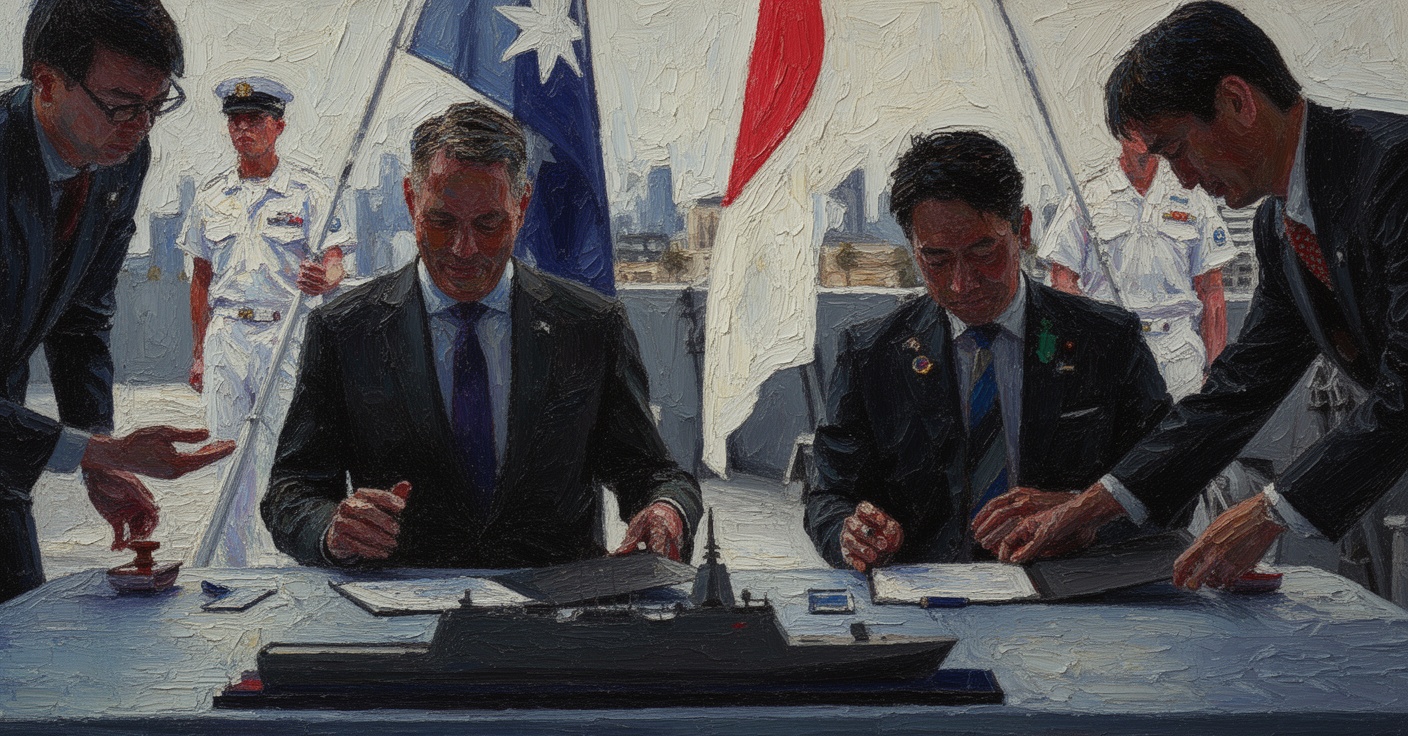
Australia and Japan Sign $7bn Warship Deal, Deepening Indo-Pacific Ties
Australia and Japan have formalized a $7 billion warship program, signaling closer defense cooperation amid rising strategic competition with China. The deal locks in a multi-year build-and-support plan and expands bilateral interoperability. Analysts caution the move could recalibrate regional naval balance and trigger response from Beijing.
The agreement seals contracts worth about seven billion dollars for the construction of advanced warships, consolidating a bilateral program that will span several years. Canberra and Tokyo frame the deal as a step toward deeper maritime security collaboration and supply chain resilience. The ships are described as capable platforms designed to operate in contested environments with enhanced survivability and sensor suites.
The background here is a wider shift in Indo-Pacific defense postures, where Australia and Japan have been steadily expanding defense ties. Both governments have emphasized deterrence and freedom of navigation as core aims, while coordinating through bilateral channels and regional defense forums. The decision follows a succession of joint exercises and technology-sharing initiatives that tested cooperation in real-world conditions.
Strategically, the pact reinforces a two-country approach to maritime power projection, potentially influencing allies and rivals in the region. It serves as a signal to deter coercive behavior and to reassure partners facing maritime security challenges. The arrangement complements ongoing efforts to diversify supply chains for defense materials and to accelerate industrial collaboration in shipbuilding.
Technical and operational specifics include multi-hull or conventional framework ships, with integrated combat systems, advanced radar, and far-ranging anti-ship and air-defense capabilities. The program is expected to involve domestic yards in both nations, with collaboration on design, testing, and lifecycle maintenance. Budget allocations and procurement milestones will guide workforce development and vendor contracts over the coming years.
Forward, analysts expect closer naval co-deployment and joint logistics planning, enabling swifter crisis response and crisis management in the region. The deal may prompt counterpart initiatives from other regional powers, potentially raising the tempo of naval modernization. Washington and allied capitals will watch for signaling effects and implications for alliance credibility and deterrence in the Indo-Pacific.